For 19 years in the 13th century, the most coveted throne in Europe stood effectively empty after the collapse of the Hohenstaufen dynasty, leaving the Holy Roman empire without an emperor.
No claimant to the Holy Roman crown could gather enough support
from the German princes to hold real power, instead of just empty titles.
Historians call it das Interregnum, the years between.
Several interlocking factors made recovery impossible including the Papal determination to destroy the nest of vipers, overextension and neglect of the German base, succession failure at critical moments and broader structural weaknesses. The result was not merely the loss of the imperial and Sicilian crowns, but the physical extinction of the main line.
This was not an age devoid of ambition. On the contrary, it was an age drowning in it. With no emperor to answer to, every margrave and prince-elector built up his own defences, minted his own coins, collected his own taxes and kept order in his own lands.
Each became, within his territory, a small sovereign. And precisely because each had become sovereign in his own right, none could be induced or persuaded to kneel so that another might be crowned. The abundance of local power made central power impossible.
As a result, the empire did not splinter because its men were weak, but because too many of them had grown strong in the wrong places.
Kenya buried its
rendition of the Holy Roman emperor in October last year.
Raila Odinga was, whatever one finally made of him, the organising principle of the entire opposition, which for a generation had rested on a single idea of assembling regional kingpins, stacking their blocs behind one supremo and attempting to capture the presidency.
What the country has watched unfold since his funeral is not an inheritance of the leader of the opposition, but an interregnum.
And the current self-proclaimed political kingpins are behaving precisely as the German princes did. They have been fortifying their backyards and quietly making themselves too sovereign to kneel for one of their own to be crowned.
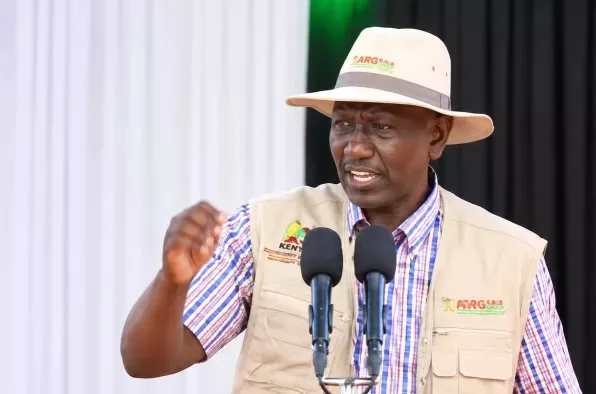
To compound this further, this weekKiharu MP Ndindi Nyoro pronounced that he had walked out of UDA and joined PPK as its party leader. And predictably, we labelled him traitor, spoiler, mole, fence-sitter. And the list of adjectives keeps growing.
To call Ndindi a turncoat and simultaneously defend democratic principles is an oxymoron. Therefore, the more instructive part is not that Ndindi parted ways with UDA, or that he joined PPK as its party leader. It is where his departure landed.
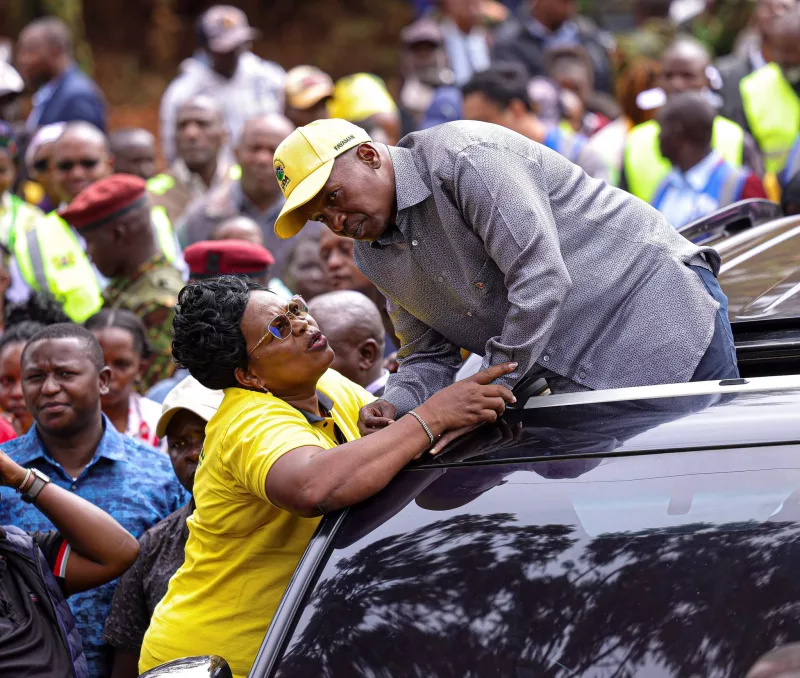
Ndindi did not consolidate behind Rigathi Gachagua, the self-proclaimed Mt Kenya kingpin. That matters. In a bloc-based opposition, the obvious political calculation would have been to attach himself to the largest baron in the neighbourhood. Instead, he did the opposite.
He took a party of his own. He told us he had consulted almost all the opposition leaders. The consultations however, did not produce submission. They produced a new party leader. That is the signature move of the interregnum.
The princes do not refuse conversation. In fact, they have been conversing several times. What they refuse is hierarchy. And a man who consults the barons then instals himself as party leader is not looking for a king to serve. He is auditioning the room he intends to rule.
Nyoro’s move therefore suggests something more consequential, that of the emergence of another centre of political gravity from within the same political constituency. And this is precisely how interregnums become difficult to end.
A political constituency can have several ambitious men without necessarily having several political centres. But once those men acquire independent organisational machinery, money, networks, influence and a personal following, the question changes.
It is no longer simply who should lead the voting bloc. It becomes why should I submit my bloc to you?
This is the question that killed the Hohenstaufen succession. And it is the question now quietly confronting Kenya.
Gachagua may believe he possesses the natural claim to inherit the political space left by the collapse of the old opposition order. He has the biography, the grievance, the regional credentials and the language of resistance. But politics does not confer a crown merely because a man has positioned himself beneath it.
A kingpin is not necessarily a king. This distinction is imperative in light of the recent shifts in the mountain.
The Kiharu MP represents something different. He represents generational positioning as much as regional positioning. His political proposition does not have to be articulated by the grievance of yesterday.
He can present himself as a politician of the next political cycle, speaking to voters whose political imagination is increasingly detached from the old architecture of ethnic kingpins.
This is precisely the advantage that younger politicians such as the Nairobi Senator Edwin Sifuna have recently been enjoying in the opposition space. Sifuna has been able to occupy the language of generational change, while others fight over the inheritance of the previous generation.
Nyoro, however, introduces a complication because he can potentially contest that generational, regional and ideological space that none of the other opposition leaders has been well able to articulate and occupy.
And for the first time, Sifuna’s generational proposition faces a credible competitor who can make a similar argument with a completely different political biography.
Until now, Sifuna’s principal competitors have largely been politicians associated with the previous political order whose political legitimacy is rooted substantially in the accumulated history of their communities, alliances and previous contests.
The Kiharu MP represents something else. He is a generational politician with a huge regional base. And he has started pronouncing himself on what he will do for country.
That is a potentially powerful combination. The question will no longer be whether Sifuna can displace the old establishment. He may well be able to.
The question will be whether, having displaced the old establishment, can he prevent another politician of his generation from displacing him? That is a much harder proposition.
Nyoro does not need to displace Sifuna by becoming more radical or out-shouting him. He does not even need to become more popular immediately.
He simply needs to make the generational argument competitive. Once that happens, Sifuna will lose something extremely valuable. Political uniqueness.
And uniqueness is often more important than popularity in the early stages of political dealignment. If Sifuna is the only credible politician who can say I represent the future of Kenya, then every voter dissatisfied with the old order has a natural destination.
But if Nyoro can say the same thing, from a different geographic, ideological and political starting point, the generational constituency suddenly has become contestable.
This is why his move may ultimately matter more to Sifuna than it does to Gachagua. Gachagua is fighting over the inheritance of the mountain. Sifuna is fighting over the inheritance of the future. Ndindi has just announced that he wants a piece of both.
He is young enough to compete for the future but established enough to compete for the present. He can therefore appeal simultaneously to voters who want change but not through the old establishment, and voters who still want political structure and ideology.
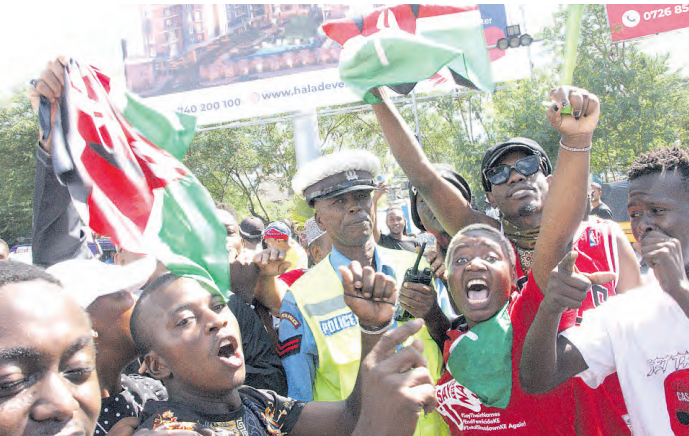
And Sifuna has made a bigger wager on thinner ground. Where the kingpins at least trade blocs with a voting history, the senator has staked his relevance on Gen Z, a cohort that has marched, hash tagged and died on the streets, but has not yet voted as a bloc even once. Sifuna is not monopolising an untested bloc.
He is collateralising a mood. The interregnum rewards the man who can count his people. Sifuna is betting the house on people no one has yet been able to count.
Nyoro’s move is therefore not primarily a story about personal ambition or even about Mt Kenya’s internal rivalries. It is a structural signal. The old method of stacking of regional blocs behind one kingpin appears to have been replaced by a new method. It has simply been abandoned in favor of de-alignment.
There is a quieter class of politician this scramble has quietly orphaned. This is the aspirant who wants a seat but not the master. For many years, the political system offered such people one grim choice. Find a kingpin.
Begs the question, does Nyoro’s party throw them a lifeline? The jury is still out.
Which is why the quiet winner of this scramble is the man everyone assumes it wounds. An interregnum is meant to be the incumbent’s season of danger.
However, this one is becoming his moat. First-past-the-post does not reward the majority that wants you gone. It rewards the largest single pile at the count.
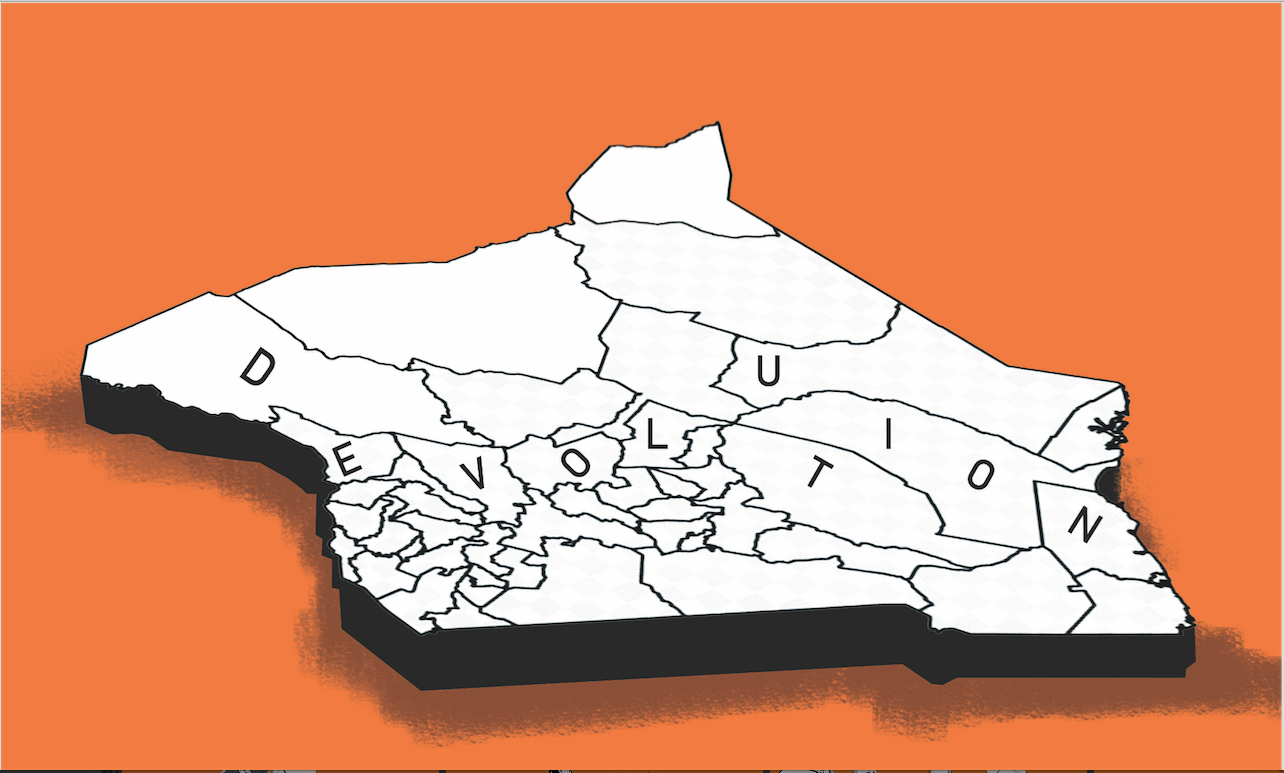
Finally, my unsolicited advice is to Wanjiku. You may think that the next election will be a contest and that you are spoilt for choice. And you could be right. But what if you are not? What if it will not be an election but a plebiscite on the equity of development? Referendums require a proposition.
And where there are no meaningful alternatives, it forces a choice, not between competing visions, but between acceptance and the rejection of the proposition before you.
Because
when an election becomes a referendum on whether development has been
equitable, or whether opportunity has been shared fairly, the choice stops
being about personalities. It becomes a verdict.
The old world is dying, and the new world struggles to be born; now is the time of monsters – Antonio Gramsci