Soon after the demise of the doyen of opposition politics, Jaramogi Oginga Odinga, a fierce struggle ensued for control of Ford-Kenya and by extension the politics of the Luo nation. The titanic battle pitted James Orengo against Raila Odinga.
Orengo who was in alliance with Wamalwa Kijana had the support of almost all the Luo MPs except Orwa Ojode, Oburu Oginga, Owino Achola and Tom Onyango.
It is instructive that the Luo MPs allied to Raila had all been elected in by-elections occasioned by Kanu-engineered defections and Jaramogi’s death.
Raila was then the party director of elections and used the position to aggressively campaign for the candidates who also happened to be his protégés.
The violence that became part and parcel of the party elections was extended to the hallowed grounds of All Saints Cathedral. Archbishop Manases Kuria had been appointed the arbiter between the feuding parties and had chosen to use his offices at the church to coordinate the election of delegates to the main elections.
The difference between the perpetrators of violence then and now is that those were not for hire. They were staunch party supporters and many were duly and voluntarily registered members. Raila eventually bolted and Ford-Kenya remained the shell it still is to date.
However, the seeds of violence as the main political currency were firmly planted in Luoland. On the other side of the political divide, Kanu had also established its local militia machinery.
Once Raila wrested control of Luo politics from Orengo and colleagues, the next battlefront was Kisumu. Mayor Lawrence Akinyi Oile in partnership with Ogonda Osir established and nurtured a ruthless violent youth group in the lakeside town. For a long time, Raila’s political activism was restricted to the outskirts of Kisumu town.
Incidentally, the return of multiparty politics moved Luos from mainstream government. The community found themselves marginalised and relegated to the fringes of national governance structures as it was during the Jomo Kenyatta regime.
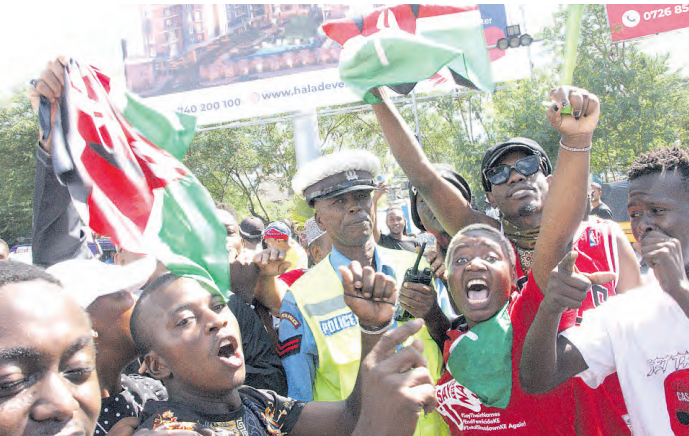
They also faced harassment from the security agencies and state-sponsored violence. This led to the emergence of the self-styled community vigilante group named the Baghdad Boys. The group was based in Kondele but operated in the entire town and its environs.
Their mission initially was to offer protection to the Luo hustler community from criminal gangs and police brutality. This they did from the perspective of self-preservation. Later they aligned to opposition movements and eventually began to offer security services for hire.
The period leading to the 1997 general election were dark days for the Luo nation. Raila stood for president, Kanu and President Daniel Moi sought fervently to regain its foothold in Nyanza and now Kisumu Governor Anyang’ Nyong’o was ideologically fronting Charity Ngilu to be the first woman president of Kenya. Violence became the tool of first choice to settle political scores.
Raila went out of his way to consolidate his control of politics in the region. No effort was spared to ensure that all elective posts were captured by the new kid in the block, National Development Party. He vanquished all his opponents and emerged as the undisputed leader of the Luo nation.
The tussle between Orengo and Raila would continue post 1997. Orengo was the only person who surmounted the NDP juggernaut. Joe Donde slipped through in Gem under Ford-Kenya because of a technicality that barred the NDP candidate.
Political violence became entrenched and buttressed by the cooperation between Kanu and NDP after Raila came third in the presidential election after Mwai Kibaki and the winner Moi.
Raila was able to assume patronage of these gangs and eventually integrated them into his political movement. He crossed over with them into New Kanu, later into Narc and eventually ODM.
Kenyans will recall and fondly remember the youths who comfortably carried Kibaki into the plane to seek medical treatment in London. Those were party adherents under the emerging Raila political movement. Jakom had been on a journey to complete the vision of his father Jaramogi under the old Kanu.
After Independence, there was a vicious struggle to control the ruling party. Much of the struggle revolved around the Kenyatta succession. Within Kanu, it was generally accepted that the President was aging and would succumb to any serious health threat.
It had been easy to instal old Jomo as the leader of the nationalist party on account of his advanced age. His long absence from the local political activities also helped to shore up his popularity among the protagonists. In the open and publicly, the contestation was led by and between Tom Mboya and Jaramogi.
Both were of the Luo ethnic community and had joined the Legco at the same time. In Parliament, they simultaneously led the forum for African Elected Members with Jaramogi as chairman and Mboya as secretary. In this period, their competition was for national control of political power and influence.
They were not virulently focused on who was the supreme Luo leader. Separately they belonged to different constituencies. While Mboya was urbane and represented cosmopolitan Kamukunji constituency, Jaramogi was more of the cultural leader and represented rural Bondo constituency.
The two remained top contenders for the national throne and never bothered much about controlling the Luos in a vicelike grip. Each was more concerned with succeeding Kenyatta.
Thus, Jaramogi used his position in the party to control events around Kenyatta. That explains the early assassination of Pio Gama Pinto and the establishment of the Lumumba Institute. He believed that getting loyalists around the presidency through indoctrination was the surest way to succeed Kenyatta.
That is why Jaramogi was accused, and rightly so, of having embraced communism. The Lumumba Institute was sponsored by the USSR and China, both of which were declared communist states.
On the other hand, Mboya used statecraft to push Jaramogi away from Kenyatta’s the inner circles. That is why while both had stiff competition, their rivalry never brought violence to the Luo nation. Their competition remained ideological and played out on the national platform.
The falling out between Kenyatta and Jaramogi and the assassination of Mboya, together with the subsequent Kikuyu oath-taking against the Luo, made Jaramogi start looking inwards. The events that followed ensured that the country practiced single-party politics until end of 1991.
By the time pluralism returned, the country was so tribally polarised that ethnic mobilisation for votes was the default setting for leading political players.
The violence witnessed during Jaramogi’s return to the Luo political helm was caused by the resistance to his leadership by the existing Kanu mandarins. There were Luos in senior government positions, including the Cabinet, who saw their comfort and influence being dissipated and scattered to the four winds.
Therefore, and as a natural consequence, they resorted to violence to protect their turf. However, they were met with an equal measure of response from the For-Kenya partylunteers. Injuries and deaths were recorded on both sides.
This past scenario of antagonism and violence is being faced today by the current protagonists in Luoland. At play are the Raila succession issue, together with the coveted influence of proximity to the government.
As political waters find their own levels to settle, the Ruto government might project ambivalence. This will allow the dominant forces to emerge so as to forge a workable alliance for the 2027 election and beyond.
Two camps have since emerged with clear objective of being the de facto Luo leaders. One is allied to Homa Bay Governor Gladys Wanga with Siaya Senator Oburu leading the support cast.
The other one gravitates around Orengo with backing from MPs Caroli Omondi (Suba South) and Babu Owino (Embakasi East). Both camps claim authentic leadership of the ODM party.
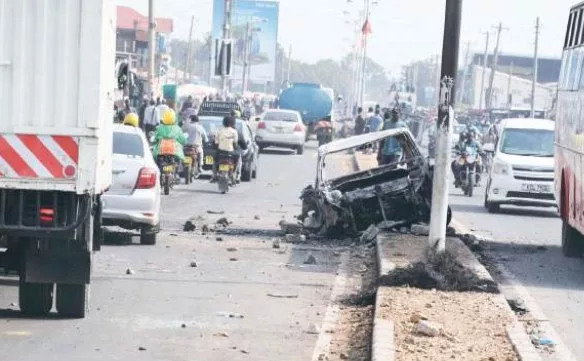
In engagements outside Luoland, their rallies have been well organised and peaceful. But it is hell on earth the moment they hold any political event in Nyanza. The latest and ugliest was in Homa Bay on Sunday, August 16.
Before the dust settles in the battle for the heart of Raila’s party, lives will have been lost, goonism shall have been entrenched and Nyanza’s development trajectory will have been derailed. Luoland appears to have reverted to the political violence of the ’90s.