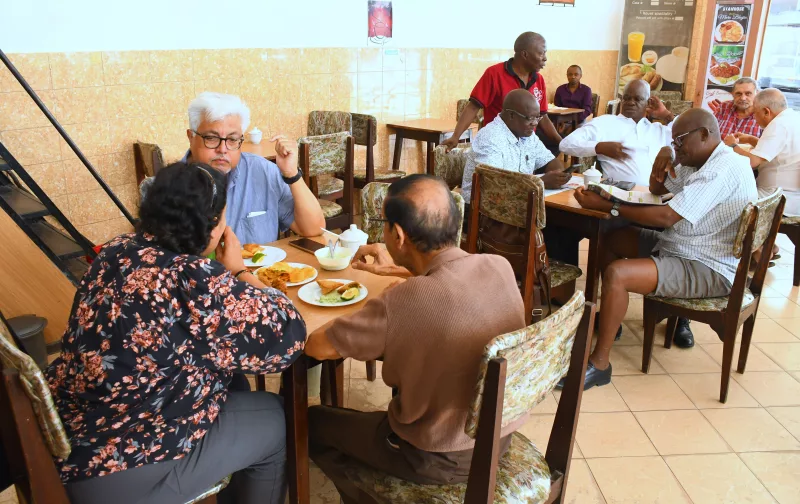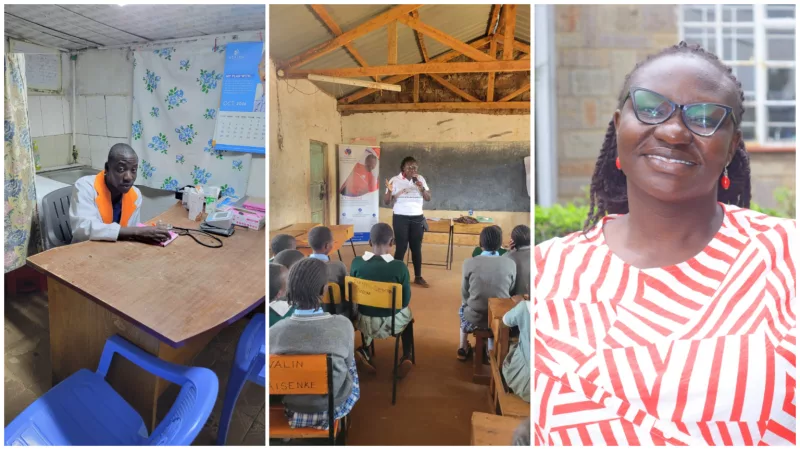
The room was filled with applause as survivors and their families cut cake, collected trophies and certificates inscribed ‘Very Brave Person’ and celebrated victories that took years to achieve.
For many of them, justice had taken longer than it should have. Cases had stalled when files went missing, suspects disappeared or judges were transferred. Some families had spent years moving between police stations and courtrooms before hearing the guilty verdict against men who had forever changed their lives.
On this day, eight of the survivors and their families were celebrating more than convictions. They were celebrating survival, healing and a chance to begin rebuilding their lives.
The family of the ninth victim was remembering the courage of a victim who could not be in the room today after losing her life after bravely fighting repeated cycles of Sexual and Gender Based Violence from the age of 13 until 17, when she totally lost the battle.
KEEPING HEAD ABOVE WATER
For Aketch Adhiambo* (not her real name), her journey to rebuilding her life can be traced through something she had always loved: plaiting hair.
She later enrolled in a course to learn hairdressing and salon work in Mombasa, building on something she had already started doing while in college.
“I used to plait, but I would plait children and I would get Sh300 per day,” she says. “Sometimes you will be idle but sometimes, you will get customers.”
Today, that skill has become part of the life she is rebuilding after the ordeal that left her pregnant while she was still in school.
It began when she and other children started fetching water from a neighbour’s home.
“We could go there almost every day and slowly by slowly, the caretaker there started getting closer to me,” she says.
The man repeatedly asked her to be in a relationship with him, but she rejected him because she was still in school.
“But he did not relent. He said it was possible to have intimacy even when going to school,” she says.
One day, as she went to fetch water, she says, the man sexually abused her, leaving her pregnant. She returned home distressed and began hiding the pregnancy.
“When my mother learnt about it she started telling me to abort the baby, but I couldn’t. How could I?” she says.
Instead, she told her mother that she had terminated the pregnancy, while secretly nursing her bulging tummy.
When her father eventually discovered that she was pregnant, the situation at home changed.
“All hell broke loose. You could eat but you felt that the food was stuck in your throat. There was tension in the house. My father started asking himself why he had been paying fees for someone like me,” she says.
Her father took her to the police station and demanded that she speak about what had happened. As her pregnancy grew, she says she wore oversized clothes to conceal it.
But when the man accused of making her pregnant was brought to the police station, she says he denied knowing her, let alone having had sex with her.
“It hurt me deeply,” she says. The case began in 2021 at Kiembeni Police Station before proceeding to Shanzu.
For her family, pursuing justice became another difficult journey, with her father saying that one of the biggest challenges was repeatedly finding that the case file was missing.
“Every time we go to court, the file goes missing,” he says.
The family endured repeated court adjournments, missing court files and the transfer of investigating officers, often taking it upon themselves to track witnesses and ensure hearings proceeded.
“We looked for witnesses, doctors and analysts and we gave them the dates and ensured that they reached the court,” her father says.
Eventually, the prosecution managed to secure six witnesses. After years of waiting, the accused was convicted and sentenced to 20 years in 2025.
Aketch’s father testified it wouldn’t have been possible were it not for the support of the International Justice Mission, which came and walked with them through the years as they pursued justice.
For the family, it was a victory. But the conviction did not erase what the ordeal had done to Aketch.
She says she reached a point where the experience had affected how she saw herself.
“I reached a place where I started denouncing myself,” she says, adding that the counselling she got from International Justice Mission counsellors played a big role.
Today, Aketch is pursuing her interest in hairdressing and working towards building a future through her skills. Her father says he is equally pleased that his daughter is now benefiting from the outcome of the case and has a future beyond the ordeal.
“She survived the wait. Now she is dreaming again,” he says.
NURSING OLD WOUNDS
Like Aketch, Naomi Wanjiku’s* path to justice was measured not in months but in years. Her life today looks very different from the years she spent waiting for justice. She is now focused on school, where she says she is performing well in the sciences, and has already begun thinking about the career she wants to pursue.
“I am okay now because I am with my sister. She is also okay,” Wanjiku says. She says she knew the perpetrator because they were living in the same place, but she has since moved on from the experience and is concentrating on the future she wants for herself.
“I feel good that I am performing very well in school,” she says, smiling. “I want to be a nurse, not a doctor, because I am performing sciences with flying colours.”
For Wanjiku, nursing is not simply a career choice. “Nurses are caring people, especially for pregnant women,” she says.
But even as she speaks excitedly about school and her ambitions, there is a part of her life that remains unresolved.
Wanjiku has not seen her mother for six years, and the absence continues to weigh on her, particularly because her younger sister keeps asking about their mother.
Her case took five years and six months to conclude and involved two accused persons: her mother and another man. The man was eventually convicted and sentenced to 20 years in prison, while her mother was released.
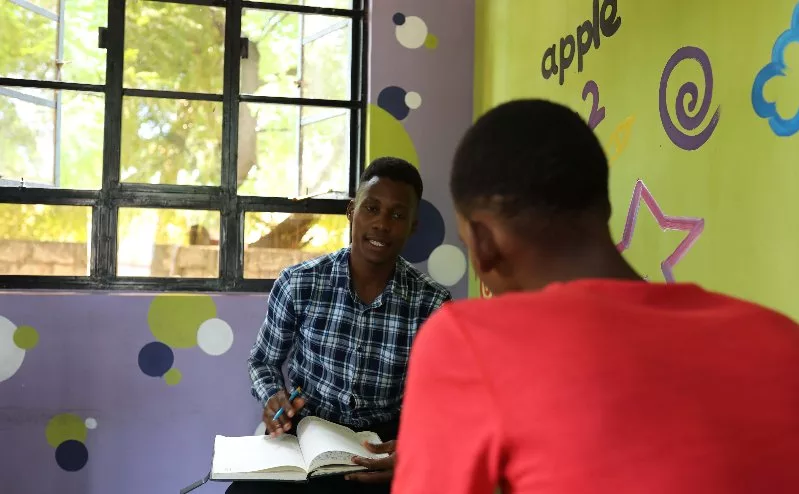
Counsellor and psychologist Leah Njuguna, who has walked with Wanjiku through the process, says she first found her in a children's home and continued supporting her after learning what she had gone through.
“Her mother would send Wanjiku to the neighbour's house under the pretence of taking food to him,” Njuguna, who supports survivors with counselling, says.
She says that, after some time, Wanjiku's mother began asking her to spend the night at the neighbour's house, giving the excuse that there was no space for her to sleep at home.
“It was at this moment that the man defiled this child, and later on we learnt that her mother had agreed that the neighbour was going to pay their rent,” she says.
“Her testimony was good evidence but it was difficult that the family was apart and [she was] part and parcel of what happened to her. She was very bitter with her mother.”
The long wait for justice was complicated by several setbacks. The judge handling the case left and another judge had to take over, while one of the accused persons also fled, causing the case to stall.
After five years and six months, the case finally concluded with a conviction and a 20-year prison sentence. But the victory was bittersweet. The perpetrator had absconded while out on bail and was not present in court when the sentence was handed down.
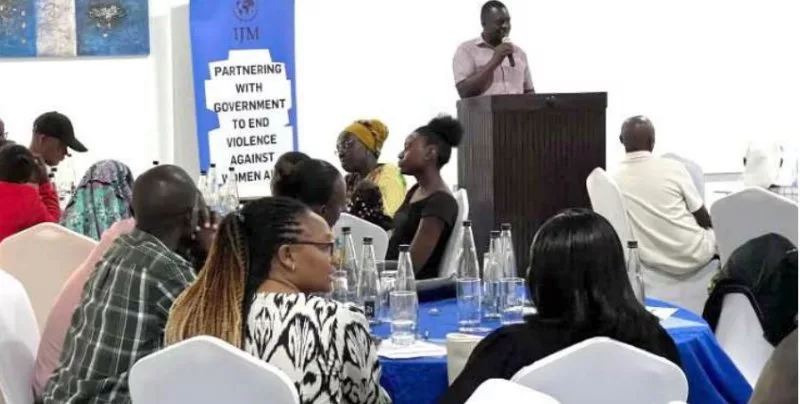
“One of the biggest challenges in these cases is that some suspects abscond after being released on bail,” says Aggrey Juma, IJM's manager for Violence Against Women and Children.
“Of the nine convictions we are celebrating today, two involve convicted offenders who remain at large despite being sentenced by the courts.”
For Njuguna, the conviction was important but so was witnessing Wanjiku's transformation over the years. The conviction represented justice secured, but Wanjiku's return to school and her determination to become a nurse offer another kind of victory: the chance to build a life that is not defined solely by what happened to her.
HELPING HAND
For Mwakali Isa*, the greatest challenge was not only securing justice but learning how to heal while the case was still unfolding. By the time the case was over, she was trying to put her life back together, returning to school while still dealing with the emotional effects of what had happened to her.
“She was not in a good state. Every time she would tear up,” says her mother Mwakalo*, who walked alongside her through the ordeal.
The case began in November 2023 and ended in 2025, when the perpetrator was convicted and sentenced to 17 years in prison. But the conviction has not brought complete closure. The man is no longer in custody.
“There is a warrant of arrest. We are looking for him,” Mwakalo says.
The accused had, throughout the proceedings, projected confidence that he would win and appeared determined to prevent the case from moving forward.
For Mwakali and those who walked with her, the conviction was, therefore, a significant victory, but recovery has continued beyond the courtroom.
“I am happy that her schooling is going well,” Mwakalo says.
Those working directly with SGBV cases acknowledged the need for survivors to have someone walk with them during the legal journey.
Officer Christine Maureen, a police officer who works at the Gender Desk at Diani police station in Kwale county, says survivors need support from the moment they report their cases.
“When you see someone defiled, let's hold their hands and talk to one another so that they get help,” she says.
Maureen says survivors feel unsupported when the accused is later released.
“Sometimes you have a survivor and accused, then after two days, he is released, and nobody helps you. It is us officers to help you, so let's work together to end these cases,” she says.
The scale of violence against children remains significant. Data in the 2026 Economic Survey shows that 145,345 cases of violence against children were reported in 2025, up from 129,610 the previous year. Girls accounted for 73,069 of the cases, compared with 72,276 involving boys.
Against this backdrop, Juma from IJM says concerns about survivors’ experiences when reporting cases have also highlighted the need for greater privacy. In response, gender desks have been set up at police stations in Bamburi, Changamwe and Bambatha, areas where SGBV cases are prevalent.
“The gender offices we have supported to set up have a counselling room and survivors can come in and report a case in privacy,” Juma says.
Kenya's justice sector is seeking to transform how SGBV cases are handled.
The National Council on the Administration of Justice recently launched new National Standard Operating Procedures for Court Users Committees, aimed at creating a more coordinated, predictable and survivor-centred response to SGBV.
The SOPs acknowledge that "weak coordination, response and partnership have led to delayed justice in SGBV cases" and seek to promote prompt, dignified and compassionate access to justice.
According to SOPs, justice-sector agencies are required to coordinate investigations, prosecution and case management, including mechanisms for sharing information within 24 hours whenever requested by an agency investigating a suspected SGBV offence.
The framework also places survivors at the centre of the process, calling for the prompt conclusion of cases while safeguarding their well-being and preventing re-traumatisation.
Juma says IJM supported the development of the SOPs after identifying systemic gaps that were slowing down the progress of cases it was supporting through the courts.
"We initially supported Kilifi and Kwale counties to develop their SOPs, and the Judiciary saw the potential to scale this nationally," he says, adding that they can help expedite cases.
“Among the cases whose victories we are celebrating today, proceedings took an average of five years. As you can see, some of these survivors were defiled at the age of 13, but by the time we are celebrating these victories, they are now 18.”