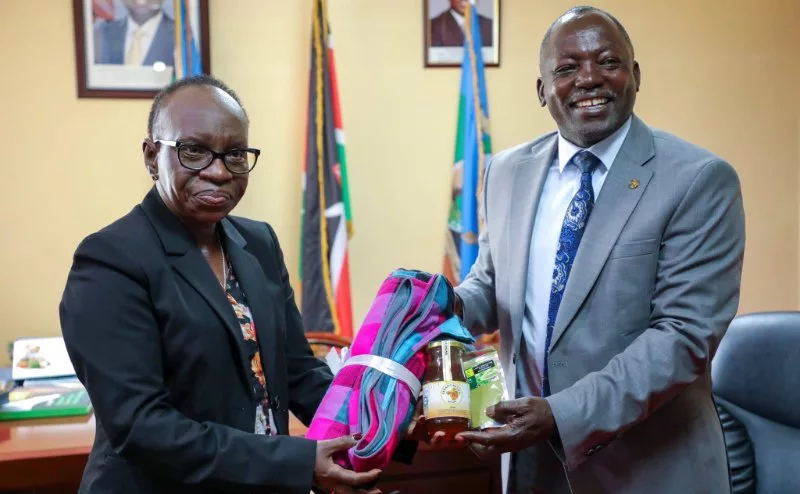
Auditor General Nancy Gathungu has cautioned governors against leaving behind pending bills, warning that unpaid debts could hurt county economies and expose outgoing leaders to criticism from their successors.
She said county governments should settle liabilities incurred during their tenure instead of leaving incoming administrations to shoulder obligations arising from goods and services already delivered.
“We have seen a perennial behaviour of leadership coming in and failing to honour obligations of the county," Gathungu said.
"It is fiscal indiscipline when services have been provided, goods consumed and then failing to pay because the liabilities were incurred by the previous regime.”
Speaking in Nanyuki, Laikipia county, during a stakeholders’ engagement, the Auditor General said failure to pay suppliers and contractors was hurting businesses and undermining economic growth in counties.
She said governors should account for debts incurred during their tenure, as well as those inherited from previous administrations.
Gathungu warned that governors who leave unpaid obligations could be forced to answer for them after leaving office, as incoming administrations often blame their predecessors for inherited debts.
“As you exit, check what liabilities you have, budget for them and make sure there is a provision for clearing the liabilities. I do not believe any governor wants to be called back after their exit and make negative headlines because the next governor will be passing all the blame on you,” she said.
County governments owed suppliers, contractors and other service providers Sh176.9 billion as of June 2025.
The warning comes as counties prepare for another transition ahead of the 2027 General Election, with Gathungu urging governors to ensure liabilities are properly accounted for and settled.
Laikipia Governor Joshua Irungu said his administration was committed to clearing all pending bills accumulated over the five-year period and had made provisions for them in the 2026-27 financial year budget.
Irungu said Laikipia had not been accumulating new pending bills under his administration, attributing some of the county’s outstanding obligations to inadequate own-source revenue collections.
He said the county had prioritised settling inherited debts while ensuring new obligations were matched with available revenue to prevent them from accumulating.
The governor recently faced criticism over claims that the county owes contractors and suppliers more than Sh1.3 billion for work and services undertaken during the tenure of his predecessor, Ndiritu Muriithi.
Irungu said the county had been working to clear the inherited liabilities and expressed confidence that the measures being implemented would enable Laikipia to end the current financial year without accumulating additional debts.
Gathungu also put the Laikipia county assembly on the spot over a backlog of audit reports, saying about 109 audit reports were in arrears.
She urged the assembly to work with the Office of the Auditor General to develop a plan to clear the backlog before the election.
“We can assist them in planning together with my technical team, their clerks and the staff of the county executive. We are also looking at other entities such as water companies, municipalities, towns and hospitals,” she said.
Gathungu said audit backlogs undermine oversight and accountability, urging county assemblies to consider audit reports and make recommendations within the remaining period before the elections.
She also urged the Senate to focus on cross-cutting challenges affecting devolution, including gaps in legislation, funding and operations, while allowing county assemblies to deal with operational issues at the county level.
The Auditor General was in Laikipia as part of a tour of regional offices following the decentralisation of audit services.
The Office of the Auditor General now has 16 regional offices, with Laikipia serving as one of the regional bases.
Gathungu said the decentralisation would improve the delivery of audit services and enable staff to gain wider experience by working across different counties.
She also said the Office of the Auditor General had launched an academy in Nairobi and planned to establish satellite training campuses, with Rumuruti expected to become the second outside the headquarters after Embu.
Gathungu further noted that weaknesses in documentation, including failure by public entities to prepare quarterly financial and budget reports and poor handovers during staff changes, continued to affect the audit process.
She said the Office of the Auditor General was working with the National Treasury and the Public Sector Accounting Standards Board to strengthen financial reporting as the public sector implements accrual accounting.
Instant analysis
Gathungu’s warning puts county pending bills at the centre of the accountability debate ahead of the election. With counties owing suppliers and contractors Sh176.9 billion, the debt burden threatens businesses and weakens local economies while raising questions about fiscal discipline. Her warning also highlights the political consequences of leaving liabilities unresolved, as incoming governors often blame predecessors for inherited debts. Laikipia illustrates the challenge, with the county still clearing more than Sh1.3 billion in obligations linked to the previous administration. The audit backlog further exposes weaknesses in oversight and financial accountability.