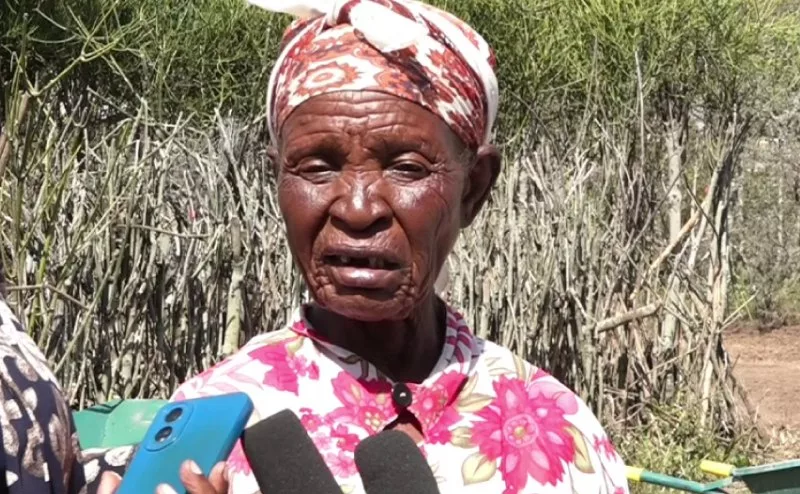
For 71-year-old Napeiyo Ngilekoi, a new house means more than a roof over her head—it is a reprieve from years of hardship living in a leaking structure with three children under her care.
The widow from Muramati village in Segera ward, Laikipia county, has struggled to provide for the socially orphaned children.
At times, she has sold her few goats to pay their school fees while relying on neighbours for food.
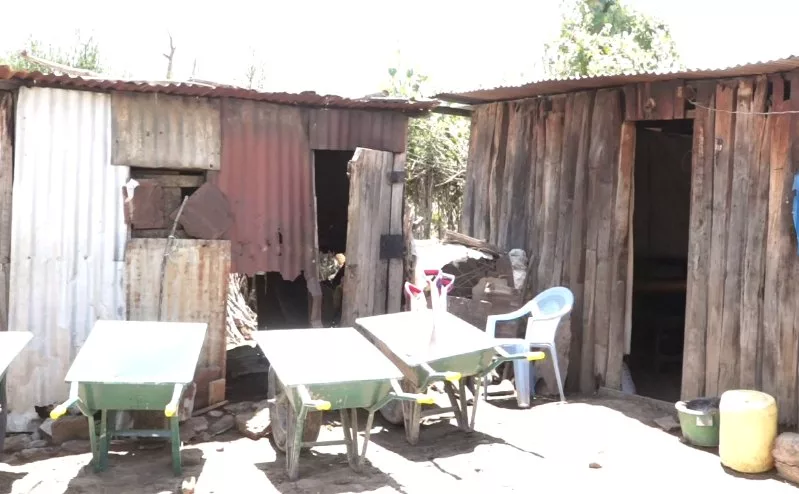
Her old house had no toilet, bathroom or kitchen, forcing the family to endure harsh living conditions as she battled to make ends meet.
“I am very happy for a decent home. We have lived in abject poverty and the roof has been leaking. These children were left here by their mother and I am the only one who looks after them. We struggle a lot,” Ngilekoi said.
Ngilekoi is the first beneficiary of a new housing initiative that brings together affordable construction, youth empowerment and support for vulnerable families in the area.
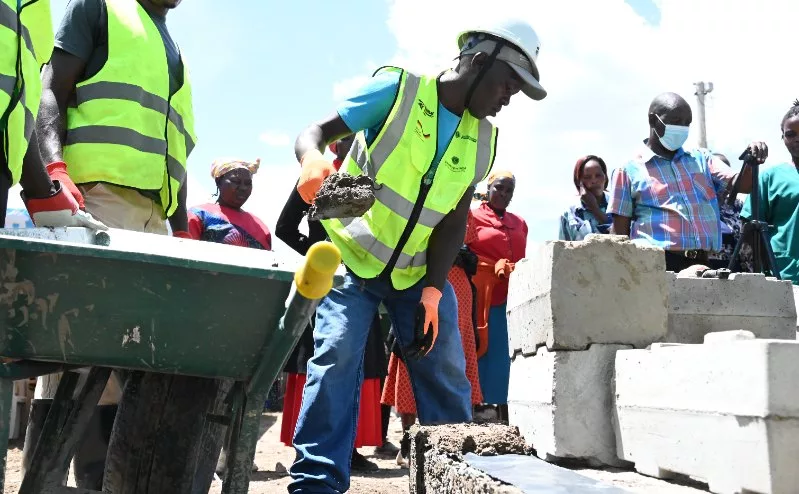
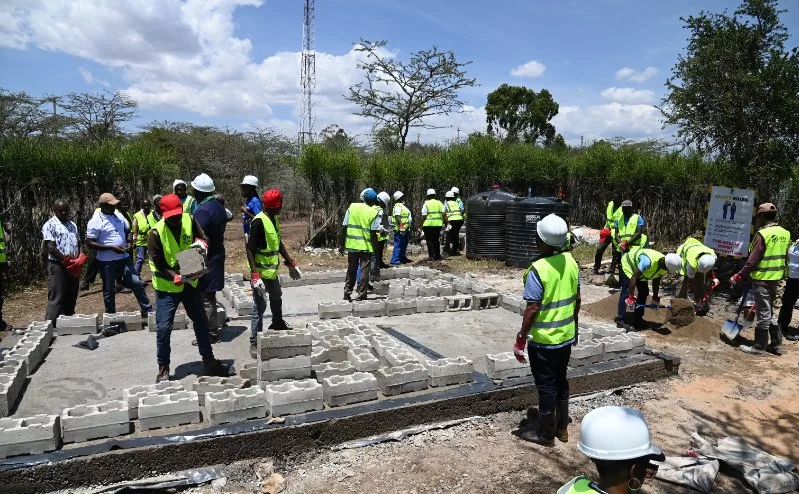
The project, being implemented by Habitat for Humanity Kenya, is using Interlocking Hollow Blocks (IHB), a building technology that uses locally available materials while reducing construction costs.
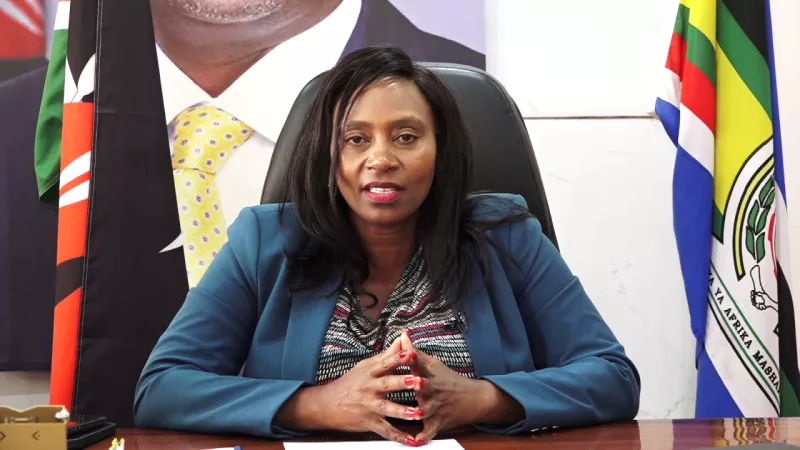
Habitat for Humanity Kenya chairperson Rose Sang said the organisation was seeking to ensure vulnerable families could access decent homes while also improving their access to basic services.
“Every child deserves an opportunity to run, to study, and what that does for us is that it equalises us through the use of housing,” Sang said.
The organisation is currently putting up seven additional houses for vulnerable families in Muramati.
The youths trained to make the blocks are supplying the materials for the construction.
Sang said about 150,000 euros (Sh22.6 million) had been committed to the initiative, including the development of a borehole that will serve the wider community.
She said Habitat was targeting about 50 houses while also promoting incremental housing, where existing homes are gradually improved to meet decent housing standards.
The initiative has also opened a new avenue for employment for 27 youths from the area, most of them young women aged below 30.
The group was trained by Habitat for Humanity Kenya in the production of IHBs and is now manufacturing blocks for the ongoing construction.
Mary Waithera, a youthful contractor and member of the group, said the training had given them practical skills that could eventually become a source of income.
“We have learnt how to make the hollow blocks, and in future we are hoping to get markets outside the area, market our blocks and earn from them,” Waithera said.
The technology uses quarry dust, sand and small amounts of cement to produce interlocking blocks, offering an alternative to conventional stone construction.
According to the project proponents, the method can reduce construction costs by up to 30 per cent while producing houses that are climate resilient, fire resistant and have better acoustic insulation.
Waithera said women had embraced the technology, with female members forming the majority of the group.
“As a group, we do something that will benefit us. There are 27 of us and the women are more than the men, and we are good at it,” she said.
The youths are now producing about 30,000 blocks to be used in constructing the seven houses identified for vulnerable families in the locality.
Habitat for Humanity Kenya National director Dr Eileen Mokaya said the organisation had worked in more than 18 counties since its establishment, supporting vulnerable families with housing and water projects.
She said decent housing must go hand in hand with access to essential services, particularly clean water and sanitation.
“Our homes are never complete without sanitation facilities, and our homes are never complete unless the homes also have access to clean safe water,” Mokaya said.
The borehole being developed in Muramati is expected to benefit the wider community, addressing a long-standing challenge of access to clean and safe water.
Laikipia is the second county after Tana River to adopt the IHB technology, which has been used in parts of Asia, Latin America and South Africa.
Unlike Interlocking Stabilised Soil Blocks, which mainly use soil, IHBs are produced using quarry dust, sand and cement, making the technology suitable for areas with access to these materials.
The project comes against the backdrop of an estimated annual housing deficit of 200,000 units in Kenya, highlighting the need for cheaper construction methods.
INSTANT ANALYSIS
The widow from Muramati village in Segera ward, Laikipia county, has struggled to provide for the socially orphaned children.
At times, she has sold her few goats to pay their school fees while relying on neighbours for food. The project, being implemented by Habitat for Humanity Kenya, is using Interlocking Hollow Blocks (IHB), a building technology that uses locally available materials while reducing construction costs.