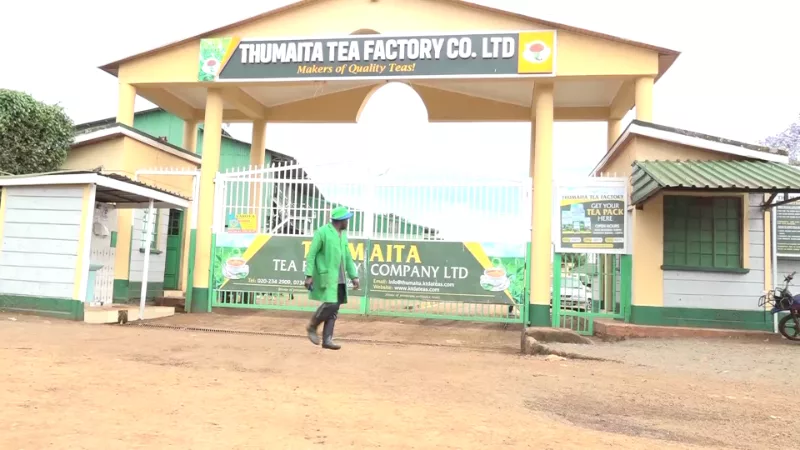
Farmers supplying Thumaita Tea Factory in Kirinyaga are demanding a Sh117 million refund from the government, blaming delayed fertiliser subsidy payments for reduced bonuses and mounting financial pressure.
The farmers said the government had failed to remit money owed under the fertiliser subsidy programme, forcing the factory to use funds meant for growers to offset the outstanding debt.
Their concerns come amid a growing national fertiliser subsidy bill, with the government owing the Kenya Tea Development Agency (KTDA) approximately Sh7 billion, according to figures before the Senate.
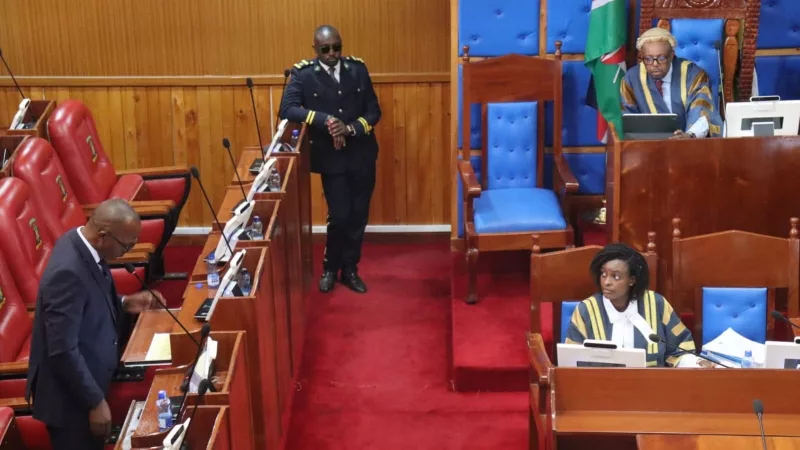
Senate Majority leader Aaron Cheruiyot said the delayed reimbursements had left KTDA carrying the financial burden of supplying fertiliser to smallholder tea farmers at subsidised prices.
Thumaita Tea Factory chairman Richard Magu said the factory’s unpaid fertiliser subsidy-related debt had accumulated to about Sh171 million, with Sh117 million already paid using funds that would otherwise have supported farmers.
“We are asking the government to refund the money deducted because it belongs to the farmers. The money would help ease their financial burden and enable them to meet their household needs,” Magu said.
He spoke during a meeting with buying centre representatives on Friday.
The gathering was convened to review the factory’s bonus calculations and give farmers a clearer understanding of how their earnings had been determined.
He said growers were concerned that the government had not honoured its commitment to reimburse the cost of fertiliser supplied at subsidised rates, despite assurances that the funds would be channelled through KTDA.
He warned that the outstanding amount continued to grow, with additional fertiliser supplied during the current financial year expected to increase the liability.
The subsidy programme requires KTDA to facilitate fertiliser supplies to smallholder tea farmers, with the government expected to reimburse the difference arising from the subsidised prices.
However, the delays have placed additional pressure on factories, some of which have had to meet the costs from their own resources or funds intended for growers.
Magu raised concerns over some Sh40 million that the factory reportedly paid after money previously reflected on farmers’ payslips as a government payment was not remitted as expected.

He explained that farmers had initially been informed that the money would be channelled through KTDA and distributed equitably among tea growers across the country, with individual farmers expected to receive between Sh3,000 and Sh6,000.
However, he expressed concern that Thumaita had ended up shouldering the payment despite the money not having been available in its accounts.
“The money was not ours, yet the factory had to pay it. We are appealing to the government to return the funds so that they can be used to support farmers,” he noted.
Magu said the factory had incurred additional costs in meeting the payment, further straining its finances as it sought to improve operations and deliver better returns to growers.
Farmer Jamleck Mugo warned that the delayed reimbursement had affected households that depend on tea earnings to pay school fees, meet daily expenses and repay loans.
He noted that some farmers were facing pressure from banks and other lenders after receiving lower earnings than they had anticipated.
Mugo argued that tea growers deserved the same government support extended to farmers producing other agricultural commodities, including maize and rice, through subsidised farm inputs.
“We have suffered in our homes, and some farmers are being pursued by banks because they cannot repay their loans. We want the government to settle this debt so that farmers can get their money,” Mugo said.
He appealed to the government to expedite the refund, saying the funds would help growers prepare for the January school term and meet other family obligations.
The farmers also called for the delivery of promised tea-processing equipment, saying modern machinery would improve the handling of green leaf, enhance quality and strengthen their competitiveness in the market.
In September, the government announced a Sh10 billion allocation for the tea sector, including support for fertiliser subsidies and the modernisation of smallholder tea factories.
Magu welcomed the recent delivery of a cut-tear-curl (CTC) machine and a tea dryer valued at Sh28.7 million at the factory, which he attributed to support from Agriculture Cabinet Secretary Mutahi Kagwe.
However, he said the factory needed additional equipment to replace ageing machinery and improve the quality of processed tea.
He noted that the 71 tea factories under KTDA competed for buyers in a market where prices were influenced by the quality of the tea offered, making modernisation essential to improving farmers’ earnings.