Junior schools in Murang’a county have received 257 integrated smart boards under a government-backed programme.
The initiative is aimed at expanding digital learning and improving classroom instruction.
The devices are expected to help teachers deliver lessons using digital content, enhance learner participation and strengthen the integration of technology into teaching.
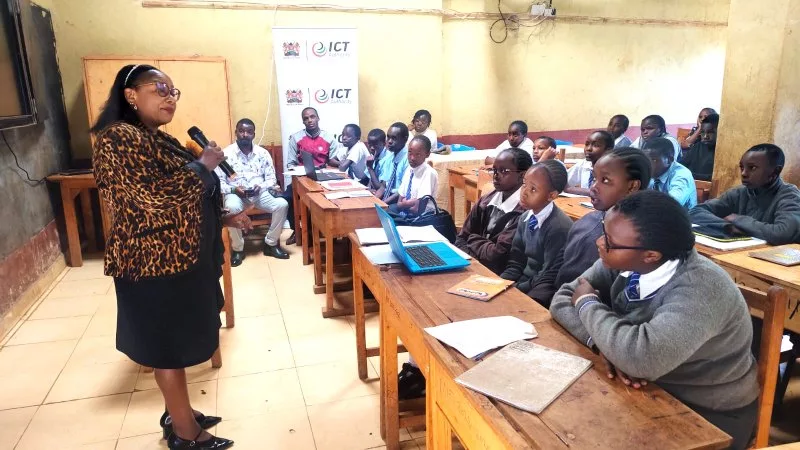
The programme was launched at Mumbi Primary and Junior School in Kahuro, which has been selected as a champion institution to demonstrate the use of technology in education.
Ministry of Energy Director of ICT Lynn Nyongesa noted that the initiative would improve access to educational information, promote collaboration among schools and enhance learning outcomes.
“We are confident that going forward, we will have this programme taking root and being showcased in all the other subcounties,” Nyongesa said.
She explained that the initiative, sponsored by the World Bank in collaboration with the Ministry of ICT and the ICT Authority, formed part of the government's broader digital transformation agenda aimed at ensuring learners were not left behind.
Nyongesa said three teachers at Mumbi Primary and Junior School and other participating institutions had been trained to support the programme, including a trainer of trainers expected to guide implementation and ensure its sustainability.
The rollout comes as the government expands digital learning infrastructure in public junior schools through the Kenya Digital Economy Acceleration Project (KDEAP).
In June 2026, the government began distributing 10,382 laptops and 10,382 interactive smart boards to 10,382 public junior schools as part of an earlier phase of the programme.
The initiative targeted wider adoption of technology in teaching, with the government indicating that a subsequent phase would extend the distribution to the remaining schools.
More than 21,000 junior schools are targeted in the second phase of the programme launched this month.
Kahuro Subcounty Curriculum Support Officer Patrick Ndisha, who represented the Subcounty Director of the Teachers Service Commission (TSC), noted that about 153 teachers had undergone digital learning training in June.
He said the distribution of smart boards and laptops would enable teachers to apply the skills acquired during the training and incorporate digital content into classroom instruction.
However, Ndisha warned that shortages of digital equipment remained a challenge, urging the government to provide additional devices to enable more teachers and learners to benefit.
“Of course, there are challenges, because we do not have enough gadgets in the schools. We have already received some, but we still need more,” he said.
The rollout also comes amid concerns over inadequate infrastructure and learning resources in junior schools, with senators raising questions about the availability of laboratories, libraries, ICT hubs and science equipment needed to support the Competency-Based Education curriculum earlier in the year.
The concerns highlight the need to complement digital learning investments with adequate physical facilities and teaching resources to ensure learners can access the curriculum effectively.
Mumbi Primary and Junior School headteacher Monica Ngure welcomed the initiative, noting that the equipment would improve lesson delivery and give learners greater access to interactive educational content.
She explained that the school had previously received a laptop and a projector and had Wi-Fi connectivity to support the use of the newly installed smart board.
Ngure added that teachers had undergone training and were prepared to integrate the technology into their daily lessons.
However, she pointed out that the school's growing enrolment and limited space would make it difficult to extend the benefits of the equipment to all classes.
“In fact, we could just say it will help us for Grade 9, because the others cannot fit where we have mounted it,” she noted.
The headteacher appealed to the government to provide additional equipment in subsequent phases, saying more devices would allow learners across different grades to benefit from technology-supported instruction.
She also thanked the government for selecting the institution as a champion school, expressing optimism that the investment would encourage teachers and learners to embrace digital learning.
The distribution of the smart boards marks another step towards expanding technology-based instruction in Murang’a junior schools.