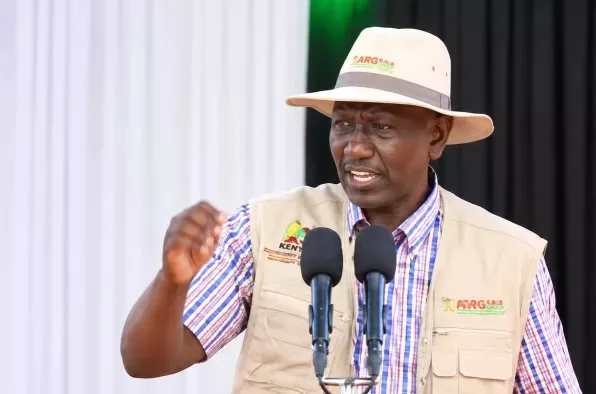
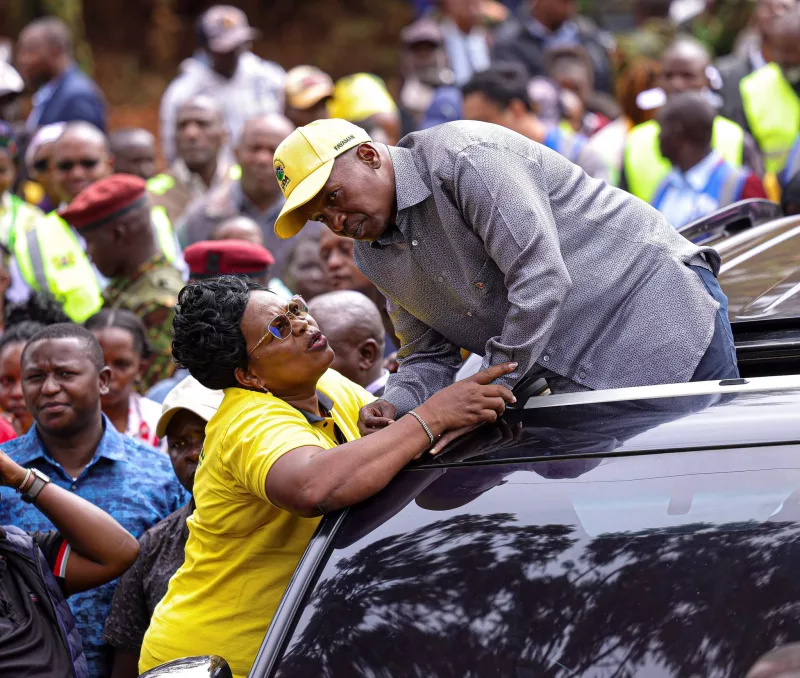
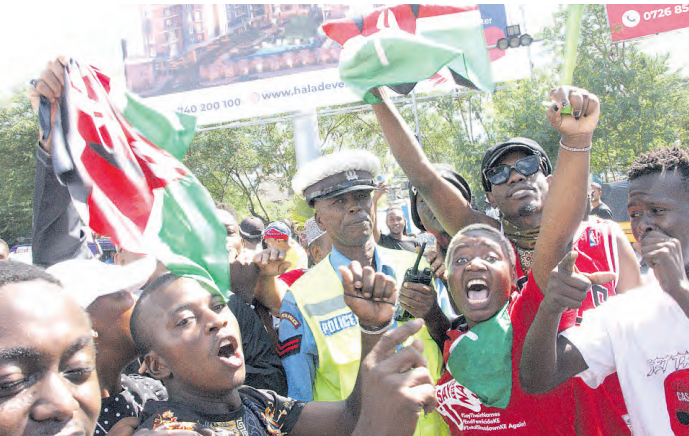
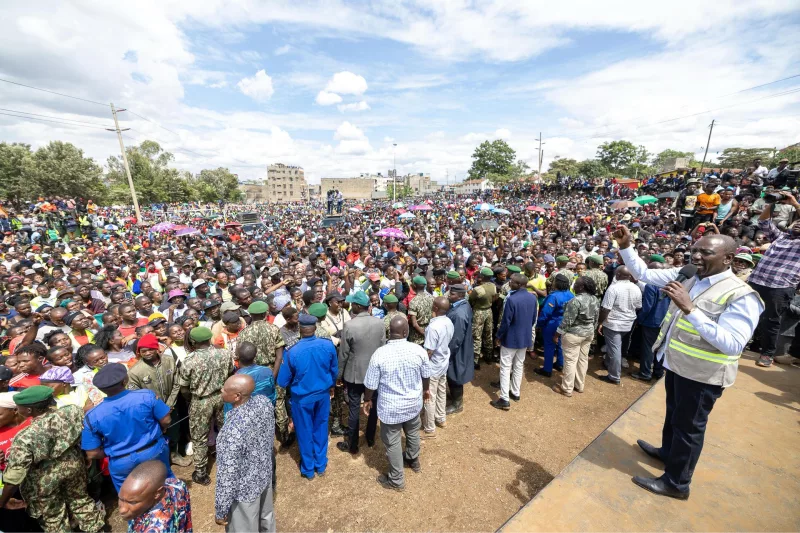
 President William Ruto addresses Nairobi residents at a past event.
 Kenya has entered yet another election season. Across the country, familiar political rhythms are beginning to unfold.
New political parties are being unveiled with elaborate ceremonies. Dormant parties are being revitalised and rebranded.
Political coalitions are taking shape while others crumble under the weight of competing ambitions. New political faces are emerging to challenge established players. Campaign slogans are being coined with remarkable creativity, each promising hope, renewal, or transformation.
Behind the scenes, campaign financiers are quietly assembling the enormous resources needed to sustain the long road to August 2027.
Meanwhile, political strategists are once again immersed in the arithmetic of ethnicity, calculating voting blocs, regional alliances and demographic advantages.
Yet amid all this political activity, one fundamental question remains conspicuously absent from our national conversation: Where is the place of knowledge?
Kenya is preparing for another election as though leadership is merely a contest of numbers, money, slogans and political alliances.
We are investing enormous energy in who is joining whom, which coalition is strongest, who controls which region and which slogan resonates most effectively with the electorate. These conversations dominate our media, our social gatherings, and increasingly our social media platforms.
But they leave untouched the single most important determinant of successful leadership and national transformation: knowledge.
Knowledge is the invisible infrastructure upon which every successful nation is built. It is knowledge that transforms natural resources into economic prosperity.
It is knowledge that enables governments to design sound policies, manage public finances prudently, strengthen institutions, deliver quality healthcare, improve education, modernise agricultureand create sustainable employment opportunities.
Knowledge is not merely another campaign issue; it is the foundation upon which every other campaign promise either succeeds or fails.
For over six decades, our politics has largely been organised around personalities rather than ideas, ethnicity rather than evidence, mobilisation rather than competence and power rather than knowledge. Every election cycle introduces new political formations, yet the conversations remain remarkably similar.
We debate who should govern far more vigorously than we debate how they intend to govern. We interrogate political loyalties but rarely intellectual preparedness.
We reward charisma more generously than competence. We celebrate political strategy while neglecting policy substance.
Perhaps this explains why many of the challenges confronting Kenya today have survived multiple governments, constitutional changes, and electoral transitions.
These are not problems that can be solved through larger political rallies or more expensive campaigns. They cannot be resolved by catchy slogans or carefully negotiated ethnic coalitions.
They require thoughtful leadership grounded in knowledge, evidence, research, and a willingness to learn continuously. Yet our politics rarely rewards these qualities.
Leadership in the 21st century has become extraordinarily complex. Today's leaders must understand global economics, climate change, artificial intelligence, cybersecurity, digital governance, demographic transitions, geopolitical uncertainty, public health and rapidly changing labour markets.
Governing a modern state requires far more than political instincts. It demands continuous learning, critical thinking, evidence-based decision-making, and the humility to seek expertise where necessary.
Knowledge is no longer optional. It is the currency of effective governnce.
The countries that consistently outperform others have understood this simple truth. They invest heavily in education, research, innovation, science and technology.
They cultivate institutions where evidence informs policy and where expertise is respected rather than viewed with suspicion. Their political systems increasingly recognise that sustainable development cannot be achieved through rhetoric alone.
Kenya possesses enormous intellectual capital. Our universities produce accomplished scholars. Our research institutions generate valuable knowledge. Our professionals excel across the globe in medicine, engineering, law, economics, technology and academia.
Yet too often, this reservoir of expertise remains disconnected from political leadership and public policy. Decisions are frequently made first, with experts invited later merely to justify them.
As the country approaches the 2027 general election, perhaps it is time to redefine what constitutes political preparedness.
The most important question should not simply be whether a candidate can mobilise crowds or negotiate coalitions. It should be whether they possess the intellectual capacity to navigate Kenya through an increasingly complex future.
Political parties should compete not only in recruiting influential politicians but also in assembling the strongest teams of economists, educators, scientists, sociologists, constitutional scholars, healthcare experts, environmental specialists and technology innovators.
Their manifestos should not merely promise transformation; they should demonstrate a sophisticated understanding of how transformation will actually occur.
Similarly, citizens must raise the standard by which they evaluate those seeking public office. Democracy is not strengthened when voters merely count numbers.
It is strengthened when citizens interrogate ideas, demand evidence, examine records of competence and insist upon intellectual honesty. Elections should become national classrooms where policy debates receive greater attention than political theatrics.
The 2010 Constitution envisioned governance founded on accountability, participation, transparency and the rule of law.
These ideals cannot flourish in an environment where knowledge is treated as secondary to political expediency. Constitutional democracy requires informed citizens, informed institutions, and informed leadership.
The country does not merely need new political formations. It needs a new political philosophy —one that places knowledge at the centre of leadership, policy and governance.
For knowledge outlives slogans. It outlasts coalitions. It transcends personalities. It transforms institutions. It builds nations.