The 2027 election is no longer some distant event on Kenya’s political calendar. The year is upon us, and with it the familiar choreography: politicians testing alliances, parties positioning themselves, aspirants finding their voices and, soon enough, the country will be awash with promises.
But there is another constituency that ought to be preparing for 2027: the voter. Not merely to register. Not merely to know where the polling station is. Not merely to know how to mark the ballot.
The Kenyan voter needs to be politically educated.
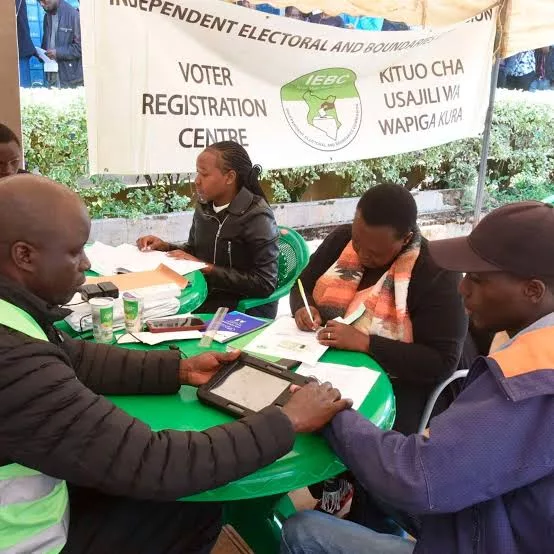
The law gives the civic education mandate to the Independent Electoral and Boundaries Commission, that is, it must tell citizens how elections work, how to register, where and when to vote and how to cast a valid ballot. The law also provides for partnerships with non-state actors in voter education.
But democracy requires more than knowing how to cast a ballot. It requires knowing what to do with it. That is where political education comes in, and that is where civil society should step forward during this election year to own the space.
Voter education prepares a citizen for the act of voting. Political education prepares the citizen for the choice they are about to make. The distinction matters.
Our campaigns, like in any other jurisdictions, are an extraordinary marketplace of promises. Candidates promise jobs, roads, cheap food, lower taxes and better services. Specifically, they are now making promises from SHA, to the housing levy, to CBC reforms, to abductions and everything in between.
They invoke ethnicity, history, grievance, personality and fear. They tell voters what they think voters want to hear. And voters are often expected to make sense of all this with little assistance beyond campaign propaganda, social media and the occasional debate.
Why should civil society leave the citizen alone in that marketplace? There are useful lessons from the United States and Britain. Their democratic systems are hardly perfect, but their civil societies have long understood that elections are not simply events at the end of campaigns.
They are opportunities to prepare citizens to exercise political power. In the United States, the League of Women Voters, for example, has spent more than a century doing precisely this. It is non-partisan, but hardly politically passive.
It conducts voter registration, candidate forums and debates, produces voter guides and provides election information through its VOTE411 platform. In 2024, the League says, more than 9.5 million people used VOTE411.
An organisation can refuse to endorse candidates while insisting that citizens ask better questions of those seeking their votes.
American civil society goes further. The National Association for the Advancement of Colored Peopleruns non-partisan voter registration and turnout campaigns, combining voter education with mobilisation.
Its work demonstrates that encouraging citizens to participate is not inherently partisan. The objective can be to get people into the democratic process without telling them how to vote.
Britain offers another useful example. The Electoral Commission works with charities, local authorities and other civil society organisations to reach voters who might otherwise be missed. These organisations have something electoral institutions often lack: trusted relationships with particular communities.
That is a useful lesson for Kenya. A youth organisation may know how to reach first-time voters. A women’s organisation may have the trust of women who rarely participate in politics.
A disability organisation may understand barriers that appear to an election official merely as statistics. A community organisation may reach citizens who will never attend an official voter education forum.
Our civil society has spent decades documenting abuses, challenging government excesses, defending constitutional freedoms and demanding accountability.
It has played the watchdog remarkably well. Perhaps it is time to teach citizens how to become watchdogs themselves.
The politically educated voter is not necessarily one who knows more political slogans. It is one who is harder to deceive. A candidate makes a promise and the voter asks: How? A politician announces a figure and the voter asks: Based on what? A candidate claims credit and the voter asks: What exactly did you do? A politician invokes ethnicity and the voter asks: What does this have to do with my child's school, my hospital, my taxes or my chances of finding work? A candidate promises something and the voter asks the deceptively simple question: Does this office even have the power to deliver it?
That is the kind of voter Kenya needs in 2027. Political education may also help address voter apathy. We routinely tell citizens that voting is their constitutional right. True. But rights become meaningful when people understand what is at stake.
Politics is not somebody else’s business. Political decisions determine the taxes we pay, the quality of public services, the cost of living, access to healthcare, education, security and economic opportunity. Political education connects the ballot to the kitchen table.