We’re officially less than one year away from the next general election which is shaping up to be one of the most profound, if not the most profound in our country’s history.
The question in everyone’s mind and what others are loudly asking is will the election will look like the euphoric 2002 polls or the less desirable varieties before and since, putting aside 2007 as we can all agree that is one version the country cannot repeat.
It is not wishful thinking to say most Kenyans are hungering for the 2002 version, marking an end to an unpopular era. President Mwai Kibaki defeated Uhuru Kenyatta in a landslide.
It would also be imprudent to think having an election that even comes close to 2002 in terms of unity within the opposition will be a walk in the park.
It will not be and in due time it will be more obvious as to why but for now, one of the most important battles being fought quietly, away from the podiums and political rallies, is the battle to register voters.
The latest numbers from the Independent Electoral and Boundaries Commission should be a wake-up call to the United Opposition. More than 2.6 million new voters were added to the register between September last year and April, including 2.345 million during the 30-day enhanced registration. The new register now stands at roughly 4.7 million voters, compared with 22.1 million in 2022.
But the important question is not simply how many Kenyans have registered. It is where they registered.
Nairobi led with about 277,000 new voters, followed by Kiambu with 129,000, Nakuru with 102,000 and Kakamega with nearly 94,000. Machakos, Bungoma, Meru, Kilifi, Turkana, Kericho and the Gusii counties also recorded substantial numbers.
There’s not enough attention being given to this critical aspect of any campaign.
The opposition has spent considerable political energy discussing who should carry its presidential banner, which parties should join the coalitionand which leader has the stronger claim to the nomination.
Those are important questions. But they are secondary to a much more basic one: how many actual voters can the opposition put into the polling booth?
Addressing this question recently, Fred Matiang’i, the Jubilee presidential candidate and former Super CS, echoed People Liberation Party leader Martha Karua’s sentiment that the United Opposition should not be presently focusing on who should be its flagbearer. Rather, he said, it should focus on laying the foundation so that whoever emerges as the flagbearer is one among equals who together will make a repeat of 2002 possible if not better.
Part of laying that foundation requires employing strategies to ensure healthy registration of new voters with a later strategy of getting those same voters to come out and vote.
This is because an election is ultimately not won by the size of a rally, the enthusiasm of a crowd or the number of political principals on a platform. It is won by registered voters who turn up and vote. It is also where the opposition’s performance deserves serious scrutiny.
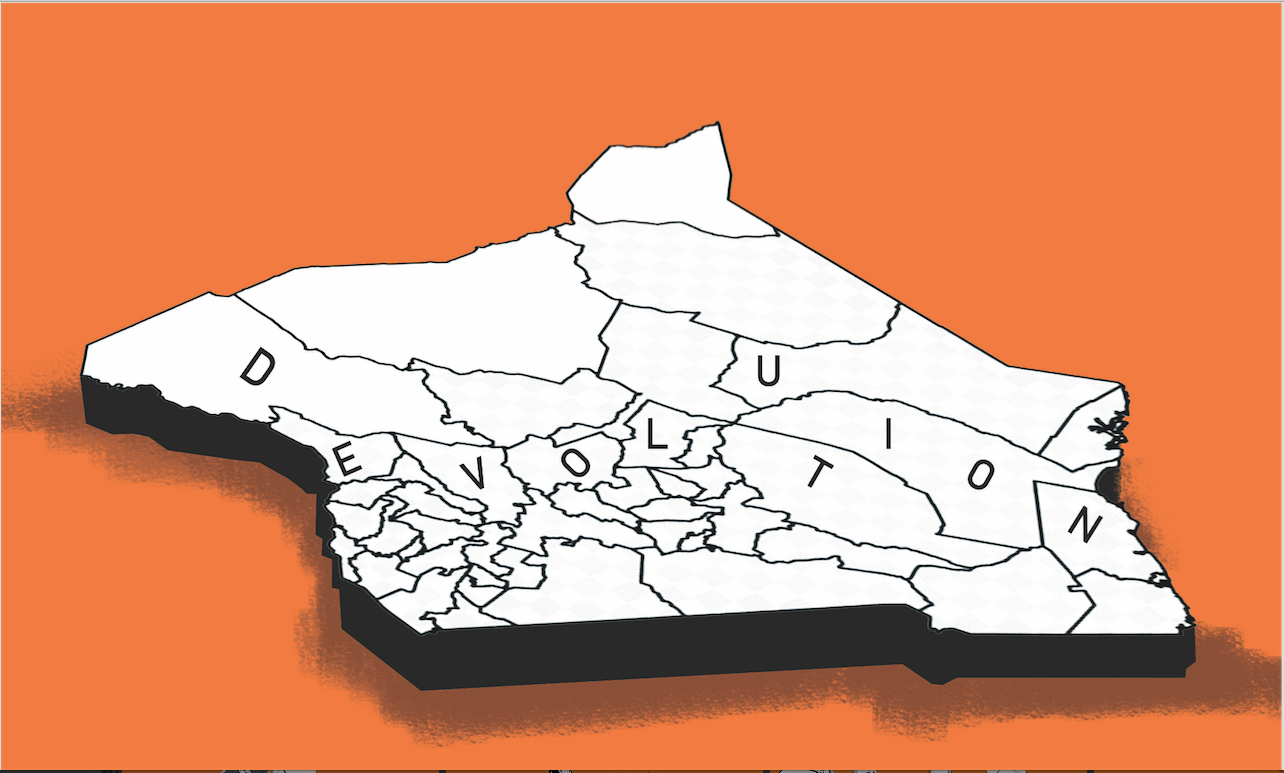
Earlier this year, the United Opposition’s geographical footprint was remarkably uneven. A review of its publicly reported political engagements found that the alliance had yet to hold joint political meetings in 28 of Kenya’s 47 counties.
Most of the Coast and Northeastern regions had received little or no coordinated opposition presence, while much of the Rift Valley, especially those areas where it’s obvious they’re up for grabs, remained largely untouched.
That is not merely a problem of political optics. It is an electoral problem.
The opposition cannot afford to campaign mainly in places where it already enjoys substantial goodwill. It must go where it is weak.
Far from divulging political strategies, it is enough to say the United Opposition needs a national voter-registration operation — not just a campaign operation. Opposition parties should be working with local leaders, youth organisations, civil society, churches, mosques and community networks to ensure that eligible citizens register.
IEBC is targeting 6.3 million new voters before the 2027 election, with another major registration window scheduled for January-February 2027. For the United Opposition, this is no time for complacency. Winning the battle of registration is what the doctor ordered.