It was a deliberate and coordinated effort by a section of the local political leadership to incite residents against the noble government initiative.
The electric fence is meant to cushion current and
future generations from the vagaries of climate change often fuelled by
unregulated human activity.
The entire Kaptagat Forest ecosystem lies within the Keiyo South, Keiyo North and Ainabkoi and Moiben constituencies in Uasin Gishu and Elgeyo Marakwet.
The ongoing fencing under the Ministry of Environment and Forestry had faced headwinds caused by a section of political leaders to stir anti-fencing sentiment for political expediency. Some residents complain about lack of access for activities that undermine conservation.
The government is building the 273-kilometre-long electric fence around the forest ecosystem to protect the critical water tower from encroachment and illegal logging and charcoal burning. The project has sparked local resistance and court battles over community access.
Sections of the fence in Elgeyo Marakwet were vandalised on the night of June 21.
The political connotation of the anti-fencing crusade is clear from the fact that the section of destroyed fence is within the boundaries of Keiyo South and Keiyo North areas.
That is where some leaders in Keiyo North have been lukewarm about the entire fencing idea, perhaps to shore up dwindling political fortunes as the country heads to a general election.
These shameful acts of incitement and betrayal need to be corrected at the ballot by election of leaders who support environmental protection as opposed to those who pursue narrow political ambitions at the altar of political survival and imaginary kingpin contests.
It is incumbent upon the electorate to make amends by electing sober and mature leaders.
It is quite unfortunate that the anti-fencing activities took place despite concerted efforts by the Kaptagat Integrated Conservation Programme (KICP) that place communities at the centre and create benefits that make stewardship sustainable.
Over the last decade, KICP has demonstrated that forest restoration improves lives and communities become the forest’s greatest custodians. What began as a concern over environmental degradation evolved into a broader vision of joint recovery of forests, water systems, livelihoods and communities.
This initiative should never be allowed to be drowned out by the politics of retrogression and self-aggrandisement.
By adopting a four-pillar model, the Kaptagat conservation programme aims to help families living within the forest ecosystem and transform conservation from an activity supported by goodwill into an investment supported by tangible benefits.
The first pillar is Pesa Mfukoni, prosperity through conservation when environmental protection creates economic activity. Pillar two Kawi Safi Nyumbani, advocates and supports communities on clean energy solutions, thus reducing reliance on forests for firewood.
Pillar Three is Maji Safi, protecting water and sustaining communities. The fourth Pillar is Mazingira Safi, focusing on restoring landscapes and thus securing the future.
The KICP journey has been about a decade of restoring landscapes, renewing possibilities and redefining stewardship. It is therefore immoral and unacceptable for any leader or leaders to undermine this initiative. It is well thought-out, detailed and about protecting water systems, strengthening livelihoods, sustaining ecosystems and ensuring future generations inherit landscapes capable of supporting life, dignity and opportunity.
The initiative, which includes fencing and some authorised access is about restoring relationships between people and landscapes and transforming environmental stewardship into a practical pathway for resilience and growth.
Kenya, like other progressive nations, continues to advance ambitious restoration commitments and strengthen environmental action through collaborative approaches that place communities at the centre of implementation. The KICP exemplifies this.
Its integrated approach reflects international best practices by connecting landscape restoration with, livelihoods, and water security clean energy transition and local ownership.
As the government continues to strengthen environmental governance and restoration initiatives, programmes such as KICP provide practical examples of how national ambitions are translated into local action.
Water interventions provide more than access. They support productivity, improve households’ well-being, reduce vulnerability and strengthen climate resilience.
Communities increasingly understand that conserving forests and protecting water are not separate responsibilities; they are one commitment.
KICP was founded on the understanding that environmental decline threatens water, livelihoods, biodiversity and future opportunities.
The response therefore must be larger than planting trees; it requires restoring relationships - relationships between people and forests, between conservation and livelihoods and between today’s decisions and tomorrow’s responsibilities.
This cannot be left to politics and politicians; it cannot be left to people who link everything, including the safety of future generations, to political survival, self-survival against the survival of generations.
It is incumbent upon communities to reject such leaders and safeguard future generations by casting their votes to remove obstructionist and unworthy leaders.
Our ambition must be simple: to leave communities better and stronger than we found them, landscapes healthier than we inherited them and ensure generations to come inherit a cleaner environment.
This cannot be
attained through the election of bad leaders who do not look beyond their tenure;
we need leaders with a vision for the future and those who look at what we will
bequeath to future generations.
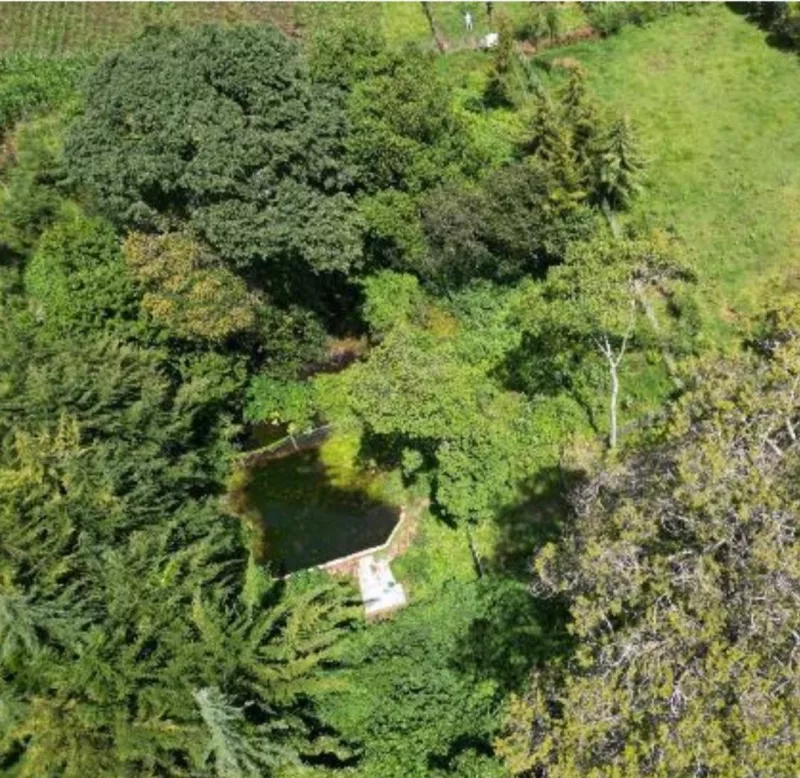
Meaningful change rarely begins with grand moments; often it begins quietly, with one restored spring, one protected forest, and one household adopting clean energy, one farmer choosing a new income path, and one community deciding that decline is not inevitable.
Lelmet is a media and communications consultant, and Chelimo is the chairman of Jiamini Disability Network