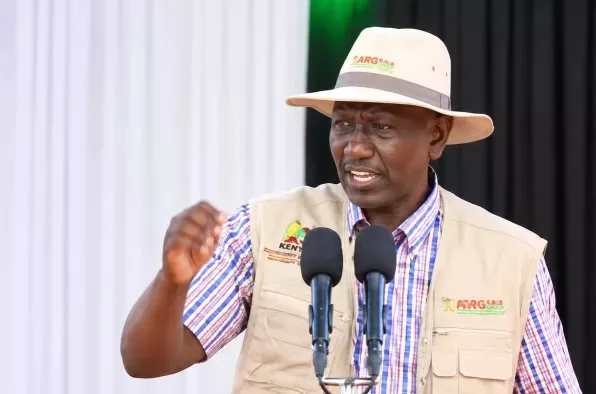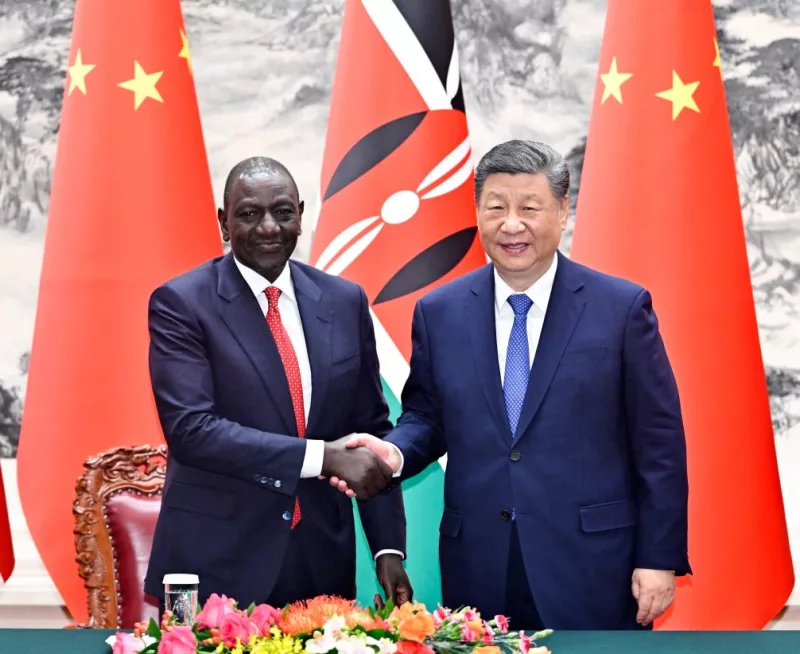
On Wednesday, President William Ruto officially launched public participation on the proposed Vision 2060. Dubbed Beyond 2030, the debate focused on receiving initial responses to the proposals presented to the President a week ago by the committee led by Prof Anyang’ Nyong’o.
The Vision 2060 roadmap is anchored on three pillars designed to transform Kenya into a competitive, industrialised and inclusive First World nation over the next 30 to 40 years.
This public input aims to ensure wider acceptance by the public and to push the development policy into a legal framework.
The experience of the Vision 2030 is that new governments can put aside a policy guideline and institute a new path. This would waste the investments made by the public under the previous regimes and make development an unpredictable process.
As CS John Mbadi noted a day earlier, the leadership of the broad-based government wants a people-driven process to develop the roadmap. Every effort is being made to ensure that as many stakeholders as possible contribute to the final policy document.
Eventually, it will be submitted to Parliament for legislative endorsement and statutory approval to provide authority for legal enforcement.
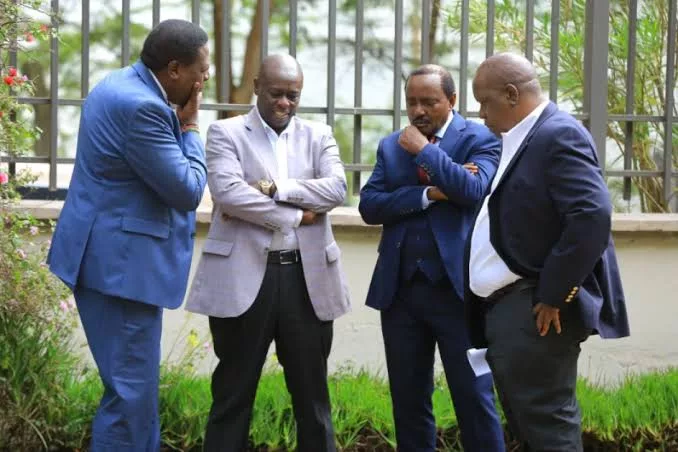
At the inaugural KICC event, the opposition and the religious leadership were conspicuously missing, and so was the Judiciary. In later public engagements covered by the press, the opposition poured cold water on Ruto’s proposals.
This was perfectly in order and within their rights. What is missing and worrying is the lack of coherent and factual rebuttal. Political parties exist to seek power by forming government or influencing public policy through engagement with institutions as the opposition.
The political opposition in a multiparty democracy is essential for preventing tyranny and ensuring good governance.
By holding the ruling party accountable, scrutinising legislation and offering policy alternatives, they ensure that the government remains transparent and responsive to the needs of the electorate.
Opposition parties serve as a "government-in-waiting”. They present alternative budgets, and visions to the public, giving voters a genuine choice for future elections.
During parliamentary debates, the opposition challenges poorly drafted laws, exposes potential flaws in bills, and proposes necessary amendments.
They give voice to underrepresented demographics, marginalised communities and minority opinions that might otherwise be ignored by the majority.
Even when the ruling party has a clear majority, the presence of an active opposition forces consensus-building and discourages the rushed passage of unpopular or extreme legislation. The opposition thus encourages compromise among political cleavages.
While the Vision 2060 has not been translated into a detailed development policy document, it has nonetheless identified its key planks.
This will be completed once the public participation is completed. The official charter is actively being shaped by public input from all 47 counties, civil society, young people and academia to build a consensus-driven vision.
The economic pillar focuses on diversification, industrialisation and expanding beyond traditional sectors into manufacturing and digital technology to spur sustainable job creation and growth.
The political pillar emphasises strengthening institutions, ensuring political stability, promoting transparency and ensuring that democratic rights outlast specific political administrations.
The social pillar is about developing human capital and aims to improve the quality of life by investing heavily in education, vocational and skills training and universal healthcare services.
The proposal is therefore itemised and well-articulated to invite cogent responses from key sectors of the country’s development spectrum.
It has also identified key bottlenecks that must be addressed to clear the path to Singapore-like status. These include priority areas of corruption and bureaucratic inefficiency.
Since promulgation of the 2010 Constitution, the national political leadership has been somewhat confused. While the constitution provides for a presidential system, the leaders continue to conduct business in the practice of the Westminster parliamentary system.
This duopoly has so compromised the effectiveness of the Legislature that attempts were made to revise the laws through the failed Building Bridges Initiative. Matters are made worse to the extent that the Senate, which in general practice should be the upper House, plays second fiddle to the National Assembly.
Another consistent hallmark of elections under the constitution is the rejection of the presidential results. In 2017, the Supreme Court nullified the results and ordered a repeat election. This situation eroded the legitimacy of the person elected president.
The ensuing scenarios have forced the major parties to join and work together first under the handshake and currently under the broad-based arrangement. Thus, in quantum sum, opposition parties have not had time enough to develop their unique alternative and necessary policy proposals.
It is currently easy for UDA and ODM to work seamlessly together because their policy blueprints are more or less the same.
In 2022, opposition leader Raila Odinga was the government and ruling party candidate while Deputy President Ruto was the opposition candidate. Both leading candidates drew their manifestos from the same philosophical standpoint.
The same scenario obtains now. Former DP Rigathi Gachagua, who is the de facto leader of the opposition movement, worked very closely with Ruto. At the initial stages of the Kenya Kwanza administration, Gachagua wielded immense powers in government.
After his impeachment in October 2024, he joined forces with opposition figures to fight the government in general and the head of state specifically.
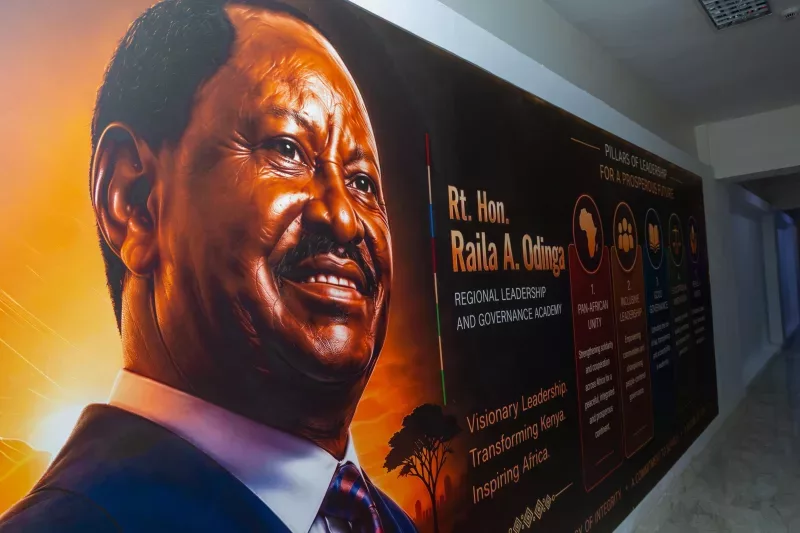
At the same time, Raila took his ODM party into a working arrangement with Ruto. As fate would have it, Raila died one year into the broad-based government. Since his absence, the opposition forces have never quite found their footing in challenging government policies.
Their responses have been kneejerk and lacking in analytics and policy grounding. They have been reduced to name calling and stuck in rote sloganeering. In their many public engagements, their pronouncements have rarely gone beyond the “one term” clarion call.
The development and launch of Vision 2060 by President Ruto offers the opposition an early opportunity to present an alternative pathway for long-term transformative national development.
Since they have declared the proposal unattainable, they should provide a carefully analysed demonstration of how each of the pillars is farfetched, inappropriate and unworkable.
However, since Ruto has invited the participation of all key stakeholders, they could as well pick up the gauntlet and enrich the proposal by submitting recommendations for improvement.
This will ensure that the nation promulgates a united vision for national development that will guide successive governments in transforming the nation.
Every political party would use it as a beacon for crafting of their manifestos. The civil society and other institutions would use it to hold government accountable.
The writer is a political and policy analyst