

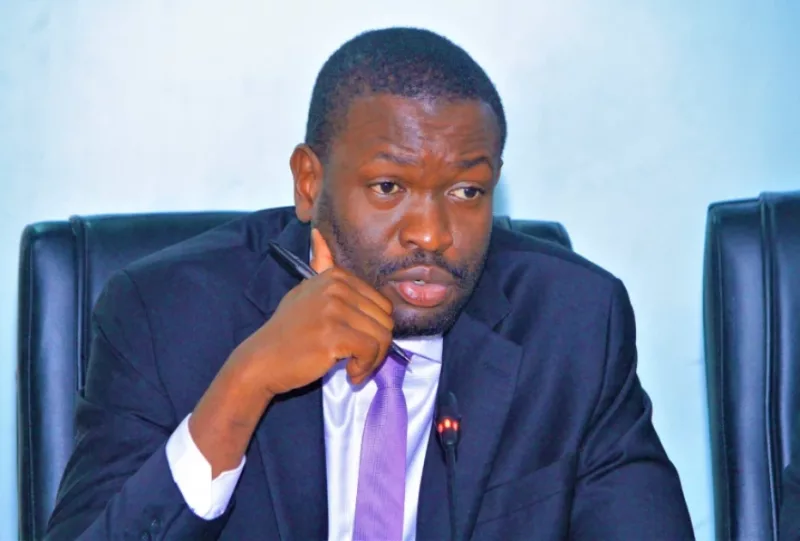
 Nairobi Senator Edwin Sifuna. His emergence as a potential presidential contender has ignited a conversation that Western has postponed for far too long
 Every generation produces leaders who embody the aspirations of their people. Some inherit power, others negotiate it, but a select few redefine what their communities believe is possible.
Whether Senator Edwin Watenya Sifuna
ultimately becomes Kenya's sixth president or not, his emergence as a potential
presidential contender has ignited a conversation that Western has postponed
for far too long: Is the Mulembe nation ready to dream beyond being a kingmaker
and instead become the kingdom itself?
For decades, the Luhya community has occupied a unique place in Kenya's political landscape. It is one of the country's largest voting blocs, rich in human capital, enterprise and intellectual leadership, yet it has often negotiated from the margins of presidential politics.
Election after election, the community has produced influential leaders who have served in senior government positions but rarely carried a united national presidential vision.
Before Sifuna entered the national presidential discourse, the political order in Western appeared settled. The triumvirate of Prime Cabinet Secretary Musalia Mudavadi, National Assembly Speaker Moses Wetang'ula and Cooperatives Cabinet Secretary Wycliffe Oparanya constituted the region's undisputed establishment.
Together, they represented experience, influence and proximity to the centre of government. Add the politically influential trade unionist Francis Atwoli to the equation, and conventional wisdom suggested they would marshal the Mulembe vote behind President William Ruto's reelection in 2027.
His possible candidature has not merely introduced another politician into an already crowded field. It has challenged a deeply rooted political mindset — that the highest ambition of Western should be to negotiate influence rather than seek the presidency itself.
Leadership is ultimately about vision. It inspires people to imagine possibilities beyond the familiar. Throughout history, transformative leaders have first changed the imagination of their communities before changing political realities. They persuaded people that what once seemed impossible was, in fact, attainable.
Unlike many of his contemporaries, he consistently frames politics as a contest of ideas rather than personalities. He speaks confidently about constitutionalism, governance, accountability, public service and institutional reform.
His communication is articulate, his arguments structured and his politics resonate with a younger generation that increasingly demands substance over symbolism.
Whether one agrees with his politics is secondary. What cannot be ignored is his ability to provoke a serious debate about Kenya's future.
For years, Western has celebrated appointments to the Cabinet, Parliament and other high offices as evidence of political success.
Those achievements deserve recognition. Mudavadi, Wetang'ula and Oparanya have made significant contributions to national leadership and earned their place in Kenya's political history.
Communities advance not merely because they occupy positions of influence but because they cultivate leaders capable of articulating a compelling national agenda.
A community that believes its highest calling is to support other people's presidential ambitions gradually limits its own political imagination.
His
emergence invites Western to think differently — not in opposition to its
established leaders, but in continuity with their legacy. Every generation
builds upon the achievements of those who came before it. The elder statesmen
opened doors into national leadership. The next generation may now ask whether
those doors should lead all the way to State House.
Kenya itself is entering a period of political transition. A youthful population, changing voter expectations and increasing demands for accountability are reshaping the country's electoral landscape.
Citizens are asking harder questions about integrity, competence, economic management and constitutional governance.
Increasingly, they are looking beyond ethnic arithmetic and expecting leaders to present credible solutions to unemployment, corruption, inequality and the rising cost of living.
In such an environment, presidential contenders will increasingly be judged not by where they come from but by where they intend to take the country.
If he seeks the presidency, Sifuna must demonstrate that he carries not only the aspirations of the Mulembe nation but also the hopes of the republic.
He must build bridges across regions, forge broad national alliances and present a policy agenda capable of inspiring confidence from Turkana to Kwale, from Mandera to Kisii.
Kenyan presidential elections have always been won through broad coalitions rather than regional enthusiasm alone. Vision must therefore be matched by organisation, humility, negotiation, political endurance and the ability to unite diverse constituencies behind a common national purpose.
The idea that Western can produce a serious presidential contender is no longer fanciful. It is now firmly part of Kenya's political conversation. Sifuna deserves credit for bringing that possibility into the mainstream.
Whether he eventually becomes the candidate is almost beside the point. His greatest contribution may already be evident.
He has encouraged the Mulembe nation to lift its gaze beyond transactional politics and begin imagining itself as a source of national vision and leadership.
History rarely remembers those who merely occupied office. It remembers those who expanded the horizons of what their people believed they could become.
If Sifuna succeeds in inspiring Western to think nationally, and Kenya to think generationally, he will already have achieved something of lasting political significance.
Perhaps that is the true measure of a vision carrier — not simply the ability to win an election, but the courage to persuade a people to believe they can lead a nation.





