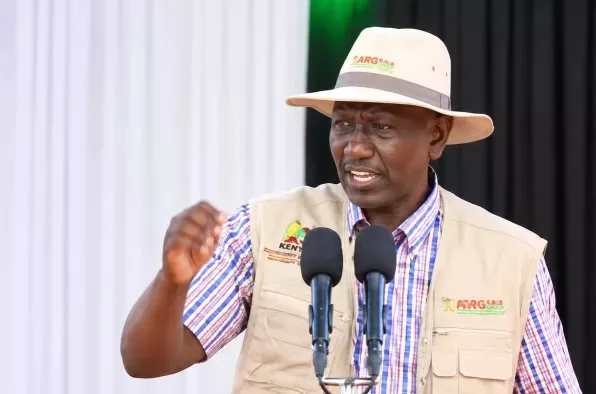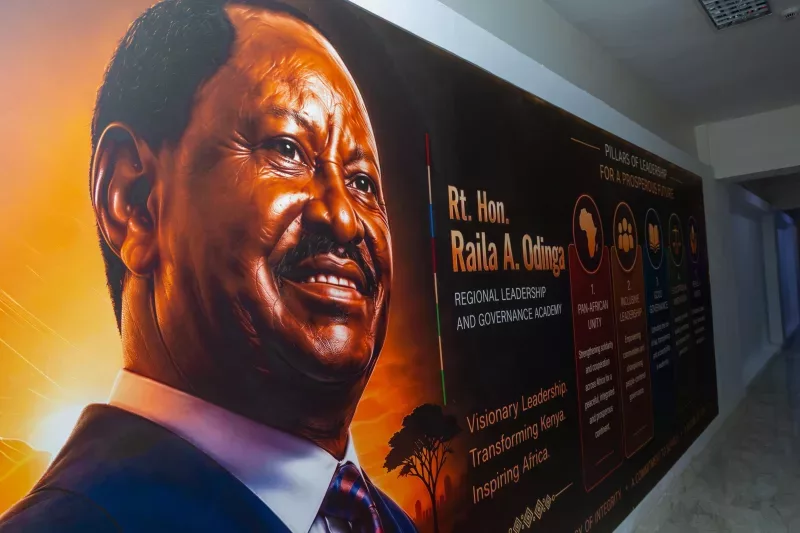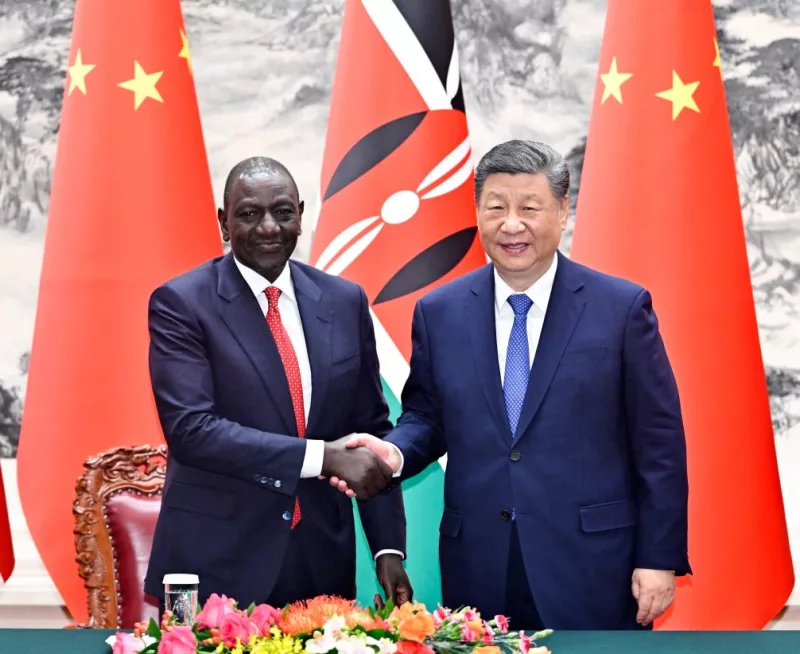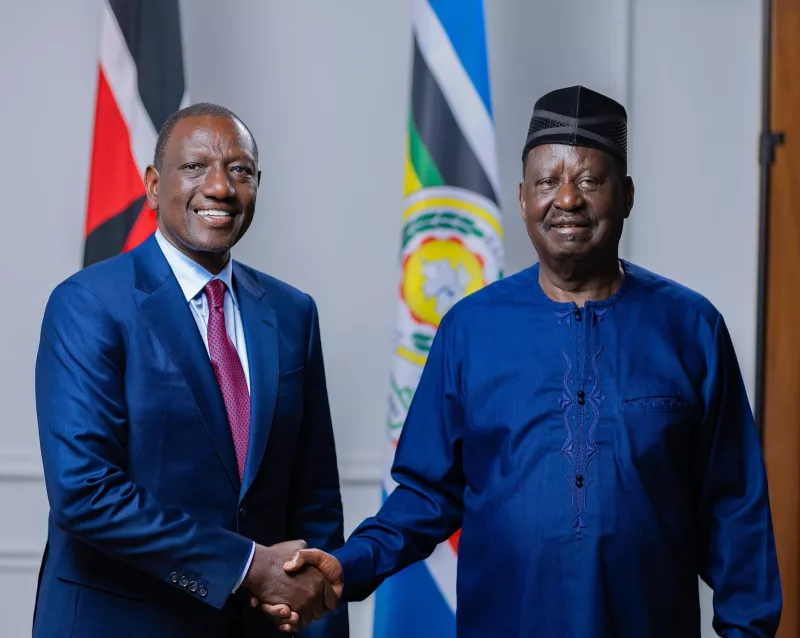
President William Ruto's ambitious Vision 2060 blueprint is emerging as the closest realisation of former Prime Minister Raila Odinga's long-held dream of transforming Kenya through an East Asian-style economic model.
The East Asian economic model is widely credited for the rapid rise of countries such as South Korea, a nation Raila often admired for its remarkable transformation from a poor country into a first-world economy.
Branded as a roadmap to propel Kenya to "Singapore status", Vision 2060 mirrors many of the ideas the former premier consistently championed throughout his political career, including long-term economic planning inspired by the development trajectories of South Korea and Singapore.
In crafting the vision, President Ruto turned to a team of economists and policy experts who previously advised Raila, signalling an ideological convergence that would once have appeared politically improbable.
The team comprises Professors Anyang' Nyong'o,Hiroyuki Hino, Michael Chege, Karuti Kanyinga and Peter Wanyande.
Operating under the Vision 2060 Working Group, the team was also supported by Raila's long-serving communications aide, Dennis Onyango.
Hino, a Japanese economist, served as Raila's economic adviser during the coalition government, while Chege is a respected expert in governance, political economy and state-building.
Wanyande, a distinguished scholar in governance and public administration, also advised Raila, whileKanyinga is renowned for his work in governance, devolution, constitutional implementation and public policy.
Kisumu Governor Nyong'o chaired several of the former PM’s economic think tanks and played an instrumental role in the formulation of Vision 2030.
Raila's elder brother and ODM leader, Oburu Oginga, confirmed over the weekend that the team driving the Vision 2060 process was originally assembled by the former opposition leader.
According to Oburu, ODM fully supports the blueprint because it embodies many of the development principles Raila championed for decades.
"You have also seen recently President Ruto has come up with a blueprint of 2060. That 2060 was an idea of our late Raila Amolo Odinga, and the team which crafted it was formed by the late Raila Amolo Odinga," Oburu said.
"And therefore, we are 100 per cent supporting it because it is our idea. It is our contribution to the coalition."
Oburu spoke on Sunday during a thanksgiving and prayer service for Homa Bay Woman Representative Joyce Osogo, popularly known as Bensuda, in Kanyadhiang’, Karachuonyo constituency, Homa Bay county.
Ruto's decision to tap into Raila's former advisory team has breathed new life into the former opposition leader's economic ideals, only months after his death.
During successive presidential campaigns, Raila argued that deliberate state planning, industrialisation, technological advancement and manufacturing could fundamentally transform Kenya's economy
The President unveiled the Vision 2060 framework last week, describing it as Kenya's next long-term development roadmap that will succeed Vision 2030 and guide the country's economic and social transformation over the next three decades.
Ruto said the blueprint seeks to build on the gains achieved under Vision 2030 while positioning Kenya as a globally competitive, inclusive and sustainable economy by 2060.
In his special national address on July 30, Wednesday, the head of state announced that the national conversation on Kenya's Future Beyond Vision 2030 will formally begin on August 12.
He also appointed an advisory team led by Hino and Nyong'o to spearhead nationwide consultations on the country's long-term development agenda.
"The thrust of their proposals is both ambitious and achievable: that Kenya can become a prosperous, high-income, industrialised and globally competitive nation within a generation," Ruto said.
"These proposals provide the foundation for a much broader national conversation; a conversation that now belongs not to government, nor to its authors, but to every Kenyan."
In an interview with Citizen TV on Tuesday night, Nyong'o identified inadequate financing as one of the major reasons Vision 2030 fell short of achieving all its targets, urging the government to make resource mobilisation the foundation of Vision 2060.
"Some of the shortcomings are that we did not have enough resources to realise the goal of Vision 2030, both internal and the resources we could borrow from our development partners.
“We learned that lesson that to realise Vision 2060, it must focus seriously, accurately and consistently in raising resources," Nyong'o said.
The governor pointed to President Ruto's proposed Sovereign Wealth Fund initiative as an example of the kind of financing mechanism needed to support the country's long-term development ambitions.
"One example is when President William Ruto came up with the wealth fund that was not thought of before. It is the kind of wealth fund that can help people improve themselves by getting money and investing in developmental projects," he said.
"Such kind of initiatives are important, and we should have more of them in implementing Vision 2060 as much as we had those initiatives in implementing Vision 2030."
Nyong'o further argued that national development should transcend electoral cycles, saying elections merely determine who forms government while leadership is ultimately measured by the policies and direction it provides.
"Well, we have had an election in this country. Elections are not enough really. Elections just decide who governs. But who governs must come up with some policies, some direction of where we are going," he said.
Kenya's New National Development Vision: Beyond Vision 2030 seeks to establish a long-term national framework for translating the aspirations of the 2010 Constitution into measurable development outcomes.
The strategy aims to define the kind of Kenya the country seeks to build over the next generation while creating a development framework capable of enduring beyond individual administrations and electoral cycles.
It also seeks to anchor national development beyond politics, strengthen the National Infrastructure Fund and the Sovereign Wealth Fund, and provide continuity in long-term planning.
However, the proposed Vision 2060 has attracted criticism from sections of the opposition.
DCP leader Rigathi Gachagua dismissed the initiative, saying the President had failed to deliver on existing promises and should not be talking about a new development vision.
"He is launching Vision 2060, yet he has killed Vision 2030," Gachagua said.
"How can Ruto tell us about 2060 when he has not done the work that we gave him? Four years since you were elected, you have done nothing."
Wiper leader Kalonzo Musyoka has also questioned the need for a new long-term blueprint before the full implementation of Vision 2030, arguing that the government's priority should be delivering on existing commitments.
People's Liberation Party leader Martha Karua has similarly argued that the government should focus on addressing immediate governance and economic challenges before launching another decades-long development agenda.
Other opposition leaders have described Vision 2060 as a distraction from pressing issues facing Kenyans, including the high cost of living, unemployment, healthcare funding and taxation.