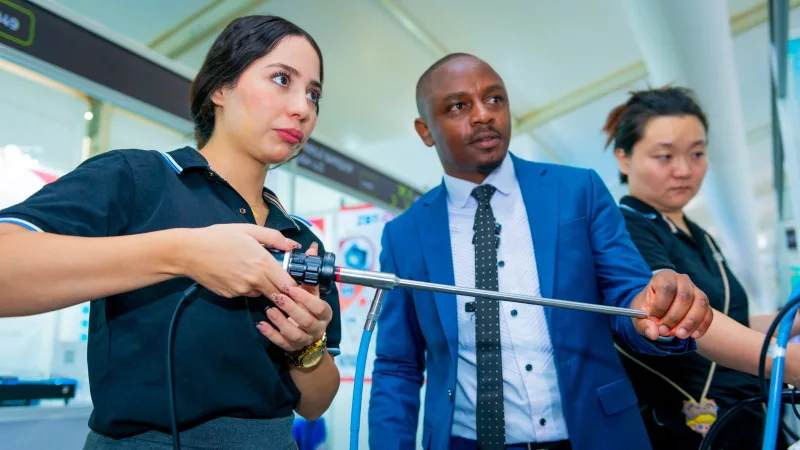
 Visitors engage with exhibitors during a live demonstration of advanced medical technology at World Health Expo (WHX) Nairobi, East Africa's premier healthcare and medical exhibition./HANDOUT
Kenya's transition to the Social Health Authority (SHA) is triggering a fresh wave of investment in medical equipment, digital health systems and diagnostics as hospitals race to meet new reimbursement requirements and tap into faster claims payments.
Healthcare providers are increasingly upgrading electronic medical records (EMRs), imaging equipment, laboratory systems and revenue cycle management platforms to align with SHA's data-driven reimbursement model, which ties payments more closely to verified services and digital reporting.
The investment drive comes as the government accelerates the rollout of universal health coverage through SHA, replacing the defunct National Hospital Insurance Fund (NHIF).
According to the Ministry of Health, more than 31 million Kenyans have registered under SHA, while 11,034 health facilities have been contracted to provide services.
Industry players say the changes represent one of the biggest technology-driven shifts in Kenya's healthcare sector in years, creating opportunities for medical equipment manufacturers, software developers and healthcare technology providers.
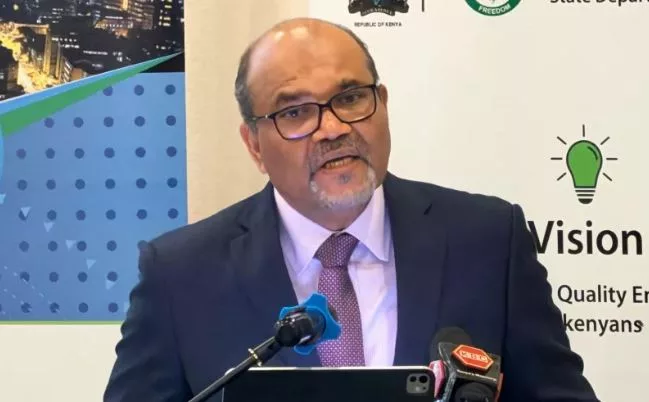
"The transition to SHA marks a decisive turning point for our national healthcare ecosystem. Healthcare facilities are under immediate pressure to adapt to new reimbursement structures, expanded benefit packages and digitised claims processing," said Medical Technology Industry Association of Kenya (MEDAK) Chairperson Dr Janki Chauhan.
The authority has paid out more than Sh147 billion in claims since October 2024, giving hospitals greater visibility on patient volumes and expected revenue flows.
Unlike the previous system, payments to primary healthcare facilities are now based on verified patient visits rather than insurance membership, while claims processing timelines have been shortened from 90 days to 30 days.
The shorter payment cycle is expected to improve hospitals' cash flow but also raises the bar for healthcare providers, which must invest in digital systems capable of capturing, verifying and transmitting patient data accurately to avoid delayed or rejected claims.
The reforms are creating new demand for electronic medical records, hospital information management systems, pharmacy automation, laboratory information systems and diagnostic imaging equipment such as CT scanners and MRI machines.
Hospitals are also reviewing investments in claims management software to improve revenue collection under the new reimbursement framework.
She said healthcare providers are increasingly looking for modern medical technologies that improve efficiency while ensuring compliance with the new financing model.
SHA's structured reimbursement tariffs are also influencing procurement decisions.
Hospitals can now claim fixed rates for services including inpatient care, maternity, dialysis, oncology and diagnostic imaging, making investments in equipment and digital infrastructure critical to ensuring eligible services are accurately recorded and reimbursed.
For instance, inpatient care at Level Four to Six hospitals is reimbursed at between Sh3,500 and Sh5,000 per day, while normal deliveries attract Sh11,200 and Caesarean sections Sh32,600. MRI scans are reimbursed at Sh11,000 and CT scans at Sh9,600.
Healthcare providers say capturing these services accurately requires integrated digital systems linking patient registration, diagnostics, treatment records and claims submission.
The procurement push is expected to feature prominently at the World Health Expo (WHX) in Nairobi, scheduled for September 16-18 at the Kenyatta International Convention Centre, where hospitals, technology providers and medical equipment manufacturers are expected to negotiate new supply contracts ahead of the next financial planning cycle.
The exhibition, marking its 10th edition after rebranding from Medic East Africa, is expected to attract more than 5,500 delegates and over 200 exhibitors from more than 30 countries.
Organisers estimate business worth about $84.2 million was generated during last year's event, underscoring the growing commercial opportunities created by healthcare reforms across the region.
Across East Africa, governments are expanding health financing programmes that are reshaping hospital procurement.
Ethiopia has expanded its Community-Based Health Insurance program to cover more than 54 million people, encouraging health facilities to invest in diagnostics and medicines.
Tanzania's pharmaceutical market is projected to grow from about $1.08 billion (Sh139.70) in 2023 to $1.55 billion (Sh200.49 billion) by 2028, driving demand for pharmaceutical storage, cold chain infrastructure and digital inventory systems. Uganda is also investing in hospital infrastructure despite constrained public health spending.
World Bank and World Health Organization analyses indicate that sub-Saharan Africa still spends significantly less on healthcare than global averages, highlighting substantial opportunities for private investment in hospitals, medical technology and healthcare infrastructure.
Tom Coleman, Portfolio Director for Healthcare at Informa Markets, said healthcare financing reforms across East Africa are no longer policy discussions but are already influencing purchasing decisions.
"Kenya's SHA rollout, Ethiopia's insurance expansion, Tanzania's pharmaceutical sector growth and Uganda's infrastructure investments are all driving urgent procurement needs. Hospitals are looking to align their investments with the new funding models before the next fiscal year," he said.
For suppliers of medical devices, hospital software and diagnostic equipment, Kenya's healthcare financing reforms are opening a rapidly expanding market as providers modernise operations to improve efficiency, secure faster reimbursements and compete under the country's new universal health coverage system.


![Africa CDC Director General Dr Jean Kaseya at a past event. [Photo: Arthur Mbuguah, WHM]](https://cdn.radioafrica.digital/image/2026/10/8ced213c-affb-4dff-97ca-1b6bac1f958e.webp)