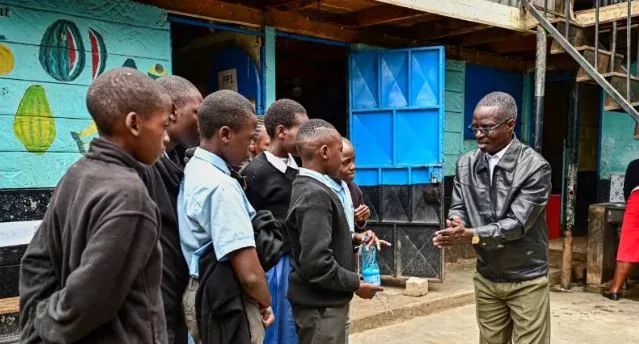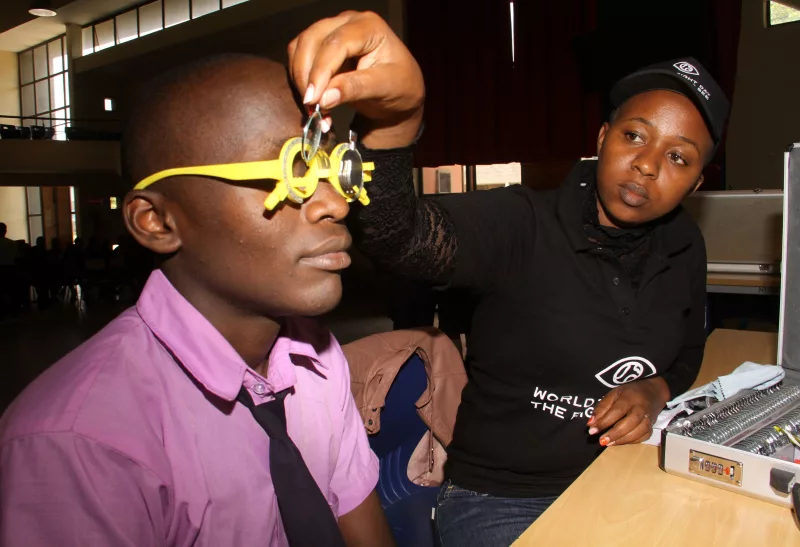
A simple eye test and corrective glasses could be one of the biggest investments a parent can make in their children.
Research reveals that Uncorrected Refractive Error (URE) is the leading cause of vision impairment in children and causes a total of 24,959 years cumulatively of lost schooling in Kenya every year.
URE is a term used for vision challenges - short-sightedness, long-sightedness and astigmatism or blurry and uneven sight at all distances.
Globally, 17.8 million children aged 5 to 17 years live with URE.
However, if URE is identified early at the age of five and corrected by wearing quality glasses, this has the potential to double by 125 per cent the lifetime earnings of a child growing up in Kenya.
Global eye health experts are now urging parents to prioritise eye tests as children in Kenya start the new school term.
The International Agency for the Prevention of Blindness (IAPB) has released new findings with data showing 23 countries where a child’s lifetime earnings could double and is encouraging parents of young children to arrange routine eye tests for their children.
The research also reveals that a child with uncorrected vision learns about half as much in a year as a classmate with good vision. As part of its effort to address this global problem, the IAPB has also launched a “Love Your Eyes” back-to-School campaign on children’s eye health, which includes developing content for school assemblies, in-class activities and take-home materials for children to share with their parents and caregivers.
IAPB’s call comes ahead of the first-ever Global Summit for Eye Health in Antigua and Barbuda on November 2, in which Heads of State and partners will make a series of commitments to improve eye care health services worldwide.
“A simple eye test and glasses could be one of the best investments a parent can make for their child’s future," IAPB CEO Peter Holland said while releasing the report.
"We recognise it may not be possible for some parents to arrange and afford eye tests and glasses, which is why we urge governments to ensure every child has access to sight tests and glasses. Every child deserves to see clearly when they start school or return for the new school term,” Holland added.
“Every child deserves the chance to see, learn and thrive, and supporting child eye care is a smart decision. Investing in eye tests and glasses is not only about preventing avoidable vision loss, but it is also about unlocking potential, transforming lives, and ensuring no child is left behind,” Sumrana Yasmin, Technical Director for inclusive health at Sightsavers, said.IAPB is the overarching alliance for the global eye health sector, with more than 250 member organisations in over 100 countries working together for a world where everyone has universal access to eye care.
The aim is to ensure no one is needlessly visually impaired, everyone has access to the best possible standard of eye health, and that those with irreparable sight loss achieve their full potential.
Sightsavers, on the other hand, works with governments and partners in more than 30 low- and middle-income countries across Africa and Asia to tackle avoidable blindness and vision impairment.
This includes cataract and refractive errors such as short-sightedness, treating and eliminating neglected tropical diseases.
Sight Savers aims to create a more equal world where people with disabilities can access health care, education and employment without discrimination.

![Africa CDC Director General Dr Jean Kaseya at a past event. [Photo: Arthur Mbuguah, WHM]](https://cdn.radioafrica.digital/image/2026/10/8ced213c-affb-4dff-97ca-1b6bac1f958e.webp)