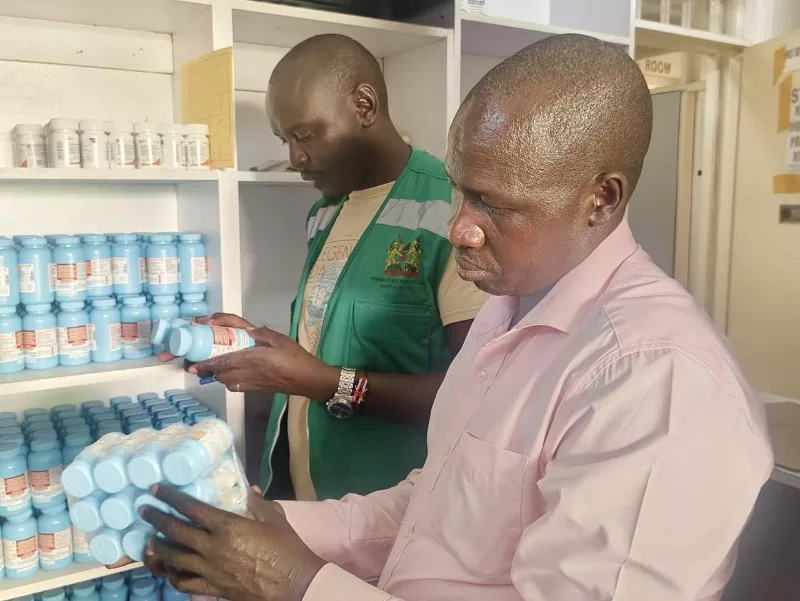
The Pharmacy and Poisons Board (PPB) is expanding oversight of the storage, transportation and distribution of medicines and other health products across the country.
This is being done through a planned nationwide compliance inspection targeting public and private hospital pharmacies, retail pharmacies, pharmaceutical wholesalers and transporters.
The exercise forms part of the Board’s continued efforts to strengthen compliance with Good Storage and Distribution Practices and ensure that health products retain their quality, safety and effectiveness throughout the supply chain.
In the Financial Year 2025/2026, PPB conducted 3,453 compliance inspections.
Of the premises inspected, 2,845 were compliant, representing an overall compliance rate of 82.4 per cent.
Enforcement measures included the closure of non-compliant premises and arrests.
The nationwide exercise will assess storage conditions, temperature and humidity controls, transportation practices, documentation, stock management, product traceability and procedures for managing product complaints and recalls.
PPB Chief Executive Officer Dr Ahmed Mohamed said protecting medicine quality requires sustained oversight beyond the manufacturing stage because unsuitable storage, transportation or handling can compromise products before they reach patients.
“Medicines must be stored, transported and handled under the conditions approved for them. We are strengthening oversight across the supply chain to ensure that patients receive products whose quality, safety and effectiveness have been preserved,” Dr Mohamed said.
Particular attention will be given to temperature-sensitive products, including vaccines, insulin and biological medicines, which require controlled storage and transportation.
Inspectors will assess whether facilities and transporters have appropriate monitoring systems, maintain temperature records and respond effectively to temperature excursions.
Regulated entities will also be required to demonstrate that they have suitable premises and equipment, qualified personnel, documented operating procedures and contingency arrangements for power interruptions, equipment failure and other incidents that could affect product quality.

Dr Mohamed emphasised that reliable records and effective traceability are essential for establishing the source and movement of products and supporting timely regulatory action when quality concerns arise.
“Every regulated health product should be traceable throughout the distribution chain. Accurate records enable us to identify affected products and coordinate timely action when suspected substandard or falsified products are detected,” he said.
The inspections will also examine sourcing and supply practices, including whether products are obtained from authorised suppliers and distributed to appropriately authorised recipients.
Inspectors will assess arrangements for identifying, segregating and handling expired, damaged, returned, recalled or suspected falsified products to prevent their unintended use or redistribution.
For pharmaceutical transporters, the inspections will examine whether vehicles, containers and handling procedures protect products from unsuitable temperatures, moisture, contamination, physical damage and theft.
Transporters handling temperature-sensitive products will be required to demonstrate that the approved conditions are maintained throughout transit.
Where compliance gaps are identified, regulated entities will be required to implement corrective and preventive measures within stipulated timelines.
Appropriate regulatory action will be taken where non-compliance poses a risk to public health.
Dr Mohamed called upon public and private hospitals, retail pharmacies, wholesalers and pharmaceutical transporters to review their operations and address compliance gaps as part of their responsibility to protect medicine quality.
“Good Distribution Practices are an essential public health safeguard. Every organisation handling medicines has a responsibility to ensure that the products reach patients in the condition intended,” he said.
Members of the public are encouraged to obtain medicines from licensed pharmacies and authorised health facilities, follow the recommended storage instructions and report products with damaged packaging, signs of alteration or other suspicious features.
Through continued inspections and the planned nationwide exercise, PPB aims to strengthen compliance across the pharmaceutical supply chain, reduce risks associated with poor storage and distribution, and safeguard the quality of medicines supplied to patients.




![Africa CDC Director General Dr Jean Kaseya at a past event. [Photo: Arthur Mbuguah, WHM]](https://cdn.radioafrica.digital/image/2026/10/8ced213c-affb-4dff-97ca-1b6bac1f958e.webp)