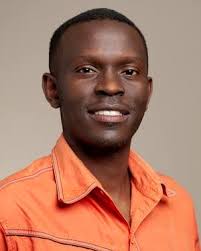
 The writer, Harrison Andeko: "I never imagined that, within days, I would encounter the same story—not in a newspaper, but in the house of someone close to me."
What exactly happened to humanity? How did we get here? Six days ago, The Star newspaper carried a story titled “Poison in the Bottle: Killer Alcohol Floods Market as Rogue Traders Mint Billions.” I read it briefly and moved on to other stories, as I often do. I never imagined that, within days, I would encounter the same story—not in a newspaper, but in the house of someone close to me. I had heard of alcohol poisoning associated with illicit alcohol, particularly from chang’aa dens. I remember learning about it during my college days. In biochemistry class, we learnt how ethanol can be used as an antidote for methanol poisoning because it competes with methanol for alcohol dehydrogenase, preventing methanol from being broken down into toxic metabolites such as formaldehyde. We learnt how such poisoning should be managed clinically. Serious, yes, but somehow distant. Something that happened to other people and might never reach your doorstep.
Until Friday.
Whenever I am back at my apartment, I often spend time with my neighbour and friend, James. We talk about politics, football, women and the many things happening in our society. James works from home. He has tried several times to stop drinking, but sometimes a trigger pulls him back. He usually buys his alcohol from a wines and spirits shop near our apartment. On Friday, I returned home and knocked on James’ door. There was no response. I continued with my errands and later called to check whether he was around. He answered in a weak voice. Concerned, I rushed to his house. What I found is an image I will struggle to forget. James was lying on the bathroom floor, surrounded by green vomit! He was extremely weak and barely able to respond.
From what he later narrated, he had started drinking on Monday. By Wednesday, his condition had deteriorated to the point where he could no longer ingest anything. Everything he put into his mouth came straight back out as vomit. His last stool had turned black. He tried drinking water, as he normally would when dealing with a hangover, but even the water came back up. In short, nothing seemed to be staying down. I took him to a nearby hospital. As I waited for him to be attended to, I opened TikTok, perhaps simply to distract myself from the anxiety of the moment. Instead, I found videos of people from different parts of the country describing remarkably similar experiences. That was frightening. Suddenly, the newspaper story I had casually read six days earlier was no longer just a story. It was James. It was happening in front of me.
And the questions came rushing in. What exactly are we putting into bottles and selling to our people? Do we still have effective regulators in this country? Who is checking what is being manufactured, packaged and sold? Who is accountable when something goes terribly wrong? And why should this happen at a time when medical practitioners in a country already struggling with a growing burden of non-communicable diseases are on strike? Most of us working in the health policy space have always asked, “Why did he drink?” Today, however, after what I witnessed, I pose a different and perhaps more uncomfortable question: “What did he drink?”
Yes, people have a responsibility for the choices they make and we should make healthier choices. Alcohol dependence is real, and we must confront it honestly. But consumers also have a right to expect that products legally sold to them are safe. That is why regulation exists. It is easy to place the entire burden on the individual, but public health requires us to look beyond individual behaviour and examine the systems, policies and commercial practices that shape the choices available to people. While I am grateful that James was eventually attended to, received treatment and, most importantly, that I have since seen him take a meal, several questions continue to linger in my mind. What was in that bottle? How many other people have experienced what James experienced but never reached a hospital? How many families are silently dealing with similar cases? And how many people may have died without us ever connecting their deaths to what they consumed?
Perhaps the most disturbing part is that this is no longer something I can dismiss as a distant news story. Behind every headline about alcohol poisoning is a human being. Behind every suspicious bottle is a family. Behind every preventable death is a story. Kenya cannot normalise this. We need urgent investigations, stronger enforcement, transparent testing and accountability wherever negligence or criminality is established. Regulators must tell Kenyans what is happening. The public deserves to know whether the products reaching our shops are safe, whether existing standards are being enforced, and who is held responsible when those standards are breached.
But this is bigger than regulation. It is about what kind of society we are becoming. How did we get to a point where profit can seemingly matter more than human life? How did we become comfortable with a system in which the person buying a bottle has no practical way of knowing what is inside it? A bottle should never be more valuable than the person who drinks from it.
Six days ago, I read “Poison in the Bottle” and moved on. On Friday, I found myself sitting outside a hospital after finding my friend lying on a bathroom floor, desperately sick. This time, it was not a newspaper story. It was not a classroom lesson. It was not something that happened to other people. It was happening next door.

![Africa CDC Director General Dr Jean Kaseya at a past event. [Photo: Arthur Mbuguah, WHM]](https://cdn.radioafrica.digital/image/2026/10/8ced213c-affb-4dff-97ca-1b6bac1f958e.webp)