My invitation to Israel was one that would have been difficult to reject, even as the war in the Middle East continued to cast a shadow over the region.
Read Also
There was the obvious curiosity about what I would find beyond the headlines — the politics, the security concerns and the images of conflict that have dominated international coverage. But my assignment offered an opportunity to look at another side of Israel, one that is rarely captured in the language of geopolitics: the quiet diplomacy taking place in hospitals, where doctors, families and children meet across borders for one reason — to save lives.
At the heart of Tel Aviv, I found a place where the language of diplomacy was not treaties or communiqués, but the steady rhythm of a child's heartbeat.
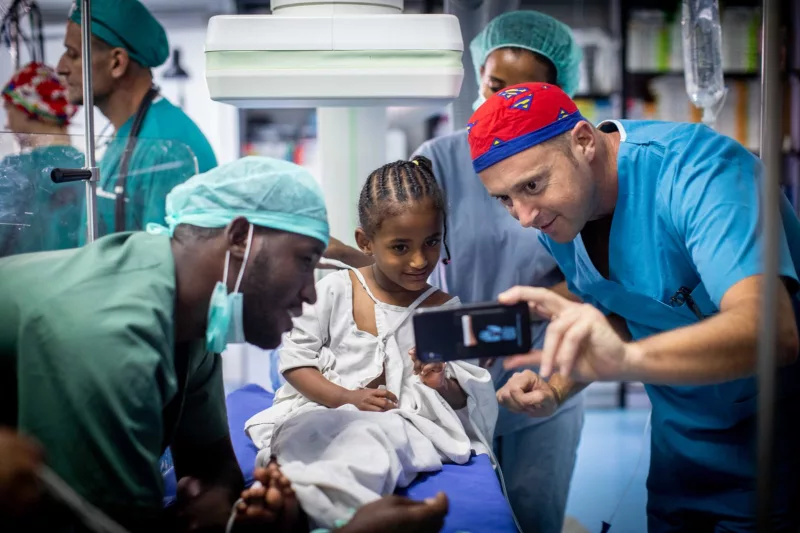
This was Save a Child's Heart, an Israeli humanitarian organisation that has spent decades bringing children with serious heart conditions from around the world to Israel for treatment, while also training doctors and supporting medical missions in countries where specialist paediatric cardiac care remains limited.
For Kenya, the numbers tell part of the story.
One hundred and eleven Kenyan children have received treatment in Israel through the programme, with three more Kenyan children expected to travel to Israel in September 2026 for treatment.
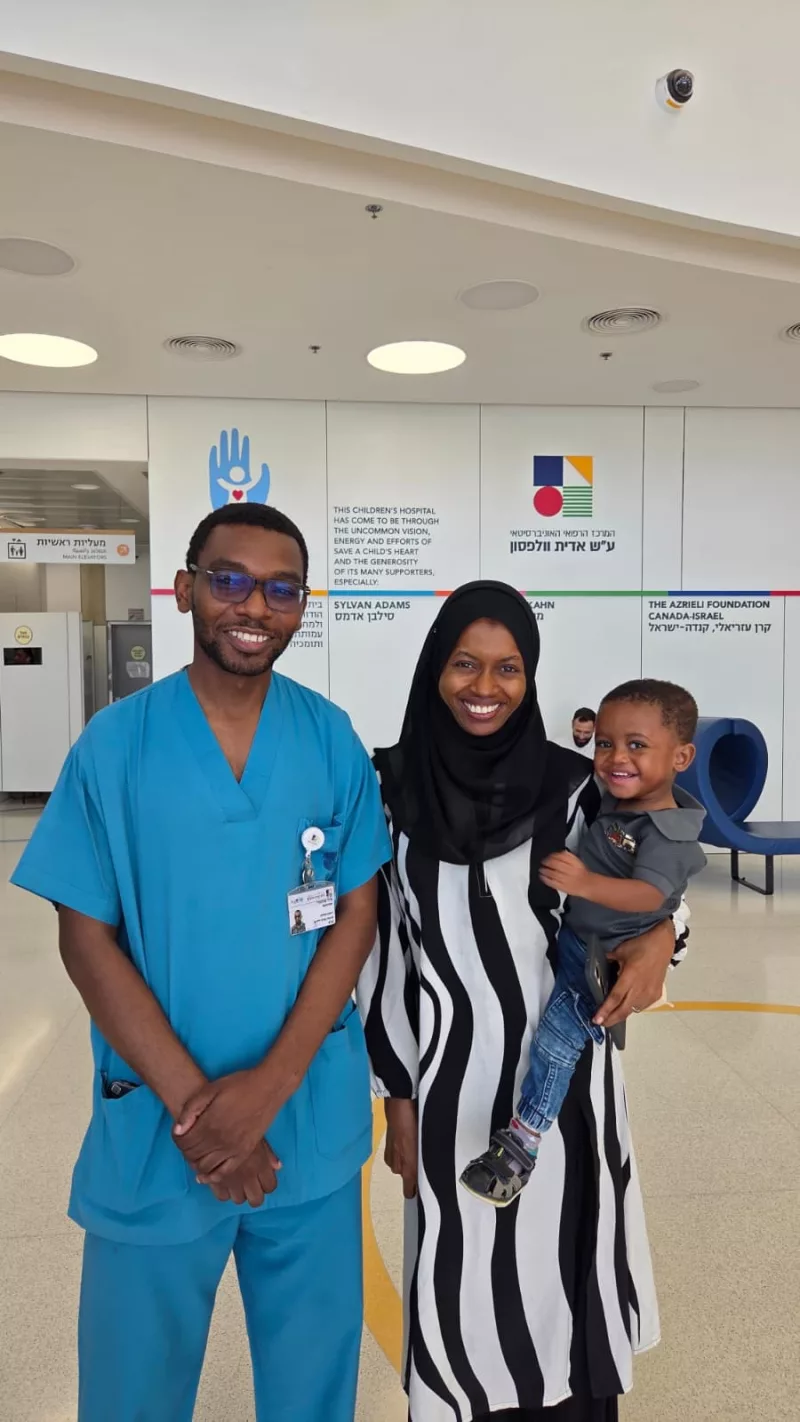 Dr Iddi Bakari,Arafa Abdulla,Khatib Khalfan
The story, however, is bigger than the 111 children.
It is about how medicine is becoming an increasingly important instrument of diplomacy in the 21st century, where relationships between countries are built not only through presidents, ambassadors and foreign ministers, but also through doctors exchanging knowledge, medical teams crossing borders and children being given a chance to grow up.
THE NEED BEHIND THE NUMBERS
The importance of such cooperation becomes clearer when viewed against Kenya's paediatric cardiac-care needs.
Congenital heart disease is among the serious conditions affecting children in the country, with research estimating that about 5,000 Kenyan children require congenital heart surgery every year. Yet the same research found that Kenya was historically performing only about 120 to 150 congenital open-heart operations annually, leaving a significant gap between the number of children needing surgery and the capacity available to treat them locally.
The problem is not simply the absence of goodwill or willing families. It is also about specialised personnel, equipment, diagnosis and the ability of hospitals to provide complex paediatric cardiac care consistently.
A study of children with congenital heart disease in Kenya found that 60.6 per cent were diagnosed after their first birthday, highlighting the challenge of late diagnosis and the need for stronger systems for identifying and treating children earlier.
For parents, however, these statistics take on a very different meaning.
They become a child's future.
They become the fear that comes with being told that your son or daughter has a heart condition.
They become the search for a specialist, the cost of treatment and, for some families, the possibility of travelling thousands of kilometres in search of a hospital capable of performing an operation.
That is where medical diplomacy assumes a human face.
A parent may not understand the details of bilateral relations, but they understand what it means when a doctor says their child can be treated.
A PARTNERSHIP THAT REACHES THE HEART
In an exclusive interview with me before I travelled to Israel, Israeli Ambassador to Kenya H.E. Gideon Behar spoke about the growing relationship between the two countries and identified health as one of the main areas of partnership.
His comments provide an important context to the work taking place through organisations such as Save a Child's Heart.
Kenya and Israel have increasingly collaborated in areas including specialist medical training, knowledge exchange, emergency care and medical missions, creating opportunities for Kenyan health workers to benefit from Israeli expertise while strengthening medical capacity at home.
The broader idea behind such cooperation is important.
Medical diplomacy should not only be about taking a sick child from Kenya to Israel.
It should also be about ensuring that the knowledge acquired in Israel can eventually return to Kenya, allowing Kenyan doctors and hospitals to treat more children locally.
That is a model Save a Child's Heart has been pursuing across Africa.
111 KENYAN CHILDREN AND THREE MORE ON THE WAY
Since its establishment in 1995, Save a Child's Heart has treated more than 9,000 children from 75 countries, providing specialised cardiac care to children who would otherwise have limited access to treatment.
The organisation also trains doctors and other medical professionals from different parts of the world, while supporting medical missions and partnerships designed to develop cardiac-care capacity outside Israel.
Kenya has been part of that journey.
One hundred and eleven Kenyan children have so far been treated in Israel, and three more are expected to travel from Kenya in September 2026.
I did not meet any of the Kenyan children during my visit to the facility, but the stories of other patients helped me understand what those numbers mean beyond the statistics.
One of them was a woman from Zanzibar whose life has become intertwined with the organisation's work in a remarkable way.
Her name is Arafa Abdulla Ali.
THE LITTLE GIRL WHO RETURNED AS A MOTHER
Arafa first travelled to Israel in 1999.
She was four years old.
She had come from Zanzibar with a ventricular septal defect, a hole between the chambers of her heart which, if left untreated, could have seriously affected her health and shortened her life.
Doctors in Israel repaired the defect.
Nearly three decades later, Arafa found herself making the same journey again, but this time she was not travelling for herself.
She was travelling with her 19-month-old son, Khatib Khalfan Khatib, who had been diagnosed with the same congenital heart condition that had brought his mother to Israel as a child.
The circumstances were strikingly similar.
When Khatib was born, he appeared healthy. But when he was just six days old, Arafa took him for a medical check-up, where doctors discovered that he had a heart condition and required treatment.
Her own experience gave her confidence in the place where her life had once been changed.
Speaking to The Star, I found Arafa particularly pleased when she realised that I could communicate with her in Swahili. English was not a language she was entirely comfortable speaking, but her story needed little translation once we began talking about the journey that had brought her back to Israel.
She told me about arriving in Israel as a four-year-old for an operation and the emotions attached to returning years later with her own child for the same procedure.
Khatib underwent the operation successfully.
Three weeks after I landed back in Kenya, I followed up on the family to find out how he was doing.
The news was reassuring.
Khatib's operation had been successful, and the little boy was recovering well and was described as happy and joyful.
For Arafa, the journey had come full circle.
She had once been the child whose heart needed repair.
Now she was the mother watching her own child receive treatment for the same condition.
“When my son grows up, I will tell him that he came to Israel to receive life-saving treatment for his heart, just as I did,” she said.
Arafa's connection to Save a Child's Heart did not end with her own operation.
She now volunteers during the organisation's women's medical missions in Zanzibar, helping other families who need the kind of medical assistance her own family once received.
She says returning to Israel brings back positive memories because of the kindness she experienced from the people and doctors who treated her when she was a child.
Her story illustrates something that statistics cannot capture: the relationships created through medical diplomacy can survive long after the operation is over.
A child can grow into an adult, become a volunteer and help another family find the same path to treatment.
THE DOCTOR WHO WILL TAKE THE KNOWLEDGE HOME
But Save a Child's Heart is also trying to address the deeper problem facing countries such as Kenya and Tanzania: the shortage of highly specialised medical personnel.
During my visit, I had the privilege of speaking to Dr Iddi Bakari, a doctor from Tanzania's Jakaya Kikwete Cardiac Institute, who is undergoing advanced training in paediatric cardiac intensive care in Israel through the Save a Child's Heart Fellowship Programme.
Dr Bakari is undertaking a four-year fellowship and is expected to remain in Israel until 2029.
His objective is not simply to acquire another qualification.
He wants to return to Tanzania with the experience required to help children with complex heart conditions and to strengthen paediatric cardiac care at home.
His story demonstrates the difference between treating a child and building a health system.
A child flown to Israel may receive life-saving surgery.
But a doctor trained in Israel can potentially go home and treat hundreds of children over the course of a career.
That is why SACH has invested in training doctors from Tanzania, Ethiopia, Rwanda, Zambia and other countries.
The organisation's ambition is to gradually help establish strong paediatric cardiac centres in countries where specialist services remain limited.
The idea is simple but transformative: the goal is not for Africa's children to depend indefinitely on overseas hospitals, but for African countries to develop the expertise needed to save their own children.
A NETWORK THAT CROSSES BORDERS
Save a Child's Heart describes itself as a global network involving doctors, families, volunteers and supporters who work together to bring life-saving cardiac care to children in need.
The organisation brings children, and increasingly adults who require cardiac care, to Israel for treatment without charging them for the medical care.
Its work has extended across Africa through partnerships, medical missions and training.
In Ethiopia, more than 1,000 children have benefited from the organisation's various programmes.
Rwanda has also been part of the effort, with children treated in Israel as well as through SACH-supported local care and medical missions.
Zambia and Tanzania have similarly benefited from treatment, medical missions and training programmes.
The figures supplied by the organisation show the scale of the network: children from Ethiopia, Nigeria, Rwanda, Zambia, Malawi, Sierra Leone, Liberia and Kenya have all benefited in different ways.
The significance goes beyond the numbers.
These programmes are creating a network of doctors who can continue the work after the Israeli specialists leave.
It is medical diplomacy that seeks to leave something behind.
WHEN WAR THREATENS THE JOURNEY
The humanitarian work, however, has not been insulated from the conflict surrounding Israel.
Speaking to The Star, Save a Child's Heart Director of Operations Riki Rosenbaum said one of the organisation's biggest challenges had been cancelled flights during the war.
Some children who were scheduled to travel to Israel could not make the journey because flights were suspended or cancelled.
Yet Rosenbaum said the organisation continued working to accommodate children despite the difficulties.
She said Save a Child's Heart had faced difficult circumstances before, including during the Covid-19 pandemic, but continued its mission because the children's need for treatment does not disappear during a crisis.
The organisation receives financial support from the Israeli government and other well-wishers, helping sustain its humanitarian programmes.
Israeli Ambassador to South Sudan Gershon Kedar, who hosted our media delegation on behalf of Israel's Ministry of Foreign Affairs, said the initiative reflects Israel's commitment to providing life-saving treatment to children regardless of nationality, religion, race, gender or financial circumstances.
That principle is visible in the diversity of children who pass through the organisation.
Some come from countries that have close relations with Israel.
Others come from countries that do not have diplomatic relations with Israel.
At the hospital, however, politics is not the first thing on the agenda.
A child's heart is.
THE DIPLOMACY OF A HEARTBEAT
There is a tendency to think of diplomacy in terms of presidents, ambassadors, foreign ministers and agreements signed behind closed doors.
But the 21st century has expanded the meaning of diplomatic engagement.
Countries can build relationships through education, technology, agriculture, water, security and increasingly through healthcare.
Health diplomacy has a particularly powerful quality because its results can be immediate and deeply personal.
A successful operation does not need a diplomatic speech to explain its value to a parent.
A trained doctor does not need a treaty to demonstrate what international cooperation can achieve.
And a child who returns home healthy becomes a living reminder of what can happen when countries share knowledge, expertise and resources.
For Kenya and Israel, the 111 Kenyan children treated through Save a Child's Heart form part of that story.
The three Kenyan children expected to travel to Israel in September 2026 will add another chapter.
But the long-term measure of the relationship should go beyond the number of children treated abroad.
It should be measured by how many Kenyan doctors are trained, how much specialist knowledge is transferred, how much local capacity is developed and how many Kenyan children eventually receive complex cardiac treatment without having to leave the country.
That is where the story of Dr Bakari becomes as important as the story of Khatib.
One represents a child receiving a second chance.
The other represents a doctor preparing to take that knowledge home and give other children the same chance.
And perhaps Arafa's story sits between them.
She was once the child who needed saving.
Today, she is a mother, a survivor and a volunteer helping other families.
Her journey began with an operation in Israel in 1999 and returned nearly three decades later with her son.
That is the enduring power of medical diplomacy.
It can begin with an agreement between governments, but its most meaningful legacy may be found in places where diplomacy is rarely discussed in the recovery room, in the doctor's training theatre, in the anxious face of a parent and, ultimately, in the heartbeat of a child who has been given another chance at life.