Kenya's political class is already behaving as though the 2027 election can be won using the same script that has delivered power since the return of multiparty democracy. Politicians are hopping from one coalition to another.
Regional "kingpins" are resurrecting themselves as indispensable brokers. Opinion polls are being weaponised. Helicopters are crisscrossing the country.
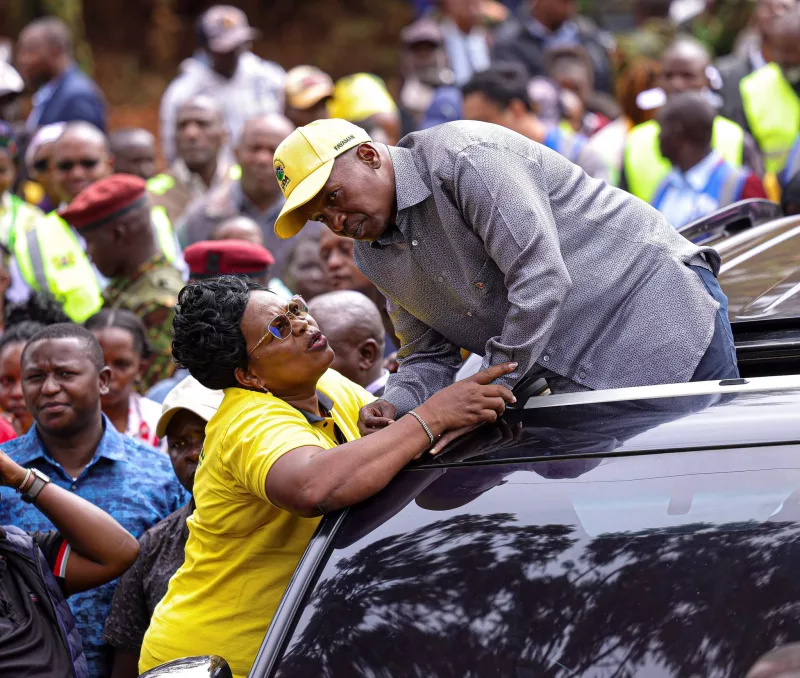
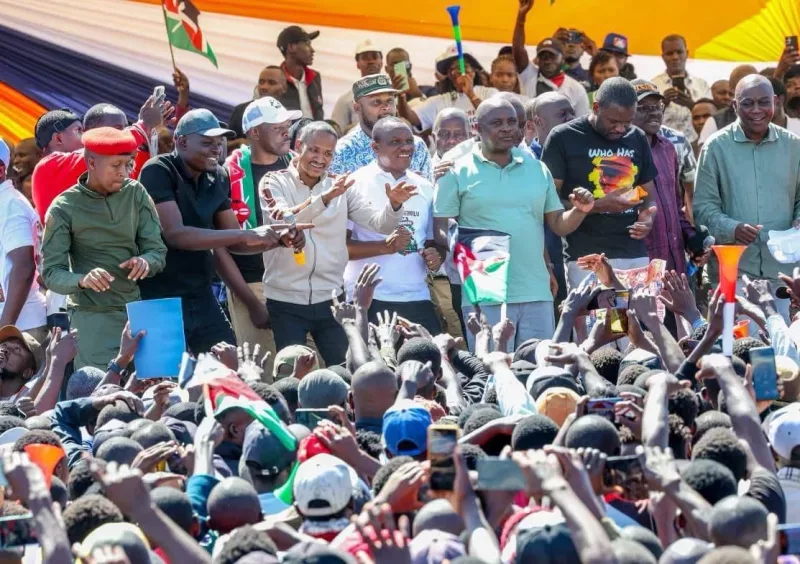
Crowds are being assembled and defections celebrated as though they are votes already cast. It is political theatre at its finest.
But beneath the spectacle lies a hard truth that many politicians would rather ignore: Kenya has changed more rapidly than its politics.
For three decades, elections have been built around identity rather than ideas, personality rather than policy and promises rather than performance.
Every five years, the political establishment has perfected the art of repackaging old faces in new alliances, introducing fresh slogans while preserving the same culture of impunity, patronage and elite bargaining. Governments have changed. Coalitions have changed.
Political colours have changed. Yet for millions of Kenyans, daily life has become an exhausting struggle against rising prices, unemployment, collapsing public confidence and widening inequality.
That is why 2027 is shaping up to be fundamentally different. The greatest threat to both the government and the opposition is not each other. It is an increasingly impatient citizenry that has begun questioning the assumptions that have sustained Kenya's political order.
The "hustler versus dynasty" narrative that dominated 2022 has largely run its course. It won an election, but elections are not won forever. Incumbents are ultimately judged not by campaign narratives but by lived realities.
The question confronting the Kenya Kwanza administration is no longer whether its diagnosis of inequality was correct. It is whether ordinary Kenyans feel their lives have measurably improved.
Equally, the opposition cannot assume that public frustration automatically translates into electoral support. Kenyans have grown weary of leaders who excel at identifying problems but remain vague about solutions. Criticism is not a governing agenda. Anger is not an economic policy.
Perhaps the biggest political force heading into 2027 is neither government nor opposition. It is the Kenyan voter who has become less predictable than ever before.
The Gen Z protests of 2024 fundamentally altered Kenya's political conversation. Whatever one's interpretation of those demonstrations, they exposed a generation unwilling to accept inherited political loyalties or elite consensus.
They showed that political mobilisation no longer depends exclusively on parties, ethnic kingpins or traditional media. A smartphone can now be as influential as a campaign podium.
This does not mean ethnicity has disappeared from Kenyan politics. It remains a powerful organising force and will continue shaping voting patterns. But it no longer enjoys the unquestioned dominance it once commanded. Hunger has no tribe.
Unemployment has no ethnicity. High taxes do not discriminate between government supporters and opposition voters.
As economic pressure intensifies, political identity becomes increasingly fluid. That should concern every politician who believes ethnic arithmetic alone guarantees victory.
The old template for winning elections is steadily losing its potency. Massive rallies create impressive television images but rarely predict electoral outcomes. Political defections generate headlines but seldom change citizens' daily realities.
Cash handouts may attract crowds, yet they cannot permanently purchase public trust. Even endorsements from self-appointed regional kingpins carry diminishing influence among younger voters, who increasingly value authenticity over political choreography.
Kenya's next election will therefore demand a different kettle of politics. The winning candidate will require more than the broadest coalition; they will need the most credible answers.
How will food prices become affordable without bankrupting farmers? How will sustainable jobs be created beyond campaign slogans? How will taxation stimulate rather than suffocate enterprise? How will corruption attract real consequences instead of selective outrage? How will constitutional institutions be strengthened rather than manipulated for short-term political convenience?
These are no longer academic questions. They are the conversations taking place in homes, matatus, markets and workplaces across the country.
There is another lesson the political class cannot afford to ignore. Citizens are no longer evaluating manifestos alone; they are evaluating character.
Leadership is increasingly measured by consistency, humility, transparency and competence. Kenyans have grown skeptical of politicians who reinvent themselves every election cycle, condemn practices they once defended, or preach accountability while surrounding themselves with individuals whose public records suggest otherwise.
The electorate is searching for something remarkably simple: leaders whose words, actions and values align. Whether such leaders exist is another debate.
Yet Kenya's greatest danger is not merely electing the wrong individuals. It is mistaking political recycling for political renewal.
Every election promises a new dawn, yet too often we simply rearrange the same political furniture while expecting a different national outcome.
If 2027 becomes another contest of tribal arithmetic, personality cults and elite power-sharing, Kenya should expect familiar results.
But if candidates are compelled to compete on ideas, integrity, competence and measurable delivery, the country may finally begin the transition from transactional politics to transformational leadership.
The defining question is not who is coming or going, but whether Kenya is finally ready to reward substance over spectacle.