Maritime security, although a new entrant into discussions of global
peace and security, seems to have been overtaken of late by a word in the
lexicon, namely, ‘chokepoint’.
This vocabulary addition comes at a time when many are still grappling to understand the depth and breadth of what maritime security is and what it entails. And yet you can’t blame such ignorance.
For the longest time, global waters were erroneously understood to be simply an ecosystem of marine life, represented by ubiquitous fish resources. And the majority ascribed this blue world as a concern of littoral communities only, especially the coastal fisherfolk whose lives depend on sea and water resources generally. Beyond that, waters were only at best synonymous - to the majority of holidaymakers - with vibrant beach life of sun and sand.
And whether such ignorance is realistic is one thing. What can’t be excused is the overwhelming ignorance on the nexus between the global population’s livelihoods and the oceans and seas that connects us.
The water mass accounts for most activities that directly or indirectly impact ordinary lives. Firstly, fact is that more than 70 per cent of the earth’s surface is covered by water.
This geographic domain, secondly, supports directly more than 80 per cent of global trade. And on climate, thirdly, our waters are primarily the lungs that keeps the earth aerating! Deflate the blue lungs, and you suffocate the earth to extinction.
That’s why the oceans are not merely important to all, but a criticality of life itself. When the waters sneeze, the entire world literally catches a cold!
This therefore brings us to the new word in the lexicon: “chokepoints”. It’s not new lingo but has existed in the vocabulary for a long time. It’s only now that it’s being popularised by topical news on global hardship.
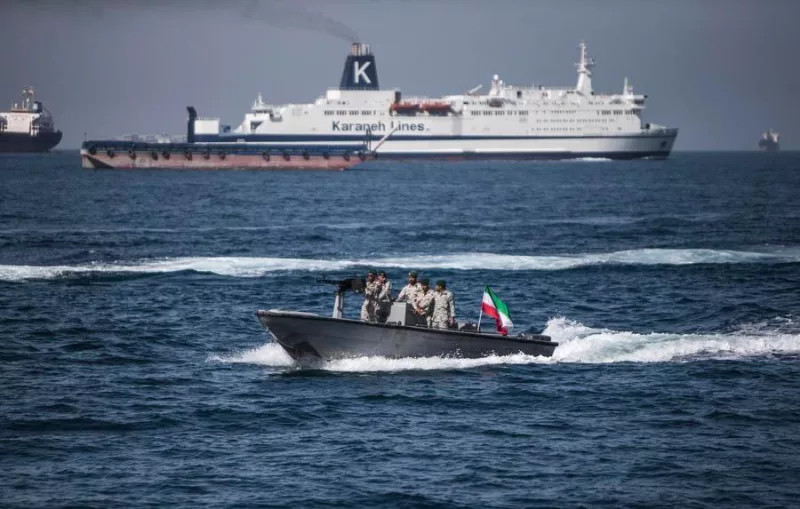
This began with the Middle East conflict within the Persian Gulf - one that started off as a security operation. Yet the operation soon morphed and escalated into an economic global hazard, courtesy of the Strait of Hormuz chokepoint.
Just like other maritime routes’ bottlenecks strategically scattered around the oceans, the Strait soon gained singular notoriety as its closure alone overwhelmingly disrupted the free flow of global commerce.
It’s through such constrictions, narrow points, that many freighters and cruise liners pass to deliver their cargo and passengers. And as with any business model, the laws of efficiency take precedence.
This is about leveraging the shortest route (time) possible between destinations to make a business sense on return on investmentmaximisation. About one-fifth of the world’s oil and liquified natural gas passes through the Strait, making it making it the most vital energy chokepoint on earth.
Yet this isn’t the case when chokepoints disrupt any scheduled delivery of critical goods to their needy customers. It’s worse when such cargo happens to be energy-based products.
Delayed or costly deliveries of energy (oil and gas) affect the overall costs borne by primary consumers everywhere on almost all purchases, leave alone the inconveniences caused during the wait time. This, thus, is a problem to individual, national and global economies, including the security of all nations.
This situation, therefore, clearly demonstrates the causal interlinkage between national and international security on one hand, and national economies and the cost of living borne by the ordinary people on the other.
Hence, this state of affairs makes a compelling case for the criticality of maritime routes to the order of global peace and order.
With such a clear nexus on this criticality of chokepoints that impacts ordinary livelihoods, the necessity of maritime security then becomes a no-brainer. And no one nation can alone solve such challenges of threats to the freedom of navigation.
Any initiative calls for collaborative synergies and interventions at all levels of solution-making, including the international and multinational engagements, cooperative regional maritime security frameworks and national interagency security collaborations.
The UN offers leadership with guiding legal and policy frameworks and principles to support collaborations and partnerships towards a common goal of freeing sea lanes for commerce.
And luckily, the global arena has woken to this new reality of threats of chokepoints and their import in facilitating common good.
Citizenry can now point a finger at chokepoints as a cause of their miseries. And the general understanding is that more often than not, it’s not national policies that are responsible, but events happening elsewhere that impact the value of lives far and yonder.
And for now, it boils down to one word in the lexicon: “chokepoint”.
The writer is the Director-General of Kenya Coast Guard Service