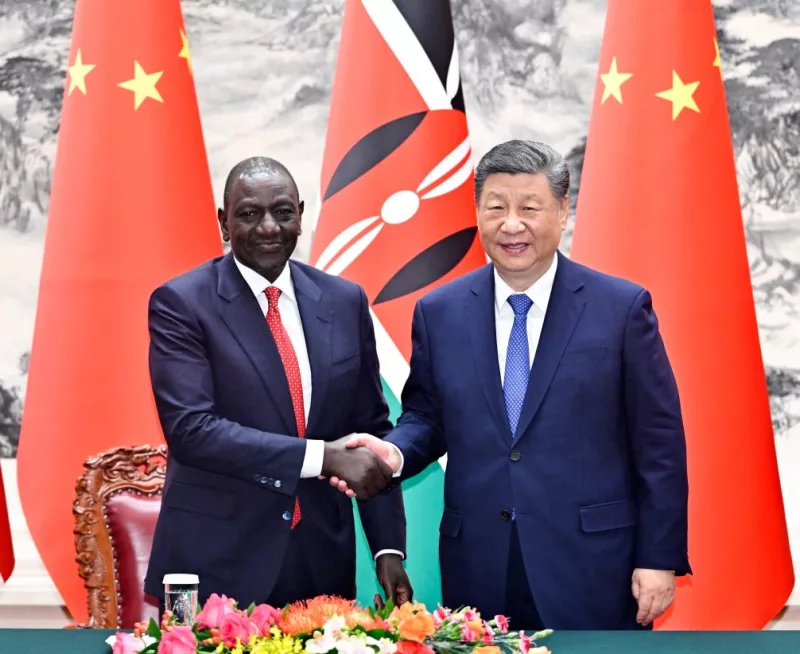
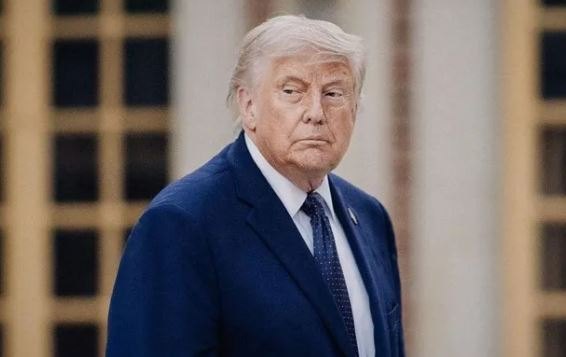
 US President Donald Trump.
The 2027 election is anecdotally proving to be one of the most underminedby charged ethnic undertones since 2007, and there is a global trend that contextualises it.
All around the world, politicians are clutching to ethnic straws and stoking culture wars to build mental-siege communities for winning power, which they then repurpose to enrich themselves and their cronies.
An easier guide to voters next year is this: be keen and scrutinise those who fan tribal tensions and you easily see one who is using you just to climb the social ladder as you sink deeper in misery, no matter the efforts you are making. Winning power is not governing.
The hard work of changing people's lives is scary and sweaty, no wonder populist leaders get to power today and by noontime they are back on their SUVs with sunroofs.
Note these: India Prime Minister Narendra Modi's Bharatiya Janata Party’s (BJP)'s open focus on Hindu cultural identity to strengthen its stranglehold on power; Donald Trump's Maga movement that continues to dominate American poiticsand Nigel Farage's open anti-immigrant stance in the UK
And Africa is not an exception. Note the much-publicised anti-black immigrant xenophobic campaigns in South Africa and the charged ethnic rhetoric in Kenya today.
India's ruling BJP centres its platform on Hindutva (Hindu nationalism), promoting a cultural identity tied to Hindu values. It blends this cultural majoritarianism with aggressive national security stances, economic neoliberalism and extensive targeted social welfare schemes. The policy has caused untold disharmony in Indian communities, as many minorities feel neglected.
Not that Kenyan politics has ever been issue-based or free from brazen tribal mobilisation that pits one community against another. The difference this time is the shameless nature of it, with media platforms proving willing amplifiers of such content, having thrown all caution to the winds.
Politicians have become so bold that they openly make unsophisticated statements that demean whole communities or chauvinistic ones that set communities apart as tribal fiefdoms.
Former Deputy President Rigathi Gachagua is a notorious offender here and his rhetoric has been consistent. He profiled MPs Zaheer Jhanda and Rahim Dawood, suggesting that because they are of Indian descent they should not be elected, repeatedly framing political competition through an ethnic lens.
Treasury CS John Mbadi has also had countless outbursts at functions in his native Nyanza region in his long-running bid to galvanise the community behind him.
Nairobi Senator Edwin Sifuna has clocked into this list recently when he claimed that his native Luhya people cannot live in multistoried affordable housing units because the chicken cannot get to the 12th floor. His statement can be interpreted as part of efforts to emotionally rally ethnic Luhyas behind him.
The list goes on and on, made worse in the information age on one hand, and on the other by unsophisticated voters who have neither the time nor the inclination to dive deep, authenticate and critically examine the claims being made.
The danger of this culture war is that it does not just sow and nurture the seeds of division and disharmony. It also produces leaders who ultimately make the lives of citizens materially worse.
Ethnic and identity politics may help politicians win elections, but they rarely help them govern well. Once in office, slogans and scapegoating do not build economies, create jobs, improve healthcare, or educate children.
You can look at the situation is in Argentina with populist President Javier Milei. The country's economy is facing countless woes after Milei's policy of massive deregulation and imports squeezed life out of local industry. So bad was the situation in the South American country that the US had to bail it out.
In October last year, US Treasury Secretary Scott Bessent announced a $20 billion currency swap to rescue Argentina's economy.
Another example is the heap of failure Brexit has become, making citizens so unstable in their politics that they are now on their seventh prime minister in 10 years.
Sold by eurosceptic politicians like Farage as a silver bullet to the country’s problems, 10 years later, Brexit has caused a persistent and worsening drag on the UK economy.
It has reduced the national GDP by an estimated six per cent to eight per cent and depressed goods exports by roughly 12 per cent to 16 per cent, due to new non-tariff barriers, regulatory checks and lower business investment. It is a net fail on improving the live of the ordinary people, while the powerful get richer and better connected.
But perhaps Trump offers the most audacious example of how culture-war politics is a zero-sum game that relies on drama for distraction.
He bungled the Covid-19 pandemic response that saw the US record the highest numbers of infections and deaths globally despite boasting of being the world's most medically advanced nation.
And his constant saber-rattling has kept the world on edge. His politics of grievance has often overshadowed the business of governing.
It is up to us Kenyans to stop the politicians who fane ethnic scapegoating and plant seeds of profiling wherever they go.
Winning a political campaign is not the same as governing, and voters must vet those on offer to get the person who is ready on day one. We hold them accountable by consistently asking them tough questions about what their agenda is, why, and how he or she will pay for it.
We must also ask them to justify their comments and shame them off when they put their foot in their mouths.
The patterns are clear, if we give populist and thoughtless politicians our time because we are emotionally high on our supply of them, we will live to regret it, and we will deserve it.