 In the year to June last year, Kenya used 14,472 gigawatt hours of electricity and produced 12,938 /FILE
Switch on a light in Nairobi tonight and there is a fair chance the electricity was born in a desert. It travelled 428km down a high-voltage line from Loiyangalani in Marsabit, where 365 turbines churn out one of the most reliable wind corridors on earth.
Africa's largest wind farm is
in Laisamis constituency, where household electricity access is 1.3 per cent,
and in neighbouring North Horr it is one
per cent.
The inequality is stark, though not for want of effort. Power does reach the north, and Kenya leads the region in off-grid solar, but supply thins sharply beyond the key towns’ boundaries.
Turkana records the lowest household electricity access in the republic at 8.8 per cent, in West Pokot it’s 11.9 per cent, Samburu and Wajir both 14.6 per cent, against Nairobi's 96.7 per cent. National access has climbed impressively from 37 per cent in 2013 to about 75 per cent today, but the gap has not closed.
This is no accident of geography. It is a design choice, and the north hosts two monuments to it. The Loiyangalani-Suswa line exists to move Marsabit's electricity to a substation in Narok.
The Eastern electricity highway does the same for Ethiopia's, crossing the border at Moyale and running some 600km through Marsabit, Samburu and Isiolo before terminating, again, at Suswa.
More than a 1,000km of high-voltage lines now cross the least electrified counties in Kenya. Neither line was designed to serve them.
In the year to June last year, Kenya used 14,472 gigawatt hours of electricity and produced 12,938. The shortfall of 1,534 GWh - a 10th of everything we consumed - was bought from our neighbours, 83 per cent of it from Ethiopia, at a cost that nearly tripled to Sh8.68 billion.
Of what we generate ourselves, geothermal supplies 5,718 gigawatt hours or 44.2 per cent, hydro with 3,503, or 27.1 per cent, wind 1,908, or 14.7 per cent and solar, thermal and cogeneration provide 14 per cent. The bulk of that wind blows in one place: Loiyangalani, in Marsabit.
Kenya’s wind farms, dominated by Marsabit, produce more electricity than the entire shortfall we buy from three neighbouring countries. Add the Garissa solar plant, the largest grid-connected array in East and Central Africa, and the north is not a peripheral contributor to the grid. It is its pillar.
It is also where the grid must grow. Geothermal is slow and costly to drill, while hydro, our second source, is hostage to rainfall in a warming climate.
Kenya's readiest headroom is wind and solar, and
the best of both lies in the north: the Turkana corridor carries some of the
steadiest wind on earth, and the drylands, the country's strongest solar
irradiation. Now that our grid connects Ethiopia, Uganda and Tanzania, that
resource is not merely national. It is regional.
Marsabit, Turkana, Wajir, Mandera and Garissa, operate on off-grid networks powered mainly by diesel generators, within a 30-kilometre radius of each plant. In the year to June 2025, those networks consumed 88GWh between them.
The wind farm at Loiyangalani, delivered more than 15 times as much - into a line running south. Moyale burns trucked diesel while Ethiopian hydropower crosses the border 90km away on its way to Nairobi. Whatever explains that, it is not scarcity.
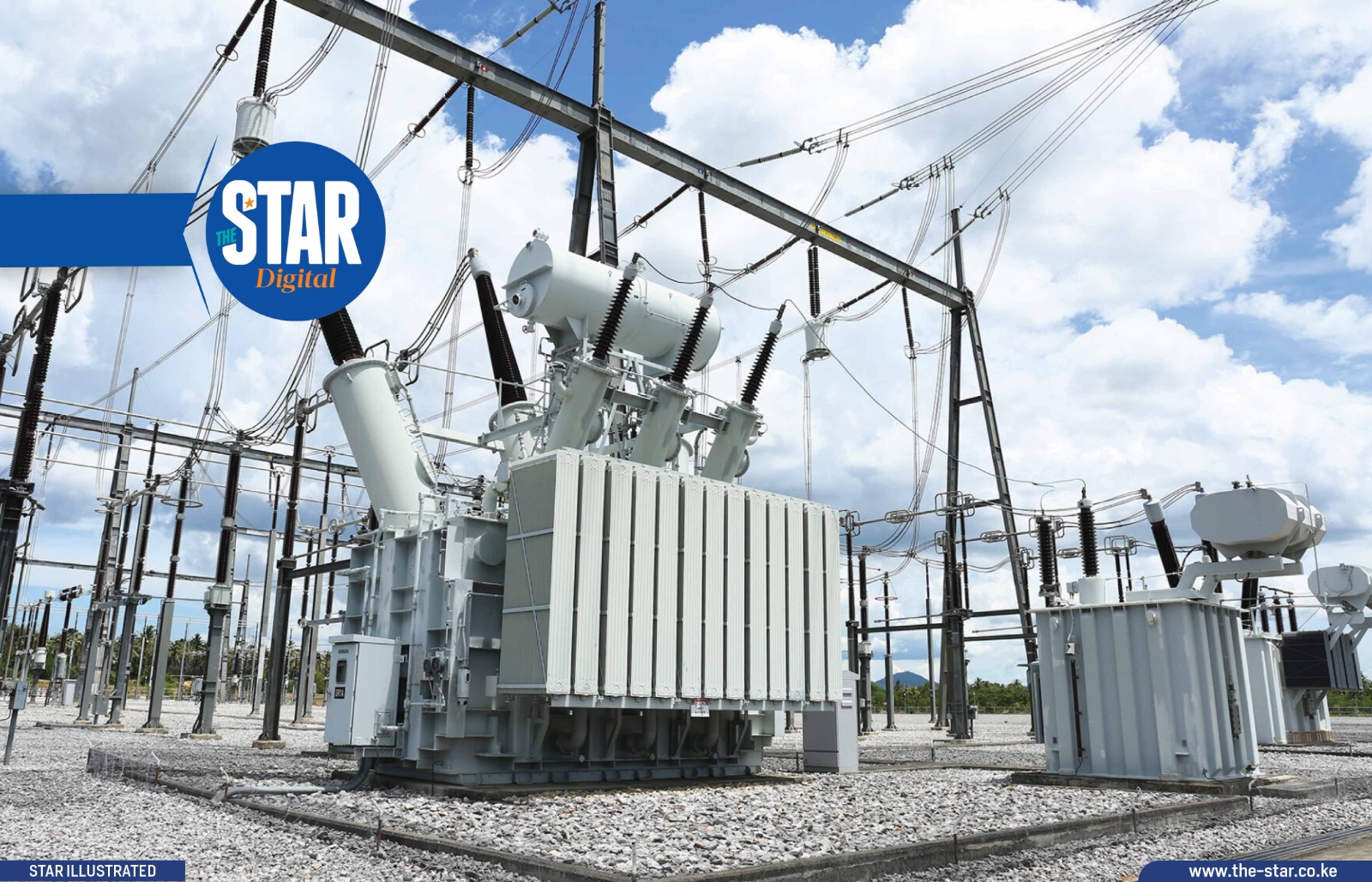
The Ethiopian link makes the point poignant. It is a 500-kilovolt direct current bi-pole, and direct current cannot be tapped along its route.
Drawing power off requires a converter station, and there are exactly two, at Sodo (Ethiopia), and Suswa (Narok). Financed at $1.26 billion by the World Bank, the African Development Bank and our own Treasury, serving the communities beneath was simply never part of the specification.
Electricity is the binding constraint on every northern value chain, and the constraint is one of reach and reliability rather than absence. Cold chains run in the main towns but rarely beyond them, so milk from a region holding 70 per cent of the national herd still spoils on the road to market.
Irrigation along the Tana, Turkwel and Dawa rivers run largely on diesel, at several times grid cost. Gums and resins leave the country unprocessed because milling needs steady three-phase power.
Clinics with solar panels can refrigerate a vaccine but not run a theatre. Every argument for northern potential - livestock, minerals, tourism, carbon, Lapsset - depends on power supply that is firm, affordable and present where value is created.
The remedy is not another mega project. The Ethiopian link needs a converter station of the kind that cost Sh75 billion at Suswa. But the Loiyangalani line is alternating current, and can be tapped with ordinary substations at a fraction of that cost.
Build them, at Marsabit and along the corridor, and write local supply into every future licence. Convert the northern diesel stations to solar and wind hybrids, and aim mini-grids at productive use because a mini-grid with an anchor customer draws capital without subsidy.
And require multi-terminal capability in every future high voltage direct current project, so that exclusion is never again welded into a specification.
Marsabit, Turkana and Samburu are not asking for charity. They are asking for a share of what crosses their own land.
A region that carries the nation's electricity across its rangelands, yet watches supply thin out a few kilometres beyond its own town boundaries, is not a development challenge. It is a policy failure with a name, a location and a wiring diagram.
The writer is a governance, management and institutional development specialist focusing on asal development, [email protected]