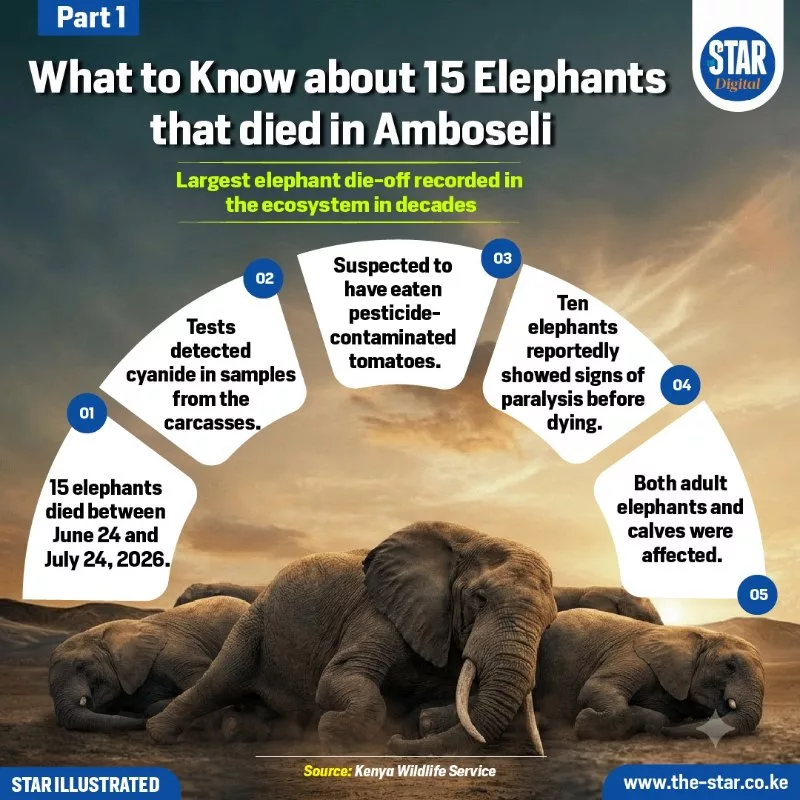
Fifteen elephants died in the Amboseli ecosystem between June 24 and July 24, 2026, marking the largest elephant die-off recorded in the region in decades.
According to data from the Kenya Wildlife Service, laboratory tests detected cyanide in samples collected from the carcasses. Investigators suspect the animals ingested pesticide-contaminated tomatoes.
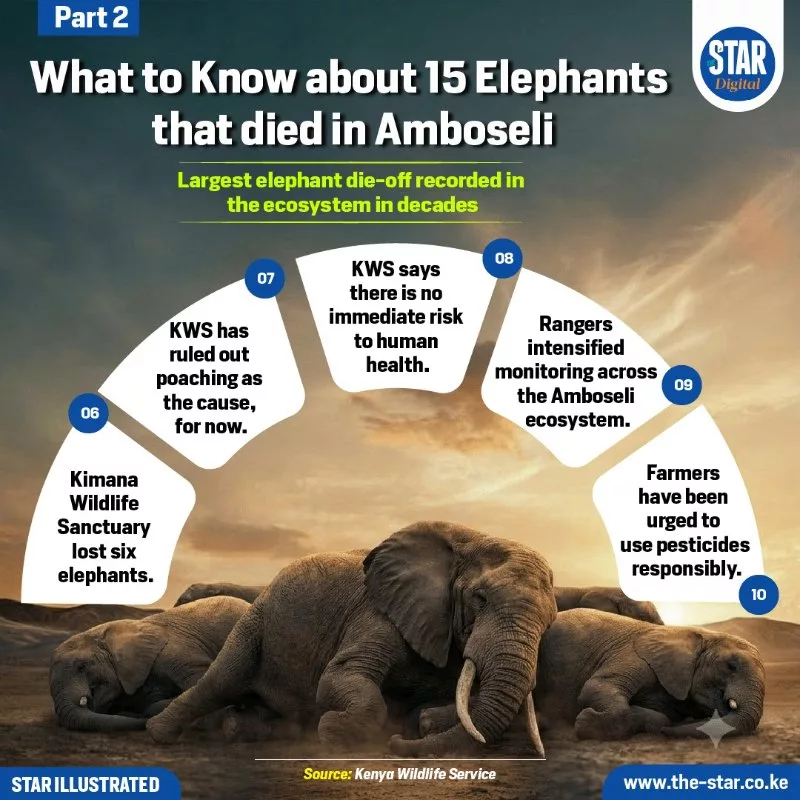
Both adult elephants and calves were affected in the incident, with ten of the animals reportedly exhibiting signs of paralysis prior to dying. Among the losses, the Kimana Wildlife Sanctuary recorded six elephant deaths.
The Kenya Wildlife Service has ruled out poaching as the cause for now, noting that there is no immediate risk to human health. In response to the tragedy, rangers have intensified monitoring across the entire Amboseli ecosystem.
Additionally, authorities have urged local farmers to exercise responsibility when using pesticides to prevent further risks.