There’s a charismatic young man in our village called Kevo. In school, he was not the sharpest tool in the granary and so he did not amount to much after his Form 4 studies.
Like me, he will probably
never apply the Pythoger-Piethagoras- that math theory
thing we learnt in class for any practical purposes, but that doesn’t mean Kevo
is stupid. Over the years at the Police Post, we’ve had to deal with one scheme
after another originating from him.
There was that time he decided to become a farmer. With his mother’s support (and a few misguided friends), he planted an entire acre of tomato plants. All was going well until some suspicious neighbours alerted us to the crops. If you’re thinking we found something fishy, then you’re right. A quarter of the plants were tomatoes, the rest were bhangi.
Then he decided to form a boda boda Sacco that would fight for the right of riders to operate without insurance or licences. He claimed that motorbikes were essentially bicycles with a small engine attached.
“Just think about it,” he said. “Morio m-small aki-ride bike, inaenda pole pole. Msee m-biggie ata-ride faster.”
“What are you talking about?” Sergeant Sophia had asked. “Are you saying a motorcycle is the same as a bicycle ridden by a very strong person?”
“Hapo sasa.”
Of course, that never panned out. This time, he’s back to his old playground.
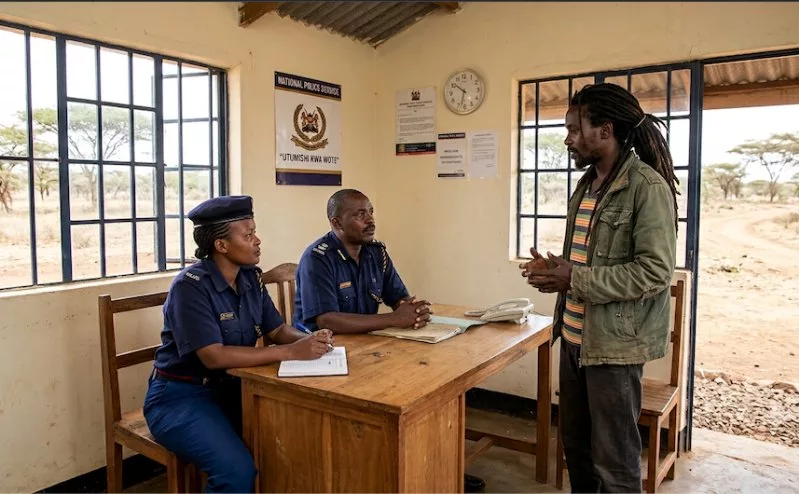
“I want to report an upcoming rally,” he walks into the Police Post and says. “I’m not asking for permission. We have the right of assembly. Just informing you.”
“What’s the rally for?” I ask. “It must be important if you’ve even taken time to read up on your rights.”
“It’s called ‘Linda haki ya mrasta.’”
“Okay. That doesn’t explain much.”
“We will be visiting different towns asking for public participation in the protection of religious rights.”
Sergeant Sophia smirks. “The constitution protects religious beliefs. You don’t have to rally for that.”
“That’s where you’re wrong. Weed is an important part of a Rastaman’s religion and it’s illegal. How is that protection of religion?”
Sophia and I exchange glances. Then we laugh.
“Is that what all this is about?” asks Sophia. “You’ll never stop until you can smoke illegal substances in public, will you?”
Kevo breaks down and gets real. “Cheki. I know nothing will change, okay? Nothing changes in this country no matter what people promise. But there’s always money in hope. Hope is a business that everyone willingly invests in. How many people do you think will contribute towards this cause?”
“But that’s defrauding the public,” I assert.
“Nope. Not if I genuinely try and they contribute willingly. They do it in politics all the time. Anyone getting sued there? No.”
We know when we are beaten. Kevo has the right to peacefully campaign for anything he wants as long as he doesn’t start doing it before going through all the legal channels.
“Okay, Kevo,” I tell him. “You can picket, but if you take people’s money, you have to show genuine cause of how you’ll spend the money. That means proper paperwork and stuff.”
He throws up his arms. “You mean I have to write stuff? Isn’t my verbal promise enough? It is for most Kenyans.”