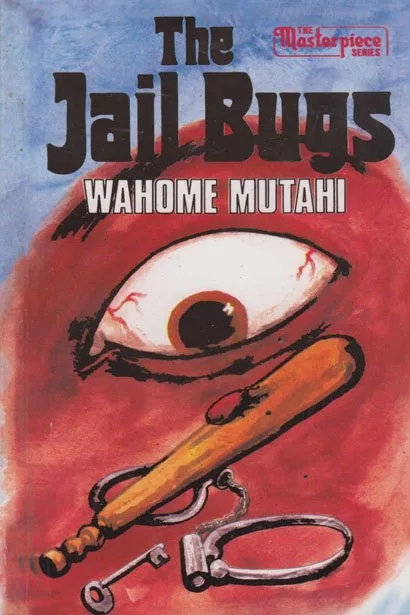
Wahome Mutahi’s The Jail Bugs is not just a novel; it is an uproarious odyssey into the absurdities of life, liberty and bureaucracy, all seen through the eyes of the hapless and endlessly entertaining protagonist, Albert Kweyu.
From the very first page, Mutahi thrusts the reader into a world where rules are twisted, logic is optional and comedy hides in the shadows of despair.
Kweyu is a man whose ordinary life spirals into extraordinary misfortune, landing him behind bars for a reason both laughably preposterous and painfully believable: he is imprisoned for hitting a child due to a car brake failure.
This ludicrous accusation sets the stage for a tale of survival, human folly and the sheer resilience of the spirit when confronted by a system seemingly designed to crush it.
The plot revolves around Kweyu’s misadventures inside a local Kenyan jail, a space that operates as a chaotic universe unto itself. Each day is a careful negotiation between absurd rules, eccentric wardens and inmates whose motives range from the self-serving to the outright bizarre.
Mutahi’s keen eye for detail transforms this confined space into a vivid stage, where the ridiculous and the tragic coexist seamlessly. One particularly striking moment captures the essence of the absurdity: “The jail was a palace of misery, with guards who seemed to have graduated from the School of Arbitrary Punishment and inmates who had perfected the art of appearing guilty while doing nothing wrong.”
In these walls, Kweyu navigates conniving cellmates, the petty cruelty of authority and the unpredictable challenges of life behind bars, all while trying to maintain his dignity—and his sanity.
Mutahi’s writing style is one of the novel’s greatest assets. It is witty, conversational and razor-sharp, capable of delivering devastating humour in a single line while revealing uncomfortable truths about society.
Consider another moment that encapsulates this balance of humour and insight: “In a place where the innocent suffer and the guilty smile smugly, one learns to measure justice not by law, but by luck, stamina and the ability to keep your sense of humour intact.”
His prose moves with a rhythm that carries readers effortlessly through episodes of chaos, reflection and pure hilarity. Each character is vividly drawn, from the naïve newcomer like Kweyu, who is constantly bewildered by the rules, to the hardened veterans who have learned to thrive in this absurd ecosystem.
The novel’s brilliance lies not only in its humour but also in its ability to critique society. The jail acts as a microcosm of Kenya’s broader social and bureaucratic systems—chaotic, inefficient and often unjust.
Mutahi’s humour serves as both lens and shield, allowing readers to laugh while examining the deeper absurdities of governance, social hierarchy and human behaviour.
Even the titular “jail bugs", both literal and metaphorical, become symbols of resilience and survival, illustrating that life—and laughter—finds a way even in oppressive circumstances.
Beyond Kweyu’s personal journey, one of the most compelling aspects of The Jail Bugs is the rich tapestry of the jail community itself. Mutahi brings to life a microcosm of personalities, alliances, rivalries and quirks, creating a world that feels fully lived-in.
From the gossiping inmates who trade stories like currency, to the inventive ways prisoners bend the rules to survive, every scene is a small study in human behaviour under extreme constraints.
The social dynamics within the jail are as unpredictable as they are entertaining—alliances shift, power balances fluctuate and humour becomes a currency of survival as much as a release valve for frustration.
It is in these intricate social interactions that Mutahi demonstrates his mastery, turning a confined setting into a stage for both comedy and insight.
However, the book is not without its flaws. Its episodic pacing occasionally disrupts the story, as Mutahi indulges in long comedic digressions that, while uproarious, slow the narrative’s momentum.
Readers seeking a tightly structured, plot-driven novel may find themselves temporarily adrift amid the chaos. These digressions, though entertaining, sometimes overshadow the emotional depth of Kweyu’s journey, leaving certain character arcs, especially his internal growth, less fully realised than they might have been.
Ultimately, The Jail Bugs is more than a story about a man in jail; it is an exhilarating, thought-provoking journey through the unpredictable maze of life itself. Albert Kweyu emerges not just as a protagonist but as a symbol of human adaptability, wit and survival, navigating a world that often seems designed to confuse and constrain him.
In the end, the novel leaves readers exhilarated, laughing at the outrageous, marvelling at the inventive and reminded that even in the strangest and most oppressive circumstances, ingenuity, community and a sharp sense of humour can carry the human spirit far beyond the walls that contain it.