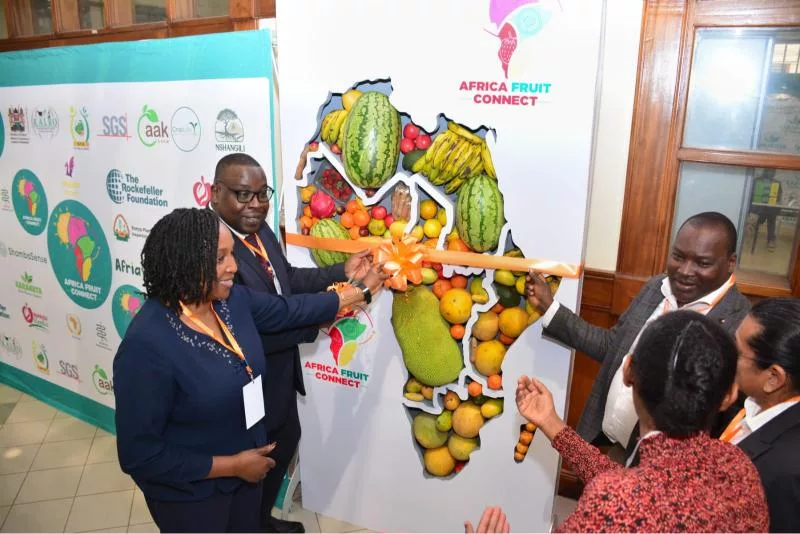
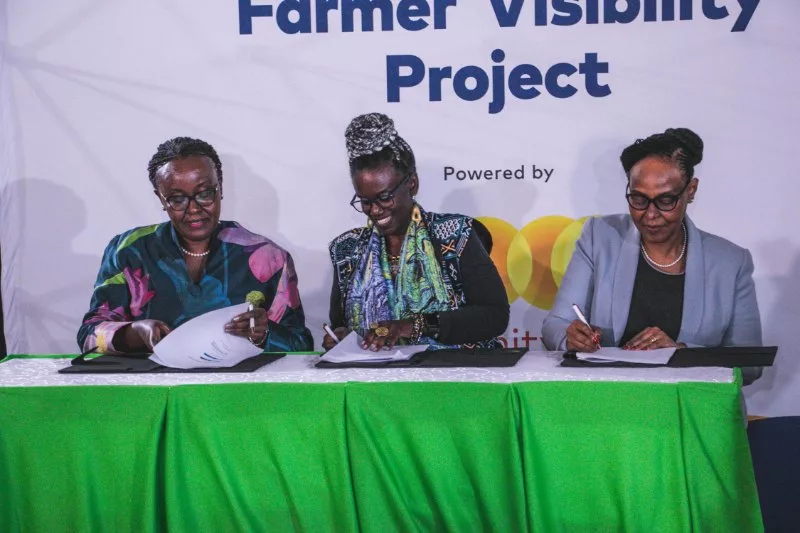
 Heifer International Kenya Country Director Wairimu Munyinyi-Wahome, KCB Foundation Managing Director Mendi Njonjo, and KCB Bank representatyive during the launch the Farmer Visibility Project./ HANDOUT.
Read Also
For years, dairy farmer Mary Wanjiru from Githunguri, Kiambu county, has struggled to access bank loans despite delivering milk to her cooperative every day.
Like many smallholder farmers, she has no title deed or other assets that banks traditionally require as collateral.
However, this could soon change following the launch of a new digital initiative that will allow farmers to build a financial history through their daily farming transactions, making it easier for banks to assess their creditworthiness.
Thousands of smallholder dairy farmers in Kenya are set to benefit from a new digital platform that will help them access loans by creating trusted digital records of their farming activities instead of relying solely on traditional collateral.
The Farmer Visibility Project was launched by Heifer International Kenya, Mastercard, KCB Foundation and KCB Bank Kenya.
It seeks to digitise farmers' transactions, improve their financial visibility and connect them to affordable financial services, markets and investment opportunities.
Speaking during the launch, Heifer International Kenya country director Wairimu Munyinyi-Wahome said the project will introduce a farmer account and digital transaction records that capture activities such as milk sales, purchases of farm inputs and other business transactions.
She said these records can help financial institutions better understand a farmer's business and make informed lending decisions.
She added that a lack of access to affordable credit remains one of the biggest barriers preventing farmers from investing in and expanding their enterprises.
"Many farmers are productive and hardworking, but they cannot access loans because the financial system still relies heavily on traditional forms of collateral," she said.
She noted that the project seeks to change how financial institutions view farmers by using their transaction history as evidence of a viable business.
"We cannot continue saying agriculture is the engine of our economy while farmers remain excluded from financial services. By increasing their visibility and treating them as equal business partners, we can unlock the credit they need to grow," she said.
Wahome said the project is targeting about 280,000 farmers in the pilot phase, with implementation beginning in Kiambu, Uasin Gishu and Nandi counties before expanding to other parts of the country.
She said the pilot will allow the partners to test the model, gather lessons and refine it before scaling it up nationally.
Daniel Huba, Team Leader for Mastercard's Growth Segment for Africa, said the project is designed to help banks make lending decisions using farmers' digital records rather than depending entirely on physical assets.
"Our goal is to ensure farmers become visible through the transactions they carry out every day. Once these activities are digitised and traceable, they can become part of the information banks use when assessing credit applications," he said.
Huba said the project will measure success by tracking how many farmers digitise their farming activities, open bank accounts, access financial services, purchase quality farm inputs and secure better markets for their produce.
He noted that collateral will not disappear overnight but said the long-term vision is to reduce dependence on physical assets as farmers build reliable financial histories.
"We are beginning a journey where digital transaction records can eventually become a form of collateral. As farmers build credibility over time, banks may no longer need to demand traditional security," he said.
Huba said the initiative is not a donor-driven project but a commercially sustainable partnership between Mastercard and KCB Bank, with Heifer International providing technical expertise and farmer engagement.
KCB Foundation managing director Mendi Njonjo said improving farmers' visibility within the financial system would enable banks to develop products tailored to the unique needs of smallholder farmers.
"We want farmers to become properly banked in ways that increase household incomes, strengthen county economies and contribute to national economic growth," she said.
The Sh32.5 million (US$250,000) pilot project will particularly focus on women and young people, who make up a large proportion of Kenya's smallholder farmers but often face greater barriers to accessing finance.
Njonjo said many young people lack land or other assets required by banks, making it difficult for them to invest in agriculture despite their interest in the sector.
"If we can solve the challenge of access to capital for women and young people, we will have addressed one of the biggest obstacles preventing them from participating fully in agriculture," she said.