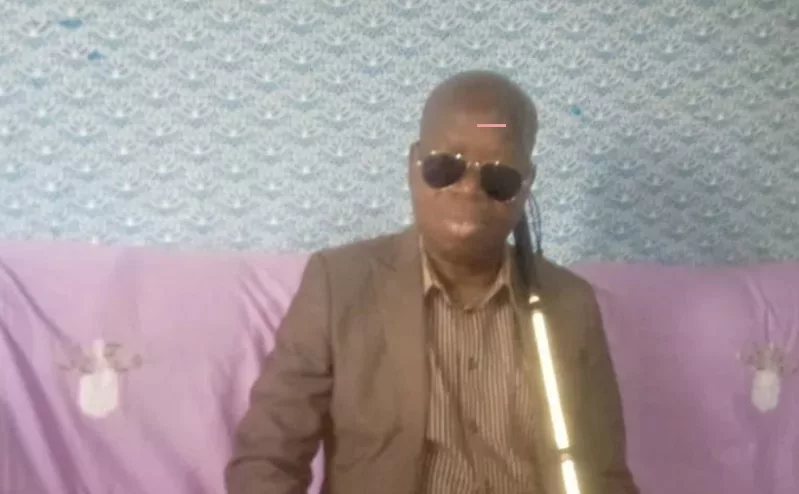
 Dr James Oluoch By Charity Chigulu/HANDOUT
It began with a sudden blackout while he was teaching at Kabete Technical Training Institute in 2010.
Without warning, Dr James Oluoch lost his sight in the middle of a lesson. Alarmed students rushed to help him. After sitting quietly for a while, his vision gradually returned and he resumed teaching.
He dismissed the incident as minor and never sought medical attention.
Five years later, while lecturing in the department of business at a Christian university, it happened again.
"It took some time for me to regain my sight, even after the students took me to the lecturers' lounge," Oluoch recalls.
This time, he visited an eye specialist. After a series of tests, he was diagnosed with glaucoma. By then, he had already lost vision in his right eye, while his left eye would periodically become blurred.
Despite the diagnosis, James continued teaching and pursued a PhD in Human Resource Management.
"I had to work because I had to eat," he says.
Using the prescribed eye drops was painful, but he persevered.
In 2016, a new and more troubling symptom emerged. He began suffering severe headaches accompanied by excessive sweating, particularly in the mornings and evenings.
Believing it was malaria, he sought treatment from a doctor friend. Although laboratory tests were negative, he was treated for malaria, but the headaches persisted.
His doctor eventually referred him to a neurologist.
"He told me it could either be a migraine or a tumour," Oluoch says.
Further tests in 2017 confirmed a brain tumour. By then, his condition had deteriorated significantly.
"I was vomiting and people told me I was becoming mentally unstable," he recalls.
Forced to stop lecturing in August 2017, Oluoch faced another challenge. Surgery was expected to cost Sh7 million. He turned to the National Hospital Insurance Fund (NHIF), which enabled him to undergo treatment at Kenyatta National Hospital after the procedure proved more affordable than at the private hospital where he had first been diagnosed.
Doctors initially tried medication for two weeks in the hope of shrinking the tumour, but it failed to respond.
Surgery became unavoidable.
After nearly 11 hours in the operating theatre, Oluoch survived. But when he woke up, he was completely blind.
Doctors explained that the tumour had damaged his optic nerves beyond repair.
"Medical professionals should know how to deliver such news compassionately. Instead of simply telling someone they are now blind and should accept it, they should offer counselling and support," he says.
With no job, meeting the cost of treatment became another struggle. His family stepped in to help pay for medication, which cost about Sh10,000 per prescription, alongside regular follow-up clinic visits for a year.
Although the tumour has not returned, Oluoch underwent rehabilitation at the Kenya Society for the Blind to help him adapt to life without sight.
Looking back, he believes earlier specialist intervention may have changed his journey.
He is urging hospitals treating eye conditions to work more closely with neurologists so that patients with neurological disorders affecting vision can be identified sooner.
"Doctors should not insist on treating a condition if they are unsure. They should refer patients to specialists," he says.
Despite losing his sight, Oluoch rebuilt his life and later secured employment with the Next Step Foundation, supported by the Swedish government.
Neurosurgeon Dr Benjamin Mutiso says persistent headaches lasting more than 72 hours, unusually severe headaches, seizures, blurred or double vision, and weakness on one side of the body should never be ignored because they may signal an underlying neurological condition.
He says risk factors include previous head injuries, drug and substance abuse and a family history of neurological disorders.
Maintaining brain health through regular exercise, a balanced diet rich in omega-3 fatty acids and vitamins, and avoiding risky behaviour can also reduce the risk of some neurological conditions.
Mutiso, however, says access to neurological care in Kenya remains limited because the country has too few neurologists and neurosurgeons.
Although the number of specialists has grown over the past 15 years, many county referral hospitals still lack adequate neurological services.
Dr Daniel Kanyatta, a member of the East African Neurological Surgeons Association, says neurological conditions commonly seen in Africa include head injuries from road crashes, epilepsy, cerebral palsy, meningitis and brain tumours, most of which are non-cancerous.
He also warns that poor nutrition in early childhood can impair brain development, contributing to learning disabilities and delayed cognitive growth. He urges parents to ensure children receive balanced nutrition during their first five years of life.
According to the World Health Organization, neurological disorders account for about 7.5 per cent of hospital admissions in Kenya. Meningitis and neonatal encephalopathy contribute nearly half of the country's neurological disease burden, while epilepsy and cerebrovascular disease each account for about 11 per cent.
For Oluoch, those statistics are deeply personal. His journey from lecturer to patient, and ultimately to life without sight, has transformed him into an advocate for early diagnosis, timely referrals and compassionate care for people facing neurological illness.