Kenya’s latest opinion polls have armed both political camps with a weapon to aim at. President Ruto’s strategists see a comfortable plurality, fortified by state tact, strategic arithmetic and regional bargaining.
The opposition, fractured and frustrated, reads the same data as proof that a unified assault would secure victory. Both interpretations are seductive but dangerously incomplete. This is the high-wire act of August 2027, a contest where numbers illuminate structure but never destiny.
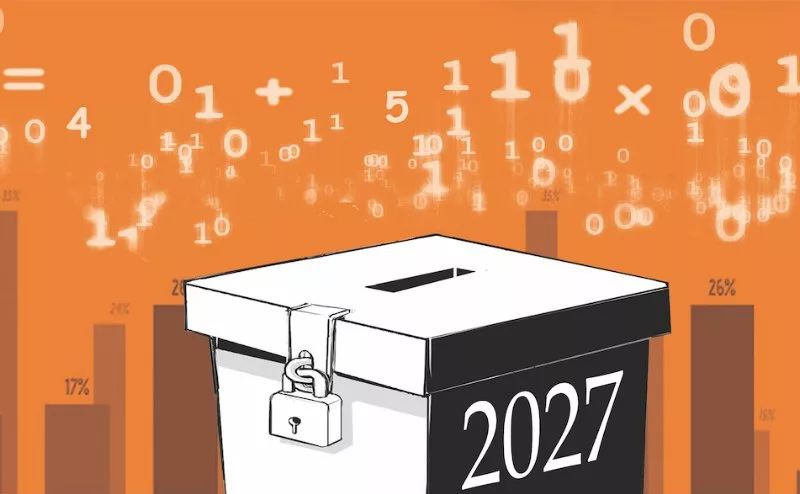
Two independent surveys, TIFA and Infotrak, depict nearly identical battlefields. TIFA shows Ruto at 24 per cent, Sifuna 15 per cent, Matiang’i 14 per cent, Kalonzo 13 per cent, and Gachagua seven per cent. Infotrak places Ruto at 32 per cent, Kalonzo 13 per cent, Sifuna and Matiang’i at 12 per cent each and Gachagua at four per cent. Undecided voters loom large at 13–20 per cent, a restless bloc that historically tilts toward incumbents. Yet history is fickle, and these fence-sitters watch every misstep closely.
Here begins the opposition's delusion. Adding the challengers' numbers, 49 per cent against Ruto's 24 per cent, seems to spell victory. It does not. This is the transitivity fallacy, a rookie error betraying political inexperience. A Kalonzo voter may rank Ruto second. A Gachagua loyalist may despise Sifuna's populism. In our first-past-the-post system, fragmentation is not coalition; it is a suicide pact.
Still, the President's fortress is not impregnable. The IEBC counts 24.7 million registered voters, and regional demography favours the incumbent on paper. But paper cannot capture the tremors since Gachagua's 2024 impeachment. The former deputy has rebranded as Mt Kenya's fiery defender, and the Ol Kalou by-election has already sent warning shots across the political landscape.
Yet here lies the twist that keeps strategists awake: as one door groans shut in the mountain, another swings open. The broad-based government, that political bargain of June 2024, has carved shocking inroads into Nyanza, Raila Odinga's once-untouchable bastion.
Ruto pulls 41 per cent there (TIFA) and 40 per cent (Infotrak). This is not grudging tolerance; it is outright adoption. Raila's absence has created a vacuum, and Ruto's team has filled it tactfully. This is a dagger in the opposition's flank, a masterstroke leaving them scrambling for counter-narratives.
This realignment is no accident. ODM's leadership has officially thrown its weight behind Ruto, urging mass voter registration. While Sifuna's meteoric rise from zero to 15 per cent makes for juicy headlines, he operates outside the Orange machinery.
Raila's faithful have always been loyal to the Orange brand, and with Raila gone, that loyalty flows toward the broad-based formation. The opposition is trapped in a cruel dilemma: a popular firebrand in Sifuna, yet institutional gravity pulling toward government orbit.
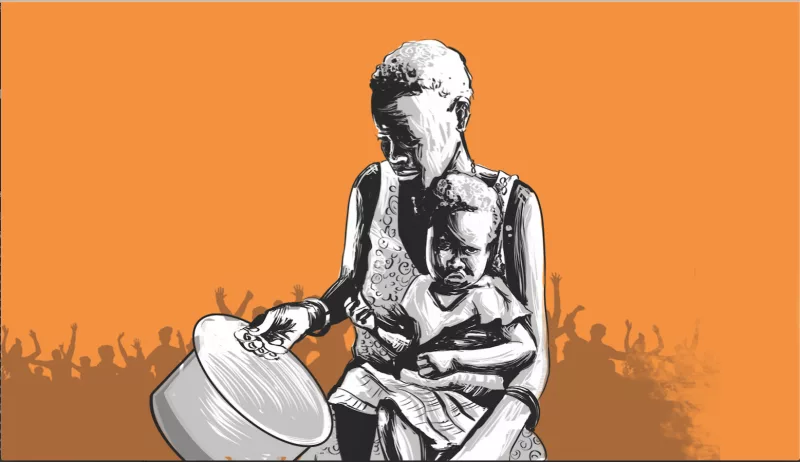
Ruto, for his part, does not rest on demography. He bets on delivery through the Bottom-Up Economic Transformation Agenda (BETA), a five-pillar promise covering agriculture, MSMEs, housing, healthcare and digital highways. But the opposition seizes on economic pain: high costs, joblessness and the squeeze on ordinary wallets.
This is not merely a vote war; it is a narrative war, a battle for the soul of struggling Kenyans. Who brings relief? The President must turn institutional muscle into tangible meals on tables. The opposition must convince Kenyans that its disunited ranks can actually govern, a tall order when leaders barely agree on a photo op, let alone a shared manifesto.
Yet the opposition's fatal flaw remains its tribal geometry. Ukambani's Kalonzo voter is not Western's Sifuna supporter. These are overlapping circles, not a united front. The tyranny of small numbers persists; each faction clutches its own patch, playing straight into Ruto's hands. Without a pre-election pact or a single standard-bearer, the opposition replays 2013 and 2017: divided, outmanoeuvred and ultimately defeated.
So what does this mean for August 2027? Polls are snapshots, not prophecies. Structural math favours Ruto, provided the opposition stays fractured. But economic headwinds and Mt Kenya's disquiet give challengers real openings.
For Ruto, the data is a warning wrapped in comfort: deliver BETA results and mend home-front cracks, even as he feasts on new allies. For the opposition, the equation is brutal: unity or oblivion.
Strategic adviser and expert in leadership and governance