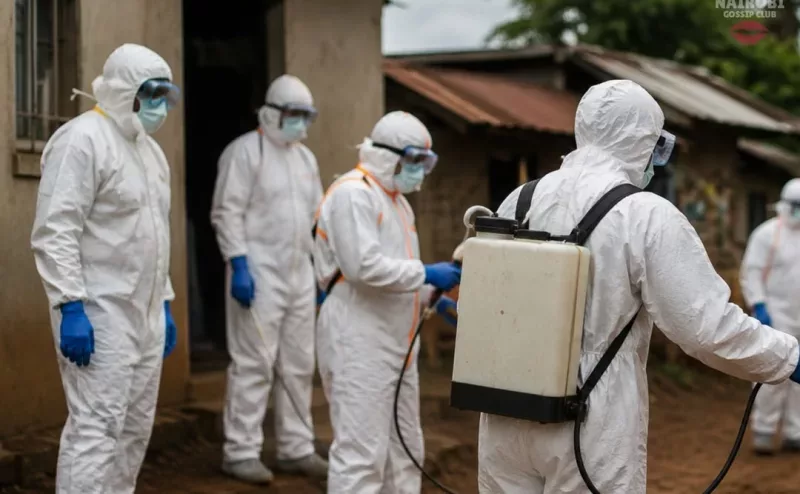
Kenya has confirmed its first-ever Ebola case. The patient, a Kenyan who had lived in the DRC for seven years, had been ill for about a month before travelling by road to Kampala and flying to Nairobi. He was isolated on arrival and died on last Monday.
Health officials have listed 28 contacts and are tracing 23 passengers and four crew members from the same flight.
The strain involved has no approved vaccine or specific medicine. Next door in Congo, more than 4,000 people have died and confirmed cases have reached 8,300 across seven provinces, the country’s worst Ebola epidemic on record.
A border built on hope
We should be relieved that this patient went straight to hospital. We should not mistake luck for a working system. A sick man travelled for weeks through three countries without being detected until he reached Nairobi. That is not a story about one traveller. It is a story about public systems stretched past breaking point.
The warning signs were there. During an earlier Ebola scare in Uganda, health officials acknowledged limited stocks of Ebola-specific protective equipment and a shortage of dedicated ambulances for safe patient transfers.
Kenya has one doctor for every 5,263 people, far from the WHO-recommended ratio of one per 1,000. Last year, contracted UHC workers spent 96 days on strike demanding permanent jobs and overdue pay.
Nanyuki: whose safety comes first?
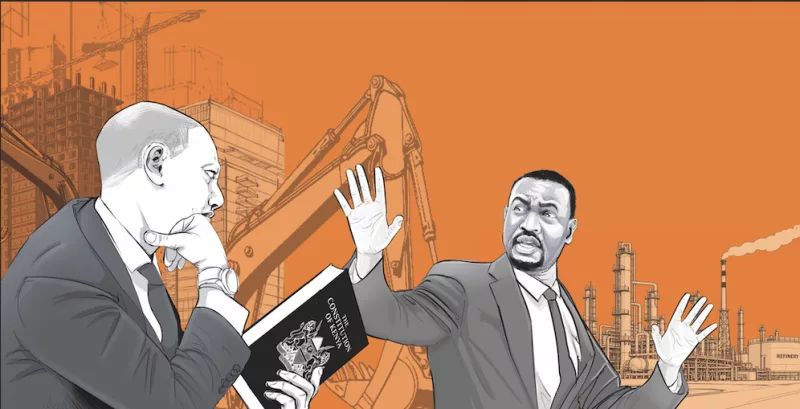
In May, Kenyans learned how fast an Ebola facility can be built when the patients matter to a powerful government.
The United States announced it was constructing a facility at Laikipia Air Base in Nanyuki. Americans who contracted Ebola overseas would be sent there rather than flown home. It would start with 50 beds and have isolation and biocontainment units for suspected and confirmed cases.
The country that cut aid to Kenya’s health system found the money and the urgency to build a biocontainment unit on Kenyan soil, for its own citizens.
Nanyuki said no. Hundreds of residents poured into the streets, blocking roads and clashing with police. At least one person was killed when police opened fire on demonstrators.
Work reportedly continued despite Kenyan court orders barring it. County leaders warned the facility could brand the area as an Ebola treatment centre and scare away investors and tourists.
The government argued that the centre is not reserved for any nationality and will strengthen Kenya’s own preparedness. It said the centre is one of 23 quarantine and isolation centres being built. If that is true, it should be easy to prove. Publish the agreement. Tell Kenyans who paid, who controls admissions and who gets a bed first.
When our first patient arrived this month, he was taken to a private hospital in Nairobi, not to a gleaming biocontainment unit. Nanyuki was never really a debate about one building. It was about whether Kenyan lives come first in Kenya’s own health security, or are an afterthought to someone else’s.
The money has gone elsewhere
Cuts in American aid left a $403.8 million hole in Kenya’s health budget. More than 41,000 Kenyan health workers were affected by changes to HIV programme funding.
At home, the budget is already spoken for. A recent rights report found that 68 per cent of ordinary revenue goes to debt service and salaries. That leaves less than a third for health, education, water, housing and social protection. Interest payments alone rose from 18 to 25 per cent of government spending in four years.
We have seen this film before
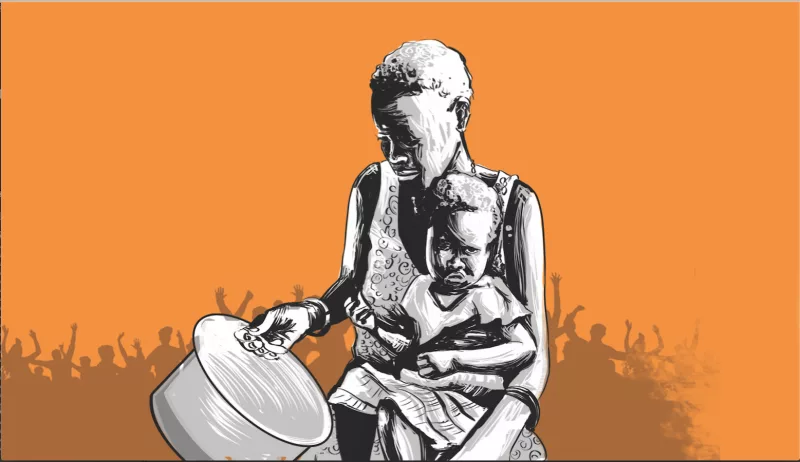
Covid-19 was the best period in history for the world’s billionaires. Governments pumped trillions into economies and stock markets soared. The richest grew richer while most of humanity saw incomes fall. In Kenya, a tiny elite holds more wealth than millions of the poorest citizens combined.
The pattern is repeating. A shock arrives. Ordinary people absorb it through lost wages, closed borders and empty clinic shelves.
The very wealthy, and wealthy nations, protect themselves first. The public purse is left too thin to fight the next outbreak. Ebola does not care about wealth, but our capacity to stop it depends entirely on how we raise and spend money.
Tax wealth to fund health security
Estimates show that a modest annual progressive wealth tax could raise close to $1 billion a year in Kenya. The rates would be two, three and five per cent on fortunes above $5 million, $50 million and $1 billion.
That would be enough to cut most of what households pay out of pocket for health care. It is also more than double the Sh46 billion shortfall lawmakers warned of last year, a gap threatening health worker hiring, HIV and TB care, and vaccine supplies.
That money would buy what this week exposed as missing: screening that catches a sick traveller before he boards a plane, protective gear on every isolation ward, dedicated ambulances, and permanent contracts for the health workers who are our real border guards.
It would also pay for isolation centres that Kenyans build, Kenyans control and Kenyans trust. No community should feel a facility is being imposed on it for someone else’s benefit.
Kenya’s response must also avoid panic. WHO has advised against travel and trade restrictions on Kenya, DRC and Uganda.
Shutting down the economy would push more Kenyans into the poverty that makes outbreaks harder to contain. The smarter choice is to invest before the next case, not after.
Proactive, not reactive
Our nurses and clinical officers will go to work tomorrow, as they always do. The least we owe them is a health system funded by those who can most afford it, not one that runs on the courage of underpaid workers and luck.
This week’s case was a warning, not yet a catastrophe. For too long, our approach to outbreaks has been reactive. We scramble for protective gear once a patient is already in the ward. We trace contacts once the plane has landed. We argue over isolation centres only after the bulldozers arrive.
That must end. We must tackle Ebola in a way that is proactive and intentional. That means funding our defences before the virus reaches our borders. It means building facilities with communities rather than around them.
And it means paying for it fairly, by asking the wealthiest to contribute their share. The next case will come. Whether it stays a single case or becomes an outbreak depends on the choices we make now.
Mandela Washington fellow and a governance and leadership analyst