On July 2, 1881, Charles Guiteau shot President James Garfield. The wound was survivable. The bullet missed vital organs and major vessels. Garfield lived nearly 80 days. What killed him was not the assassin’s lead but the unwashed fingers and unsterilised instruments of his own doctors.
They probed repeatedly, introducing infection that blossomed into sepsis, abscesses and secondary haemorrhage. Joseph Lister’s antiseptic methods had existed for years. American physicians largely ignored them. Guiteau later sneered that the doctors, not he, had murdered the president. History largely agrees.
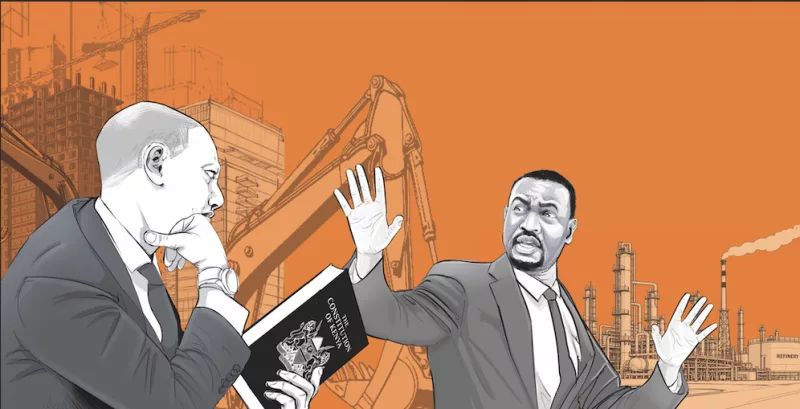
Kenya’s constitutional order is that patient. Every election is an emergency operation where citizens vote to excise leaders who have failed to uphold the constitution and deliver its promises. Yet the theatre remains contaminated. We replace one set of office-holders with others who carry unresolved scandals, forged academic certificates, integrity questions under Chapter Six and conflicts of interest.
Pre-election seasons are euphorically noisy with scanty verified information, selective disclosures and emotional mobilisation. Post-election, the patient is left to fester. The infection of patronage, selective enforcement and institutional capture spreads. Good order and constitutional ideals die, not from the initial wound of bad leadership, but from the sepsis we tolerate afterwards.
The conditions that promote this infection are both societal and institutional, and they are grotesque. We have normalised the idea that personal integrity is negotiable once power is seized. Political parties recycle candidates with open blights because ethnic arithmetic or financial muscle still outweigh character.
Institutions charged with sterilisation often perform the probing with dirty hands, with clearances that raise more questions than they answer, vetting that arrives too late or too lightly, and oversight that softens when the powerful are implicated. Parliamentary processes become rubber-stamps; independent commissions face resource starvation, interference or public distrust.
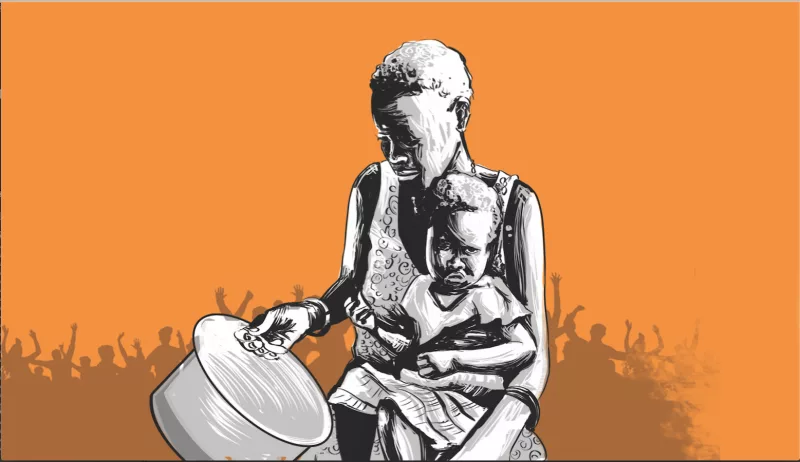
Citizen vigilance flares during campaigns then collapses into fatigue or fear. When young Kenyans take to the streets demanding better, the response has too often been force rather than accountability. The result is a sovereign republic that repeatedly survives the ballot yet slowly dies of preventable corruption of purpose.
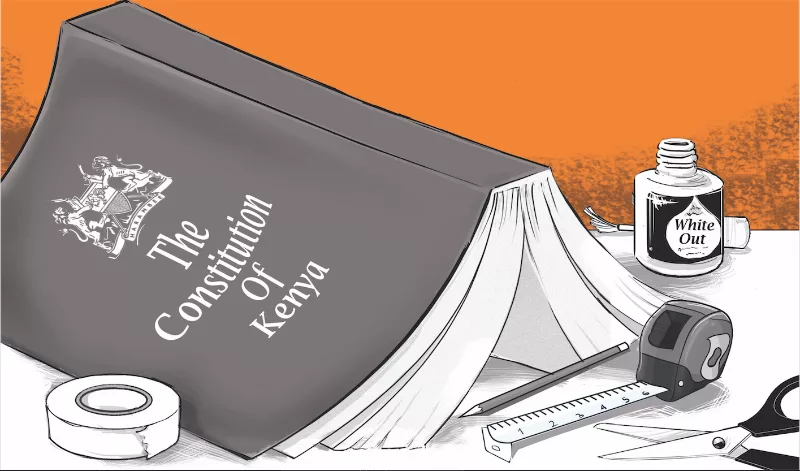
Yet we are not without modern medicine. Kenya’s 2010 constitution and its supporting architecture were designed precisely as sterile technique and advanced care. Chapter Six on Leadership and Integrity sets clear standards of personal integrity, competence and avoidance of conflict. The Leadership and Integrity Act, the Ethics and Anti-Corruption Commission Act, and the recent Conflict of Interest Act give those standards legal teeth.
The EACC holds dual powers, namely, prevention through vetting, systems reviews, integrity testing and risk assessments, and treatment through investigation, asset recovery and referral to prosecutors. The Independent Electoral and Boundaries Commission, increasingly working with professional bodies, can tighten candidate scrutiny.
The Auditor General exposes financial sepsis, which parliamentary committees can cause to be summoned and scrutinised. The judiciary entertains public-interest petitions that can halt contaminated appointments or enforce constitutional rules. Access to Information laws and asset-declaration regimes create transparency. These are the antibiotics, the scanning and imaging, as well as the continuous monitoring.
Active citizens are the immune system, with public participation as a constitutional right, not a favour. Public-interest litigation, investigative journalism, civil society parallel audits, whistleblowing and sustained, peaceful pressure keep institutions honest when they drift.
When the campaign fog lifts, records become available; attention can be sustained. The tools exist. What has been missing is consistent, equal and fearless application.
We know what happens when the operating theatre remains filthy. Garfield’s slow, agonising death was unnecessary. Kenya’s slow corrosion of constitutional ideals is equally unnecessary. The institutions of sterilisation and modern care are already built; we need to strengthen their independence, fund them properly, enforce Chapter Six without fear or favour, and refuse societal complicity in recycling the compromised.
Citizens must treat oversight as a continuous civic duty, not a seasonal spectacle. Only then does the sovereign republic stop dying of self-inflicted sepsis and begin to recover the health its Constitution promised.
Social impact adviser, social consciousness theorist, trainer and speaker, an agronomist consultant for golf courses and sportsfields and author of 'The Gigantomachy of Samaismela' and 'The Trouble with Kenya: McKenzian Blueprint'