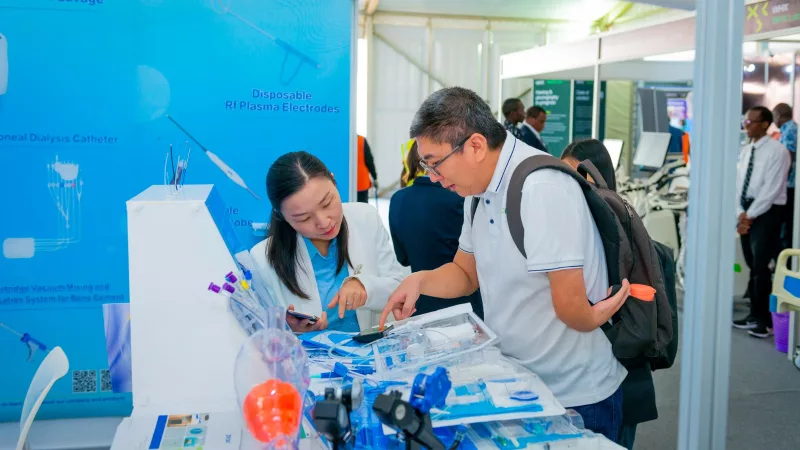
 Beyond new technologies, discussions are expected to focus on practical issues affecting healthcare delivery and local manufacturing /HANDOUT
 The shift comes as governments across the East African Community continue working to improve access to healthcare while addressing persistent challenges, including shortages of medical equipment, pharmaceuticals and diagnostic technologies. Industry analysts say stronger regional supply chains and more efficient trade systems will be critical in ensuring health facilities can access essential products at affordable prices.
Recent market projections reflect the scale of the opportunity. East
Africa's hospitals market is estimated at $9.25 billion in 2025, while the
pharmaceuticals market is valued at about $2.39 billion, highlighting sustained
demand for healthcare products and services across the region.
Healthcare experts note that Kenya's strategic location, established logistics infrastructure and role as a regional transport hub place the country in a favourable position to serve neighbouring markets such as Uganda, Tanzania, Rwanda, South Sudan and Ethiopia.
The growing emphasis on regional healthcare collaboration comes at a time when Kenya is also pursuing broader reforms aimed at strengthening its health system. The rollout of the Social Health Authority, increased investment in primary healthcare and ongoing efforts to improve access to medicines have kept healthcare at the centre of national policy discussions.
These reforms coincide with wider conversations about improving healthcare financing, expanding digital health solutions and building more resilient medical supply chains capable of responding to future public health emergencies.
Against this backdrop, healthcare stakeholders from across Africa and beyond are expected to gather in Nairobi from September16 to 18 during the 10th edition of World Health Expo Nairobi, formerly known as Medic East Africa.
The event, to be held at the Kenyatta International Convention Centre, is expected to attract more than 5,500 delegates and over 200 exhibitors from more than 30 countries, bringing together manufacturers, hospital representatives, distributors, policymakers and healthcare technology providers.
According to the organisers, this year's exhibition reflects continued
growth in regional healthcare commerce, with exhibitor participation expected
to increase by 22 per cent compared to last year and exhibition space expanding
significantly.
Tom Coleman, portfolio director for healthcare at Informa Markets, said stronger regional trade links are helping create new opportunities for healthcare businesses operating across East Africa.
"As regional trade corridors strengthen and healthcare supply chains become more connected, Nairobi continues to play an increasingly important role in bringing together manufacturers, distributors, hospital groups and policymakers to build partnerships that improve healthcare access across the region," he said.
The exhibition will showcase developments across medical devices, diagnostics, laboratory technology, healthcare infrastructure, digital health, hospital equipment and rehabilitation technologies.
Beyond new technologies, discussions are expected to focus on practical issues affecting healthcare delivery, including procurement efficiency, local manufacturing, supply chain resilience, workforce development and expanding access to quality healthcare services.
With demand for healthcare continuing to rise alongside population growth, industry stakeholders say stronger regional partnerships will be essential in improving access to medical products while supporting sustainable growth across East Africa's healthcare sector.
The writer is MCIPR communications specialists in trade and healthcare