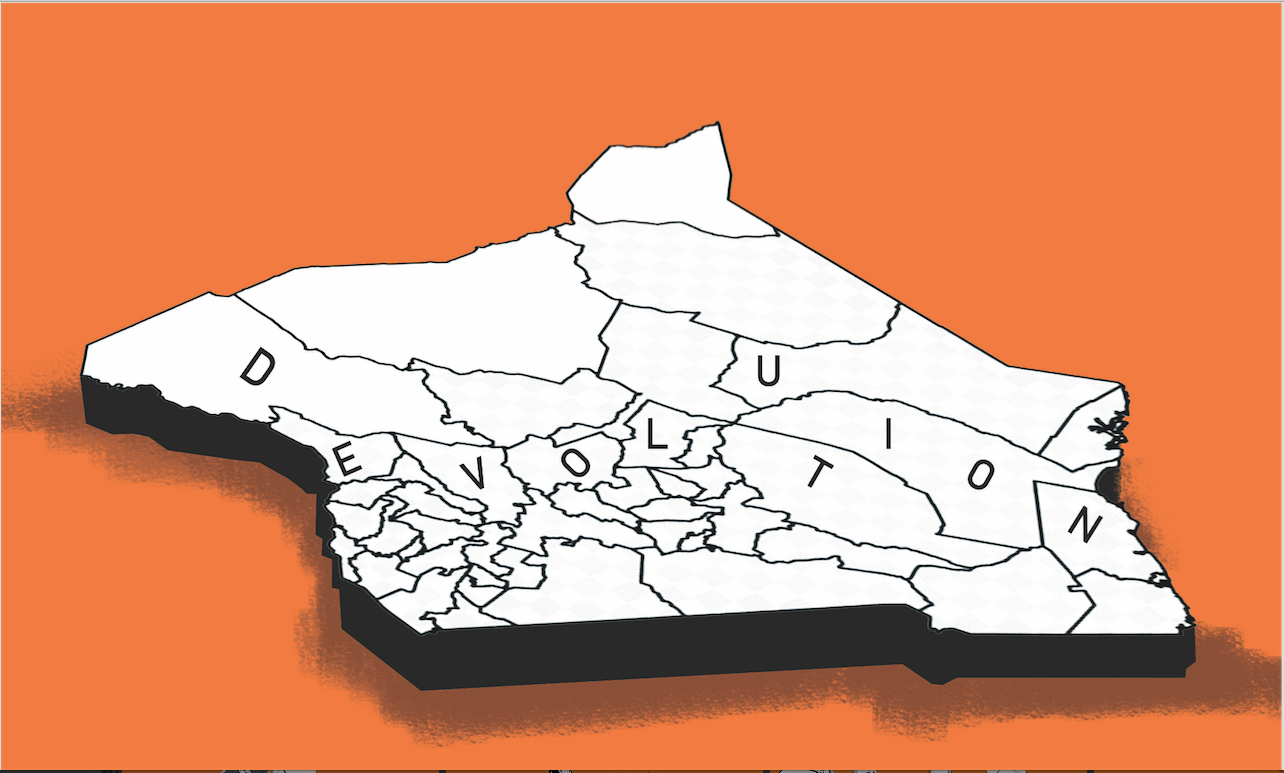
As the curtain falls on the 2026 Fifa World Cup and the countdown to the 2027 Pamoja Africa Cup of Nations begins, the most important lesson our football managers in the region should take from North America is this: devolve the organisation and logistical execution of the tournament to the lowest competent level.
It is tempting to look at the World Cup and marvel at the spectacle, the packed stadiums, dazzling opening ceremonies and flawless television production. But the real story was told away from the cameras.
The tournament succeeded because responsibility was shared devoid of bloated egos and cheap incompetence.
Decisions were made where they mattered most, by people closest to the action, while national governments concentrated on functions only, they could perform.
The 2026 World Cup was the largest in history, bringing together 48 teams in 104 matches spread across three countries.
The United States hosted 78 matches, including every fixture from the quarter-finals onwards, while Canada and Mexico staged 13 matches each. It was not an equal distribution but an efficient one, reflecting infrastructure capacity and logistical realities rather than political sensitivities.
Every host city had its own local organising committee working directly with Fifa, allowing decisions on transport, volunteers, stadium operations, accommodation and fan services to be made locally instead of waiting for instructions from a distant national headquarters.
National governments oversaw elements like security, immigration, customs, transport and emergency response that required close cooperation across agencies and across borders.
In the United States, President Donald Trump established a White House task force to bring together federal departments and ensure that planning was coordinated from the highest level of government. It was not another layer of bureaucracy; it was a mechanism for eliminating it.
Kenya should seriously consider a similar multidisciplinary Afcon task force. It should bring together the Ministries of Sports, Interior, Transport, Tourism, Health, ICT and Foreign Affairs, alongside county governments and the Football Kenya Federation. One table. One chain of command.
One place where problems are solved before they become crises. Major tournaments are not derailed by lack of ambition. They are derailed by agencies working in silos.
But the greatest lesson lies even lower. FKF should resist the instinct to run Afcon from Nairobi. Its county branches and regional affiliates should not merely be informed of decisions; they should be part of making them.
Every host venue should have a local organising committee comprising county officials, football administrators, security agencies, hospitals, transport providers, hotels, universities, business leaders and volunteers.
These are the people who understand their localities. They know the roads that choke during rush hour, the hospitals that can respond fastest, the hotels with spare capacity and the businesses capable of supporting the tournament.
Ownership breeds efficiency. People work harder for projects they feel belong to them than for instructions issued from headquarters.
And being the first tri-nation hosting of the continental jamboree, diplomacy is right at the centre of the game, and prominently so given the usual regional politics that dog the relationship with our neighbours.
Anyone familiar with East Africa knows that Kenya, Uganda and Tanzania enjoy a relationship that is cordial one day and competitive the next. Trade disputes, policy disagreements and occasional diplomatic spats have become part of our regional politics.
Yet Afcon demands that these rivalries be placed on ice, at least for a month. The United States, Canada and Mexico have hardly enjoyed a frictionless relationship in recent years. They have sparred over trade, immigration and border policy.
Yet once the tournament approached, they understood that the success of the World Cup depended on presenting one seamless event rather than three competing national projects.
Given the tourism and business benefits that the sporting fete presented, it was in their interest to bury hatchets, even for a moment. Jumuiya can do the same.
A supporter landing at Jomo Kenyatta International Airport for a match in Nairobi should be able to travel to Kampala for a quarter-final or Dar es Salaam for another fixture without encountering unnecessary administrative hurdles.
Immigration systems, transport planning, security protocols and fan information should speak the same language even if the three countries retain different governments. "Pamoja" cannot remain a slogan printed on banners. It must define how the tournament is run.
There is also a long-term prize worth pursuing.
Kenya is investing heavily in sports infrastructure, from Talanta Sports City to the rehabilitation and construction of stadiums across the country. These investments should not be judged solely by whether they impress Caf inspectors.
Their true value will be measured years after the final whistle. Stadiums that host league matches, school competitions, concerts and community events will justify every shilling spent. Stadiums that remain locked behind rusting gates will become monuments to poor planning.
But even the finest stadium cannot compensate for poor management.
Afcon 2027 will not be remembered because Kenya built a few new sports facilities. It will be remembered for whether East Africa proved that three countries can plan, coordinate and deliver a tournament that works.
The football will take care of itself. The real contest begins long before the opening match. It will be won in committee rooms, county offices, immigration desks, control centres and local organising committees where thousands of small decisions determine whether millions of people experience a tournament worth remembering.
If there is one lesson from North America, it is this: successful tournaments are not centralised. They are coordinated from the top but delivered from the ground up. That is the model Kenya should embrace as Afcon 2027 draws closer.