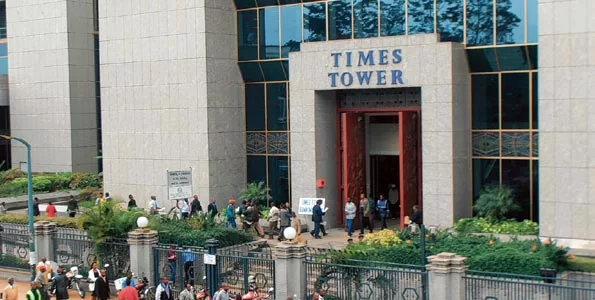
 KRA may do away with tax incentives to promote fairness and uniformity in taxation
The Kenya Revenue Authority (KRA) is considering scrapping the tax amnesty programme after concerns that repeated waivers unfairly reward non-compliant taxpayers while penalising those who pay their taxes on time.
Under the current arrangement, the taxman waives 100 per cent of accrued penalties, interest and fines on eligible tax debts for the period ending December 31, 2025.
The aim is to encourage compliance by easing the financial burden on taxpayers, allowing the government to recover outstanding principal taxes.
KRA is, however, considering doing away with the incentive to promote fairness and uniformity in taxation by ensuring the tax burden is shared equitably among citizens, as provided for under Article 201 of the constitution.
"We might not have tax amnesty," KRA chief manager for policy Josephine Mugure said during the Kenya Leadership and Integrity Forum (KLIF), organised by the Ethics and Anti-Corruption Commission (EACC) to mark the 10th African Anti-Corruption Day.
Mugure, however, clarified that her remarks reflected her personal assessment based on public feedback and did not represent an official government position.
She argued that repeated tax amnesties create a perverse incentive, with compliant taxpayers feeling disadvantaged.
She said the revenue authority was considering the policy shift based on feedback from taxpayers submitted to Parliament.
They submitted that the waiver encourages defaulters as non-compliant taxpayers become almost certain there won't be consequences because another amnesty will eventually be offered.
"One of the feedback that the stakeholders gave the MPs is that we are punishing the people who do right and reward those who do wrong. The ones who do right are the ones who pay tax and if there's a penalty they pay.
"Kenyans are very alert and what they are saying is if they are going to give amnesty to these people who did not pay in time - that's why there are penalties and interests - then you refund us what we paid," she said.
"That shows you that people are alert and they are seeing the discrimination so we might not be able to give another amnesty as a government. That's my personal comment; after having interacted with this for a while, I see where we are heading. People are woke in every way."
How the current tax amnesty works
The Finance Act, 2026 reintroduced the tax amnesty programme, which took effect on July 1, 2026, to ease the financial burden on taxpayers and encourage voluntary compliance.
MPs had previously repealed Section 37 of the Tax Procedures Act through the Finance Act, 2023, scrapping blanket tax amnesty.
The Tax Procedures however retained a framework for granting waivers on a case-by-case basis through agreements with defaulting taxpayers via the Alternative Dispute Resolution (ADR) framework.
"Re-introduced under the Finance Act, 2026, this initiative waives 100 per cent of penalties, interest and fines on tax debts accrued up to December 31, 2025," KRA said in a notice dated July 3, 2026.
The amnesty window closes on December 31, 2026.
"This builds on the success of the previous two amnesty cycles, which successfully recovered Sh80.9 billion in principal tax payments while regularizing thousands of taxpayers," KRA said.
Under the framework, taxpayers who had fully settled their principal tax liabilities by December 31, 2025 automatically qualify for a full waiver of the related penalties and interest. No formal application is required.
Taxpayers with no outstanding principal tax but who face late filing penalties also qualify for an automatic waiver once all outstanding tax returns have been filed and all tax liabilities fully declared.
Taxpayers who settle their outstanding principal taxes accrued up to December 31, 2025 in lump sum will similarly receive an automatic waiver of the corresponding penalties and interest.
Those unable to make a lump-sum payment can apply for a structured payment plan through the KRA iTax system.
However, all principal tax due for 2025 must be fully settled by December 31, 2026 to qualify for the waiver.
The amnesty does not apply to tax liabilities arising after December 31, 2025.
This means all principal taxes, penalties and interest accruing from January 1, 2026 remain payable in full.
Principal tax amounts that are the subject of active court cases are also not eligible for the waiver.
"Taxpayers in active litigation should utilise the KRA Alternative Dispute Resolution (ADR) framework to settle principal amounts and unlock amnesty benefits," KRA said.