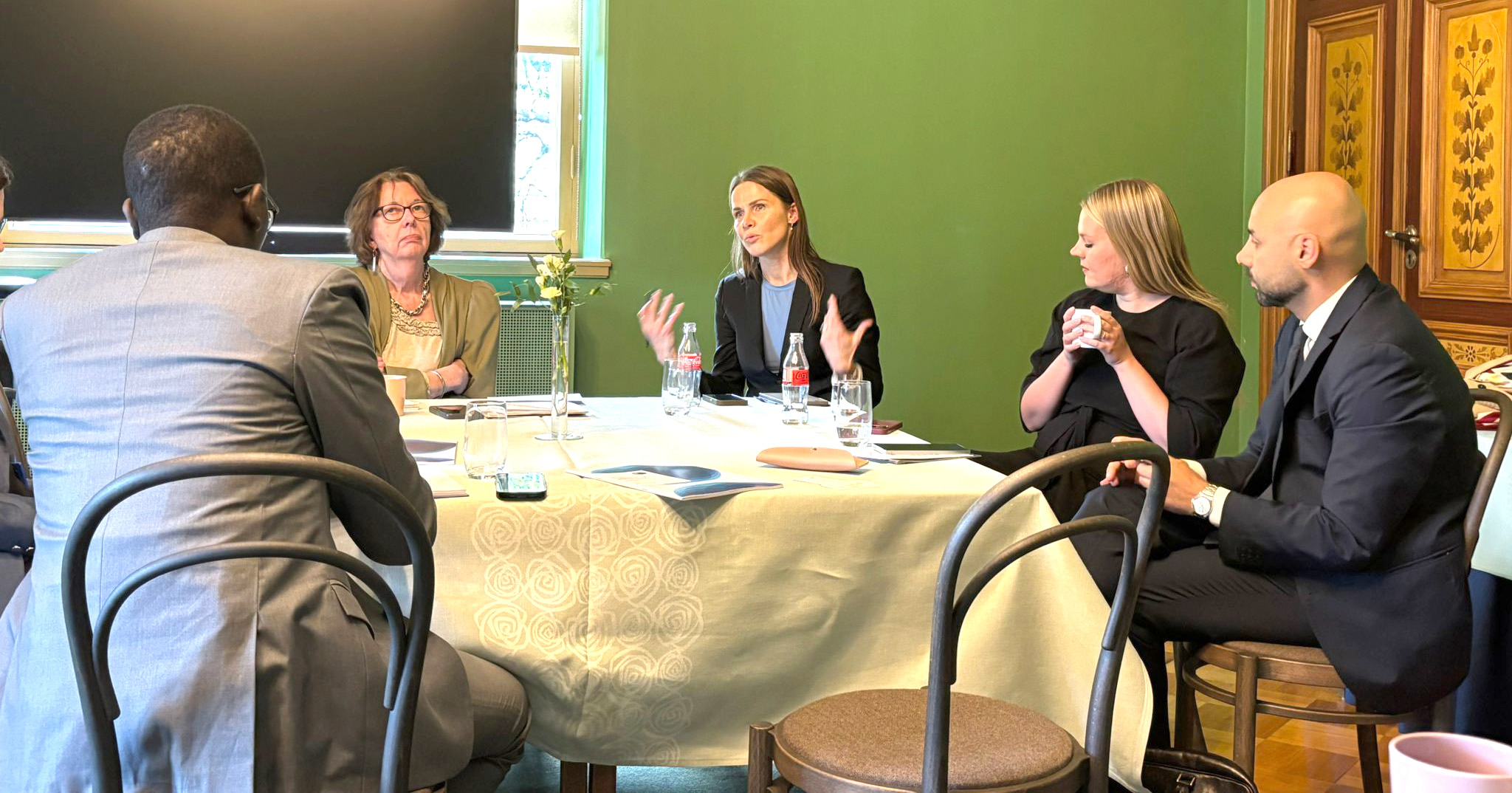
 Pia Horttanainen (centre), chairperson of Nordic Women Mediators Network, speaks during an engagement with international journalists in Helsinki on May 20 /ELIUD KIBII
For decades, Kenya cultivated a reputation as one of Africa’s most influential peacebrokers. From hosting talks on Somalia to facilitating negotiations in South Sudan and the wider Horn of Africa, Nairobi became synonymous with backchannel diplomacy, regional dialogue and crisis mediation.
But that status is now under strain.
From the stalled Tumaini Initiative on South Sudan, to Kenya’s contested role in Sudan’s Quartet and emerging questions over its neutrality in the DRC peace efforts, Kenya’s traditional mediation authority is weakening at precisely the moment regional conflicts are multiplying.
But there are lessons to draw from Finland, the Nordic country that is the go to for mediation engagements.
At a recent high-level exchange with visiting journalists in Helsinki, Finland’s Under-Secretary of State for Foreign Affairs, Outi Holopainen, offered an instructive comparison.
Finland, which has no colonial footprint and limited geopolitical weight, has historically positioned itself as a global mediator through structured, multi-layered diplomacy.
“Peace mediation is a core element of our foreign and security policy. We strongly believe in peace mediation for conflict solution and prevention.
“We have played an active role in international efforts to promote and strengthen mediation. Our conviction is based also on our own historical experience and track record,” the diplomat said.
Finland’s peace efforts are not new. It goes back to the 1970s, when global leaders met in Helsinki for three years of negotiations that resulted in the Helsinki Declaration of 1975.
It established a foundational framework connecting international security with human rights and sovereign equality. This legacy evolved into today’s Organization for Security and Co-operation in Europe (OSCE).
Beyond the historical reputation, Finland’s institutional discipline, neutrality, strategic consistency and sustained investment in mediation infrastructure are lessons top draw from.
And here, Kenya may be falling short.
Kenya’s mediation legacy—and its current strain
Kenya’s rise as a regional mediator was not accidental. Its geographical position, relatively stable political system compared to its neighbours, and strong diplomatic service made it a natural convening power in the Horn of Africa.
Nairobi became a preferred venue for negotiations on Somalia’s transition processes, while Kenyan diplomats and envoys such as former Vice President Kalonzo Musyoka and Gen (Rtd) Lazarus Sumbeiywo played central roles in South Sudan’s peace architecture. This included the Comprehensive Peace Agreement process and later regional initiatives.
More recently, Kenya positioned itself within multiple overlapping mediation tracks. These include the Tumaini Initiative aimed at revitalising South Sudan’s stalled peace framework by onboarding the holdout opposition groups that did not sign the 2018 agreement.
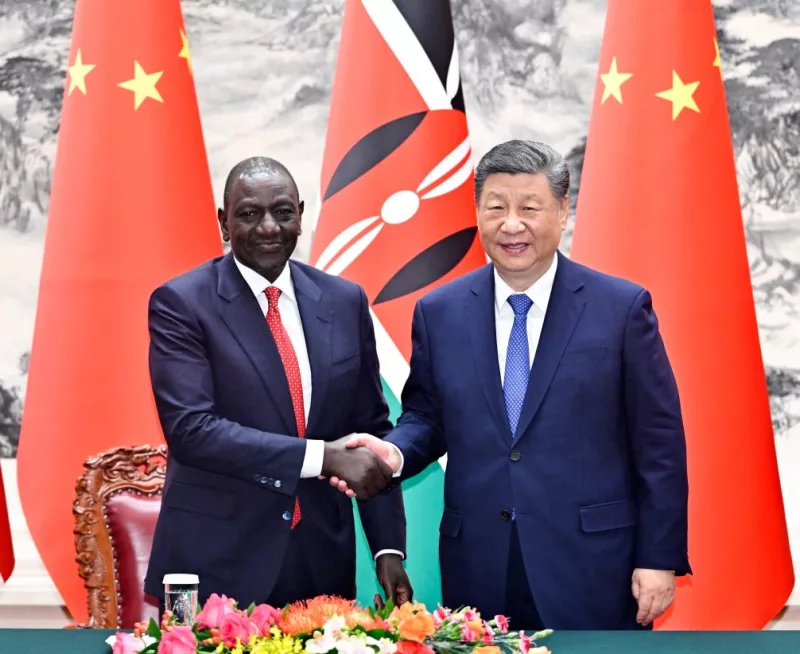
There is also the collapsed IGAD Quartet Process on the Sudan, which had President William Ruto as the lead mediator. This failed after the Sudan Armed Forces commander and the Junta leader Gen Abdel Fattah al-Burhan accused Ruto of harbouring Rapid Support Forces commanders in Nairobi.
Engagements in eastern DRC, where multiple overlapping regional initiatives compete for influence and legitimacy, are also strained.
In South Sudan, the Tumaini process has struggled with fragmentation among parties and limited enforcement mechanisms.
In Sudan, Kenya’s role within the quartet has been questioned amid accusations of inconsistent positioning and competing regional alliances.
In the DRC, mediation efforts remain heavily crowded, with the East African Community frameworks struggling to produce unified outcomes.
The result is a perception problem that while Kenya is still present, it is no longer always central. It is losing authority.
MEDIATION AS A SYSTEM
Against this backdrop, Finland’s model of peace mediation offers a striking contrast.
Holopainen described Finland’s approach not as ad hoc engagement in crises, but as a structured foreign policy pillar embedded in institutions, networks, and long-term partnerships.
The approach starts from the bottom, with children.
The CMI—Martti Ahtisaari Peace Foundation, started by former Finland President, has introduced a game called Kiista to schools, which essentially inculcates conflict resolution skills to children at a young age.
There is also the Youth Peace Mediation Mentorship Programme. It was established on the basis of an MoU on mediation between Finland and South Africa to support inclusivity in mediation processes and promote mediation through multilateral cooperation.
“The aim is to strengthen young people’s knowledge of mediation and to provide opportunities to network with mediation practitioner. There is also peer-to-peer learning among youth is at the core of the programme,” Ansa Kilpeläinen, a specialist at the Finland Foreign Affairs Ministry,said.
There are also other structured systems in Parliament under the Peace Mediation Network, Nordic Women Mediators Network, CMI – Martti Ahtisaari Peace Foundation, the Ministry of Foreign Affairs, the Presidency and through the UN, in which former Foreign Minister Pekka Haavisto serves as the UN Secretary-General’s personal envoy for Sudan.
It is also in this regard that Finland’s Centre for Peace Mediation was established within its Ministry for Foreign Affairs in 2020. The centre coordinates state-led mediation efforts, supports training and connects governmental and non-governmental actors in a unified framework.
Finland also operates through what it calls “Groups of Friends of Mediation,” co-chaired with partners such as Turkey, Spain, and Switzerland in different multilateral settings, including the UN, OSCE and the EU.
This system ensures mediation is not dependent on momentary political interest, but institutional continuity.
In Africa, Finland has deliberately positioned itself as a partner rather than a dominant actor.
It cooperates with countries such as Kenya, South Africa, Qatar and Turkey in mediation-related initiatives, often working quietly through technical support, training, and dialogue facilitation. The emphasis, officials maintain, is not visibility but credibility.
One of the most striking contrasts between Kenya and Finland lies in approach.
Kenya’s mediation efforts are often driven by geopolitical urgency or regional crises.
When conflict erupts in Somalia, South Sudan, or Sudan, Kenya is quickly drawn in due to proximity and diplomatic relevance. However, these engagements are often reactive, fragmented across institutions and influenced by shifting political alliances.
Finland, by contrast, treats mediation as a permanent foreign policy capability.
This includes dedicated institutional infrastructure (the mediation centre), formalised international partnerships (structured mediation groups), continuous cooperation with NGOs and civil society and long-term thematic priorities such as inclusive peace, water diplomacy, and engagement with religious leaders.
This institutionalisation allows Finland to maintain neutrality and consistency even when political environments shift.
Kenya largely operates in a more politicised regional environment where perceptions of alignment can weaken trust.
NEUTRALITY AND CREDIBILITY
In mediation, perception is as important as capacity.Finland’s diplomatic positioning emphasises neutrality, multilateralism, and adherence to international law. Even as a NATO member, it insists its security alignment does not affect its mediation credibility.
Kenya, however, faces more complex regional entanglements.
Its proximity to conflict zones, deep political relationships with regional actors and economic interests in neighbouring states have occasionally raised questions about impartiality.
In Sudan, for example, Kenya’s role in facilitating meetings involving the RSF has drawn criticism, and the collapse of Igad Quartet framework.
In South Sudan, what has been termed as interference — such as the push for the release of political prisoners and consequently hosting them in Nairobi — has complicated its mediation authority.
In the DRC, the hosting of the Congo River Alliance, with representatives from M23, in December 2023 eroded trust.
HORN OF AFRICA PARADOX
Kenya’s geographical position emerges as both its greatest asset and its most significant constraint.
Being in the Horn of Africa allows it to respond quickly to crises. And while Nairobi, remains a key diplomatic hub hosting UN agencies, regional organisations and peace negotiations, its proximity also means entanglement.
Unlike Finland, which operates far from the immediate theatres of most conflicts it mediates in, Kenya is embedded in the same regional ecosystems as the crises it seeks to resolve.
This creates overlapping pressures such as security concerns linked to cross-border instability, refugee inflows from South Sudan, Somalia and Sudan, political sensitivities tied to neighbouring governments and competing regional blocs such as IGAD and the EAC.
The result is a constant balancing act between engagement and neutrality.
INCLUSIVITY AND LONG-TERM PEACE
Another lesson from Finland lies in its emphasis on inclusivity. Holopainen highlighted women (Nordic Women Mediators Network), youth (Youth Peace and Security agenda), and civil society participation as central to sustainable peace processes.
Finland also integrates gender equality as both a normative commitment and a practical peacebuilding tool.
Historically, Finland attributes its own development into a stable welfare state partly to early and broad political participation, including women’s suffrage in 1906.
While Kenya has made significant progress in gender inclusion in governance and peacebuilding, implementation in regional mediation processes remains uneven.
In many Horn of Africa negotiations, representation still tends to be elite-driven, with limited grassroots participation.
MEDIATION FATIGUE IN AFRICA
Across Sudan, South Sudan, and DRC, mediation fatigue appears to be emerging.
Multiple overlapping frameworks such as IGAD, EAC, AU-led mechanismsand UN processes have created a crowded diplomatic environment.
Instead of reinforcing each other, these initiatives sometimes compete, duplicate efforts, or suffer from coordination gaps.
Kenya, as a participant in many of these structures, risks being associated with fragmentation rather than coherence.
Finland’s approach suggests an alternative of fewer interventions, but more structured engagement, clearer division of roles and sustained institutional memory.
Despite the challenges, Kenya is far from losing its relevance entirely. It still possesses key assets such as strong diplomatic corps with regional experience and Nairobi’s status as a diplomatic hub.
Kenya also has longstanding relationships across Horn of Africa political elites and remains and active member and authority of the regional organisations.
However, maintaining its relevance — and in borrowing from Helsinki — Nairobi needs to align with the evolving mediation landscape demands.
This includes institutionalising mediation by having a more formal mediation architecture, ensure strategic neutrality with clearer separation between national interests and mediation roles to rebuild trust among conflicting parties and finally, treat peacebuilding as a sustained policy domain, not a reaction to crises.