
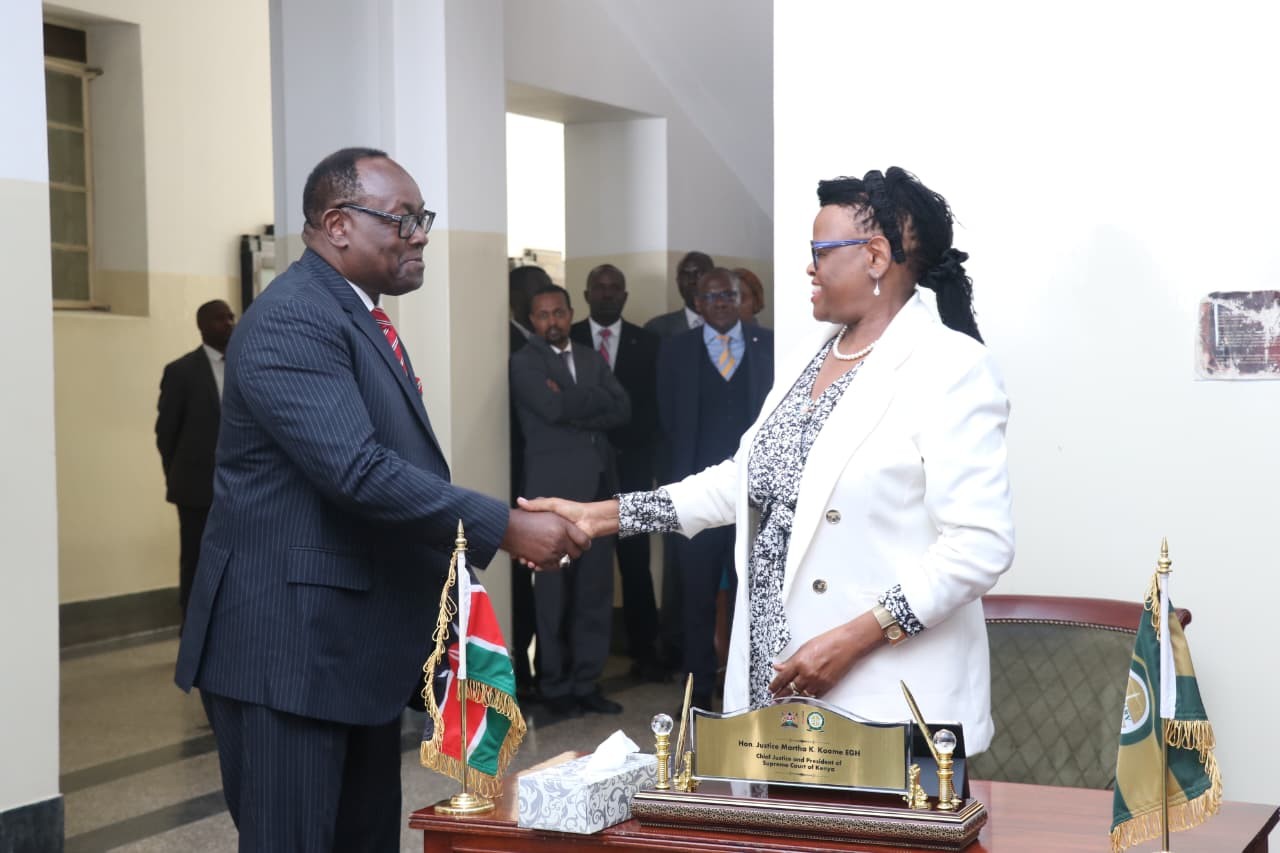
 New NCIC chairperson Kepha Omae takes oath of office at the Supreme Court, Nairobi on May 20 2026 /LEAH MUKANGAI
On May 20, Bishop Kepha Omae and his fresh team of commissioners took their solemn oaths of office at the Supreme Court Building in Nairobi.
Standing before Chief Justice Martha Koome, Omae fired a bold warning shot across the political bow, declaring that the agency would not tolerate inflammatory remarks and that no one is above the law. In his maiden address, Omae did not mince words, declaring the work before him “not ordinary—it is sacred.”
He urged Parliament to fast-track the NCIC Act to strengthen the commission's bite. Omae took the reins from outgoing chair Rev Samuel Kobia, inheriting a commission that many felt had grown silent in the face of rising flames.
Barely had the ink dried on his oath than UDA secretary general Hassan Omar tested his team, throwing down the gauntlet. During a politically charged address, Omar made divisive, inflammatory remarks that triggered a fierce national storm. He engaged in flagrant ethnic baiting targeting the Mt Kenya region, accusing its leaders and people of pride, arrogance and attempts to sabotage the state.
After facing a furious backlash, Omar issued a clarification, insisting his comments were “misinterpreted and taken out of context”. He apologised to anyone who felt aggrieved. But the fumes of anger are lingering and for a country rapidly hurtling toward the 2027 general election, this incident proves that a mere apology is simply not enough.
Several leaders were unimpressed by the former Mombasa senator’s remarks and subsequent apology. DAP-K's Eugene Wamalwa dismissed the apology as “tongue-in-cheek” while former President Uhuru Kenyatta warned the rhetoric echoed the poisonous talk that fuelled the 2007-08 post-election violence.
Nyeri Governor Mutahi Kahiga labelled Omar a "great liability" and demanded his resignation, a call backed by Naivasha MP Jayne Kihara and former Nakuru county assembly speaker Joel Kairu.
Matungulu MP Stephen Mule went further, announcing plans to petition the International Criminal Court and East African Court of Justice. Nairobi county assembly minority leader Antony Kiragu, leading a group of MCAs, gave Omar 24 hours to step down as UDA secretary general.
Coast Jubilee leaders, Ndia MP George Kariuki and Kanu's Tony Gachoka also condemned the remarks as offensive and divisive, as former Attorney General Justin Muturi condemned the statement as "deeply disturbing".
And while these condemnations may certainly look hypocritical—politicians are known for their mudslinging—the irony of Omar’s transgression is a bitter pill for the civil society movement to swallow. Before donning the ruling party’s colours, Omar was a prominent human rights defender. He spent years at the apex of human rights advocacy, serving as a commissioner with the Kenya National Commission on Human Rights.
A fierce defender who built his entire reputation on holding power to account, he routinely called out politicians for the very divisive rhetoric he now employs. Back then, he routinely prescribed stiff criminal prosecutions, institutional accountability and unyielding public shaming for state officials who dared to weaponise ethnicity.
It is precisely for this reason that an apology, no matter how polished, rings hollow when it comes from a man who knows precisely the damage such words can inflict. Power, it seems, has granted him a very selective case of amnesia.
But in a promising sign of a new dawn at the cohesion watchdog, the NCIC did not hesitate. By Monday, the commission had launched formal investigations into Omar’s utterances. In a robust press briefing, Omae warned that political influence does not confer immunity, promising “prosecutions where the evidence so warrants”. This new energy suggests the bishop and his team are determined to be proactive guardians, not passive observers.
The law is clear and unambiguous on these infractions. Under the National Cohesion and Integration Act of 2008, promoting ethnic contempt, hatred, or discrimination carries stiff penalties, including hefty fines and prison terms of up to three years.
Furthermore, Article 75 demands that state officers behave in a manner that avoids bringing dishonour to the offices they hold. If the rule of law is to mean anything, the statutory whip must crack evenly, regardless of whether the offender sits in the opposition trenches or at the high table of the ruling party.
Omar has seemingly given the new commissioners a welcome gift. Omae must act decisively, reject half-baked political apologies and make a lesson out of Omar. If the new commission cannot find its teeth to bite a powerful secretary general today, it will have absolutely no voice left to stop the flames of ethnic polarisation when the 2027 election whistle finally blows.





