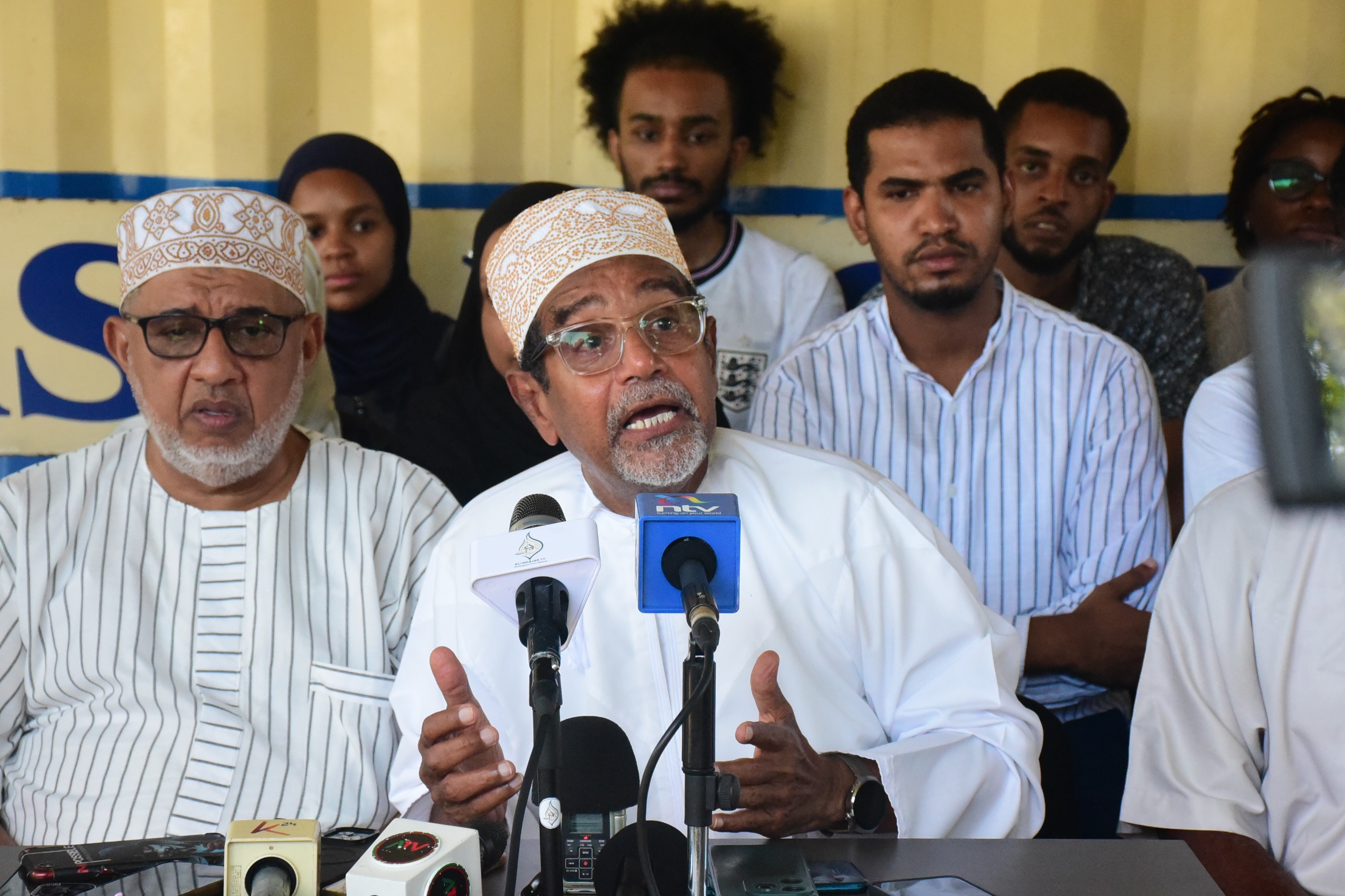
 Hassan Albeity and Muhuri director Khelef Khalifa at the Muhuri legal aid clinic in Mombasa on Tuesday. Kenyans should remember that activists often remain among the few actors consistently engaged with questions of public accountability /FILE
There is a growing trend of bastardising activism and the difficult but often thankless work activists do to safeguard rights, speak up against abuse of power and hold institutions accountable.
It is increasingly becoming fashionable to treat active citizenry with suspicion, turning the title ‘activist’ into a pejorative. This deserves to be challenged.
A look at the history of Kenya, and most recently the post–June 25, 2024 political moment, makes it clear that any and all of us can and should be activists in one way or another. When citizens speak out, they can influence government policy, force legal and institutional reforms and challenge misconduct in public life.
In the age of smartphones and internet access, nearly everybody now has the capacity to participate in public discourse on issues affecting society. This is not merely a democratic right but also a constitutional obligation. Article 3(1) states that “every person has an obligation to respect, uphold and defend this constitution.”
There are many definitions of activism, but Syracuse University’s Maxwell School of Citizenship and Public Affairs describes it as “collective action that exerts pressure on centers of power to remedy grievances and felt injustice.” In practice, activists often occupy a position similar to journalists.
They operate at the frontline of challenging power and exposing abuse, usually with little direct personal benefit and often at considerable personal risk. Yet despite this, activism is frequently dismissed as disruptive, attention-seeking or foreign-driven.
Without activists, Kenya would not have developed the democratic culture and constitutional framework it has today. Politicians eventually occupied centre stage during periods of democratic transition, but activists and civil society actors did much of the early and sustained work of resisting authoritarianism during the Kanu era.
They organised, documented abuses, mobilised citizens and kept pressure on the state at a time when open dissent carried real consequences.
The constitutional review process leading to the 2010 Constitution is a clear example. Many politicians focused primarily on power-sharing arrangements and institutional architecture, important as those issues were politically.
But activists and civil society actors consistently pushed broader questions around social and economic justice, leadership and integrity, police accountability, environmental protection and constitutional safeguards for citizens’ rights.
Their interventions helped shape the wider democratic character of the constitution beyond elite political negotiations.
Organisations such as Africog and the Kenya Human Rights Commission, alongside activists like Gladwell Otieno, George Kegoro and Njonjo Mue, also played important roles in strengthening constitutional accountability.
Africog was central in litigation and advocacy surrounding the nullification of the 2017 presidential election results. The organisation also pursued justice efforts following the 2007 post-election violence at The Hague and produced influential research reports on state capture and corruption during the Jubilee administration.
These are not the actions of people merely chasing media attention or donor approval. They are examples of citizens and institutions engaging in difficult and often unpopular public-interest work.
Activism should also not be reduced only to politics and electoral disputes. Governance issues receive the greatest attention because they dominate public debate, but activism in Kenya extends far beyond that.
Activists and advocacy groups work on environmental conservation, land rights, labour justice, reproductive health rights, digital safety, disability rights, indigenous communities’ rights, education access and policing reforms, among many other issues.
Behind these issues are real people and real consequences. It often takes activists, sometimes working alongside journalists, to bring neglected injustices into public view and force institutional response.
A look at the work of organisations such as the Kenya Human Rights Commission, Defenders Coalition and Amnesty International shows the range of civic advocacy taking place in Kenya and the impact it continues to have on people’s lives.
It is therefore concerning that activists are increasingly dismissed as opportunists or agents of foreign interests.
It has become common in television panels, social media discussions and public discourse to hear claims that activists organise protests merely to attract donor funding or media attention. Such arguments are usually unsupported and reflect a poor understanding of both constitutional rights and civic engagement.
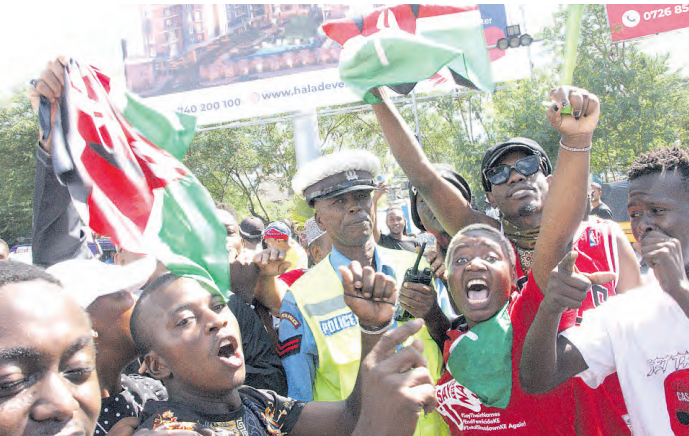
Article 37 explicitly protects the right to assemble, demonstrate, picket and present petitions peacefully and unarmed. Public protest is one of the constitutional tools citizens can use to express grievances and demand accountability.
There is also little evidence to support the claim that activists are acting on behalf of foreign interests when they campaign for affordable living, fair taxation, protection against land grabbing, police reform or judicial accountability. These are issues rooted in the daily realities of ordinary Kenyans.
The irony is that many people who ridicule activists are themselves beneficiaries of freedoms secured through civic struggle and public advocacy.
Democratic space, constitutional protections, media freedoms and even the ability to openly criticise government did not emerge automatically. They were secured over time by citizens willing to challenge authority and demand reform.
In a period marked by political polarisation, including among supposedly “leaderless and tribeless” young people, Kenyans should remember that activists often remain among the few actors consistently engaged with questions of public accountability outside electoral cycles.
Politicians calculate electoral interests and political consequences. Activists, by contrast, tend to remain engaged on issues whether elections are near or not.
That is why activism should not be reduced to conspiracy theories or casual contempt. A society that teaches citizens to distrust civic participation weakens its own democratic culture.
Kenya’s progress, however imperfect, has depended significantly on citizens willing to organise, document abuse, demand accountability and defend constitutional principles.
Activists, like all public actors, deserve criticism where necessary. But they also deserve honesty about the role they have played in shaping and safeguarding many of the freedoms Kenyans now take for granted.
The writer is a former Star reporter now living in the United States