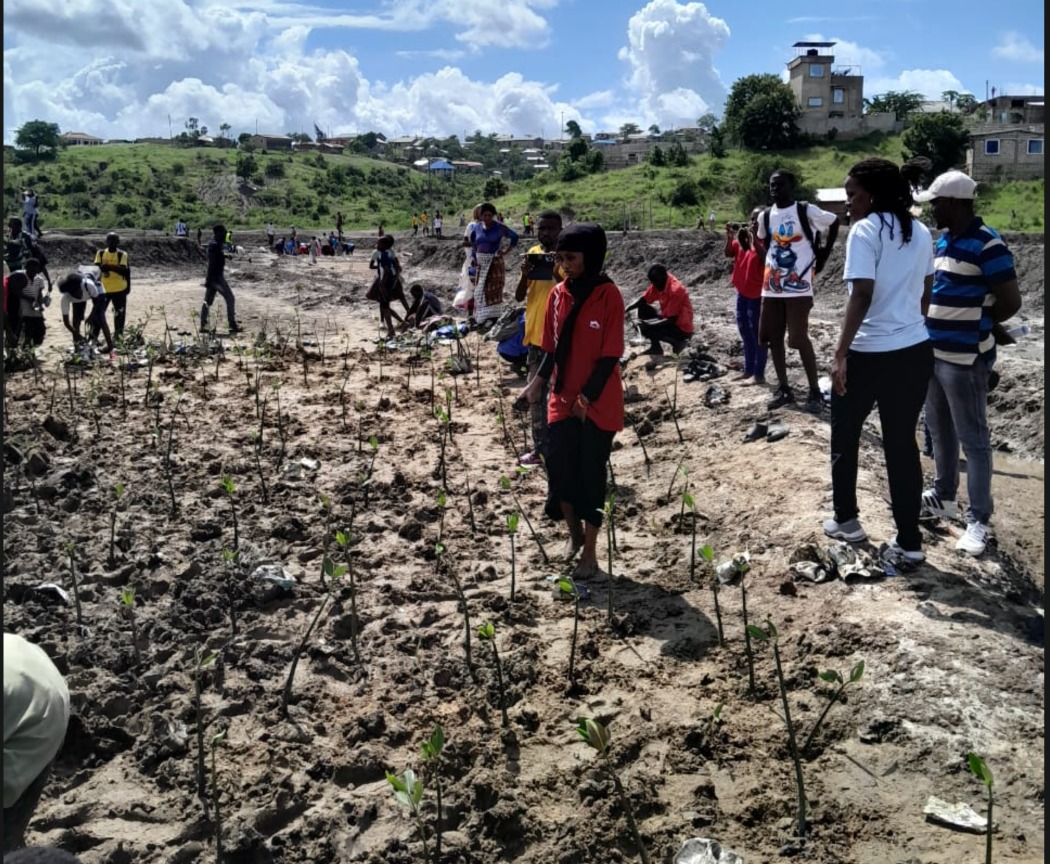
 Mangrove seedlings being planted in Tudor Creek/COURTESY
Over 20,000 mangrove seedlings have been planted in Tudor Creek in a major restoration effort aimed at reviving degraded coastal ecosystems and strengthening climate resilience along Kenya’s coastline.
The initiative brought together the Kibarani Beach Management Unit (BMU), Jomvu BMU and Equity Bank in a community-driven conservation exercise held to mark the International Day for Biological Diversity, an annual United Nations observance that promotes global action to protect biodiversity and restore ecosystems essential for sustainable development.
The activity saw over 20,000 mangrove seedlings donated by Equity Bank to support large-scale rehabilitation of mangrove cover, reinforcing grassroots collaboration in safeguarding marine environments and sustaining coastal livelihoods dependent on fishing and related activities.
Mangrove forests are widely recognised as among the most effective natural carbon sinks, playing a critical role in stabilising shorelines, reducing coastal erosion, buffering storm surges and providing breeding grounds for marine life that supports local economies.
Jacob Akida, Business Growth and Development Manager at Equity Changamwe Branch, said mangrove restoration remains central to protecting both ecosystems and livelihoods in the face of increasing climate pressures.
“Environmental conservation is no longer optional. It is a necessity for safeguarding livelihoods, ecosystems and future generations. Mangrove restoration plays a critical role in protecting coastal communities, preserving marine biodiversity and mitigating the effects of climate change through carbon sequestration,” he said.
Jane Wanyoike, Regional Coordinator under Equity Group Foundation’s Energy, Environment and Climate Change pillar, said collaboration with local communities remains key to achieving lasting impact.
“Sustainable climate action requires strong collaboration between institutions and local communities. By working closely with Beach Management Units and grassroots stakeholders, we are creating solutions that are both environmentally sustainable and community driven,” she said.
Wanyoike added that the exercise forms part of Equity’s broader environmental sustainability agenda, which has seen the institution support the planting of 45.5 million trees as part of national efforts to combat climate change and restore degraded ecosystems.
Kibarani BMU Chairlady Virginia Njue and Jomvu BMU Chairperson Kennedy Otogo welcomed the initiative, noting that mangrove restoration will help restore fish breeding grounds and improve long-term coastal livelihoods.
Mangrove restoration is a critical nature-based solution for climate adaptation, particularly as global climate variability intensifies and puts greater pressure on coastal ecosystems.
Mangroves provide a living, self-sustaining buffer that absorbs wave energy, reduces coastal erosion, and limits the impact of storm surges and flooding.
Their complex root systems also trap sediments and stabilise shorelines, helping coastlines recover and rebuild naturally over time.
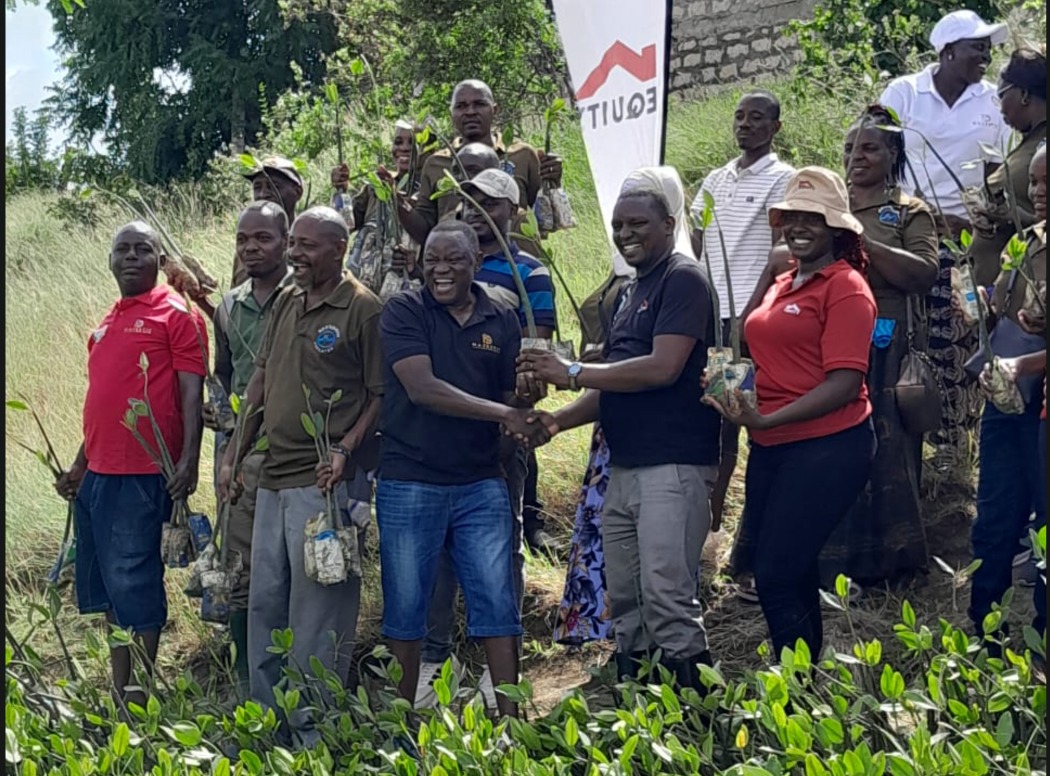 Equity Changamwe Branch partners with Kibarani Beach Management Unit and Jomvu Beach Management Unit in a large-scale mangrove restoration exercise at Tudor Creek, Mombasa, on May 23, 2026. Photo/Courtesy