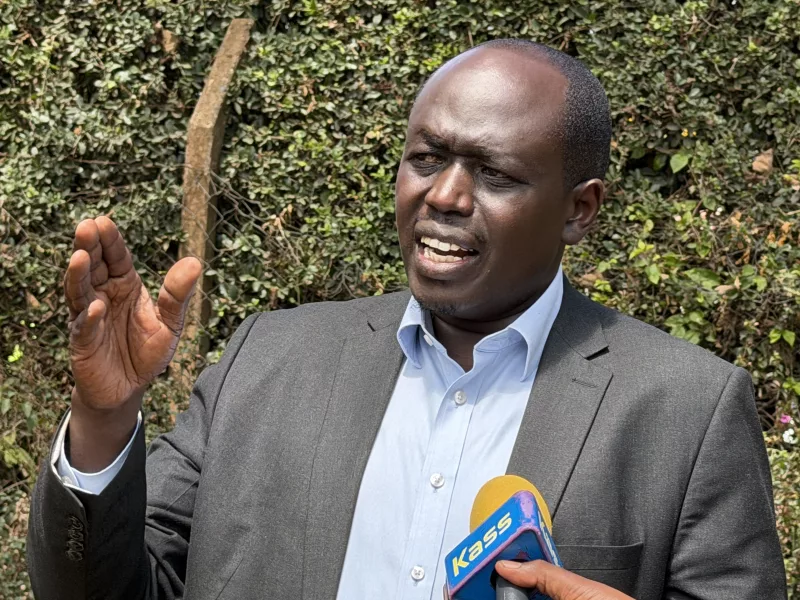
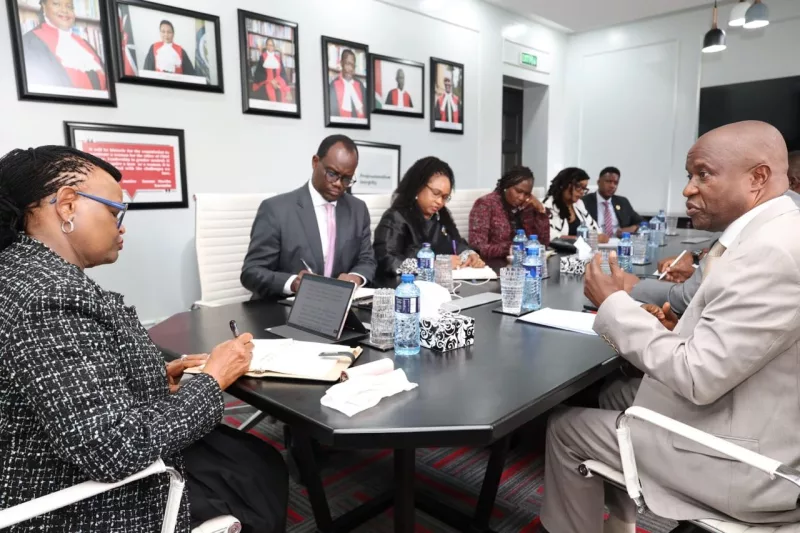
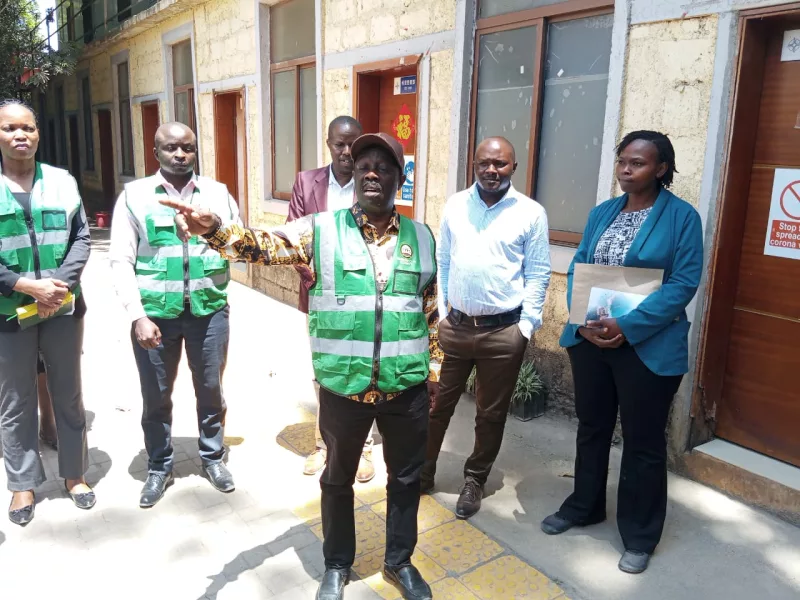
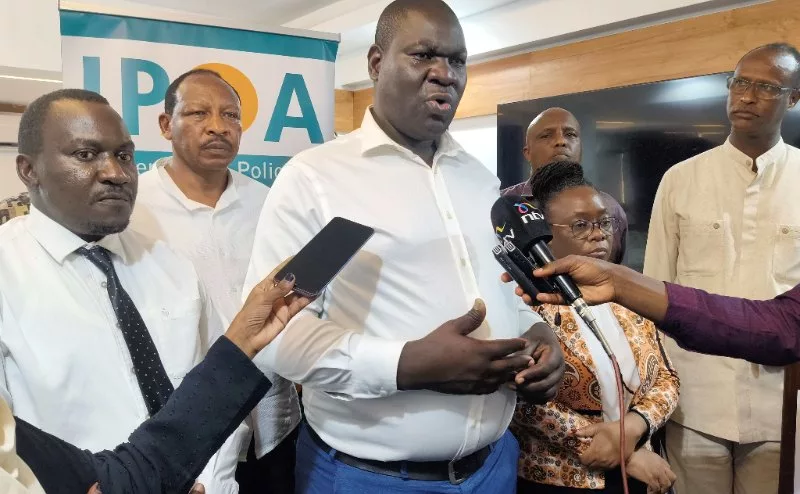
 IPOA chairperson Duncan Ojwang in Mombasa on Wednesday /BRIAN OTIENO
There is a huge trust deficit between the police and the public, resulting in confrontation and antagonism, the Independent Policing and Oversight Authority has said.
New IPOA chairperson Duncan Ojwang said on Wednesday there is a need to develop an improved relationship between the National Police Service and the public to bridge the trust gap.
“Policing and safety are beyond the police alone. They have to involve the citizens. Therefore, we are going to double our efforts to have our regional and county forums,” he said.
Ojwang spoke in Mombasa during his first-ever engagement with civil society and other public sector actors since he was appointed.
He said these fora will provide better avenues for the police to get feedback directly from citizens, adding there is no structured way through which the police can get feedback from citizens.
This way, Ojwang said, IPOA will not just be reactive.
“We want to be proactive in building community trust with the police and harnessing this energy and expertise in order to do good policing,” he said.
Ojwang said for peace and security to exist, there must be cooperation between all stakeholders.
He said the police are the most visible part of the state, especially in local areas, and the public associate the government with the police, making it seem as if the police are the yardstick with which to measure government actions.
“As IPOA, we believe that good policing includes the rule of law and working together with our stakeholders,” the IPOA chairperson said.
He said they are committed to ensuring good policing, pledging there is no corner of Kenya, including Lamu county, that would be too remote or too dark for IPOA to push for good policing and policing with citizen consent.
“We all win when we realise that safety and even peace are not just the work of the police. IPOA has a role, civil society has a role, and community policing members have a role,” Ojwang said.
He faced questions from civil society over some of the excesses that police have committed in the past.
Muslims for Human Rights (Muhuri) director and veteran rights activist Khelef Khalifa lamented the continued non-compliance with a court order to lift the Lamu curfew by security agencies.
He said despite court orders, security apparatus on the Malindi–Lamu highway continue to conceal their faces and badge numbers with balaclavas and other materials when conducting searches on public and private transport users.
“We are still being searched as though we are criminals. We don’t get answers when we ask why we are being subjected to the dehumanising searches. We cannot tell if those conducting the searches are genuine security officers or not,” Khalifa said.
The former Kenya National Commission on Human Rights commissioner said the government is having double standards when it comes to Lamu.
He said on the one hand, they have refused to lift the Lamu curfew, which he said has stood for more than 13 years, citing insecurity in the area.
On the other hand, the government has welcomed Nigerian billionaire Aliko Dangote, who is putting up a huge 700,000-barrels-a-day oil refinery in Lamu, assuring him there is security.
“Why is there security when it comes to investment, but there is no security when it comes to the normal daily lives of Lamu residents?” Khalifa posed.
Ojwang said although there is a close working relationship between IPOA and other actors in the security sector in the Coast region, there is still a need to deepen that relationship.
He also cautioned not all IPOA investigations will lead to the condemnation of police officers who are accused of excesses.
“We want to note that when we investigate, it doesn’t mean that every case is going to lead to condemnation. It is also vindication that sometimes we have found that the use of force or whatever we are investigating was proportionate and fair,” Ojwang said.
He said IPOA is a go-between for citizens and the police and wants to help bridge the trust gap.
“The bigger the gap, we believe, it becomes a field day for the criminals. But if the gap is narrow, then we can have better results and a safer community,” Ojwang said.
Instant analysis
The mandate of IPOA does not extend to ensuring national security or providing law enforcement. Instead, IPOA is strictly a civilian oversight body whose primary mandate is to hold the NPS accountable. The responsibility for maintaining law and order, preventing crime and ensuring public safety lies entirely with the NPS and other national security organs, not IPOA.