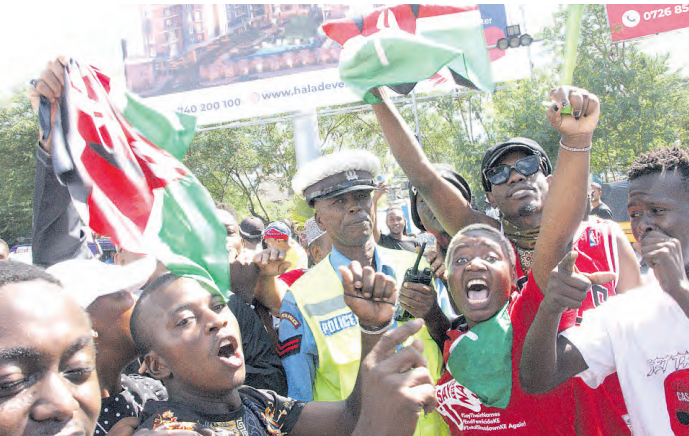
Tanzanian President Samia Suluhu, once perceived as a moderating force in the region, on Monday ripped off the veil of diplomacy to advocate for physical discipline against Gen Z activists.
Her remarks suggested a coordinated effort to “cane” protesters who cross the border, sending shockwaves through the legal and human rights communities in both Nairobi and Dar es Salaam.
Speaking at a youth forum in Dodoma on Monday, Suluhu suggested the youth should be “tamed” for voicing their dissenting opinions.
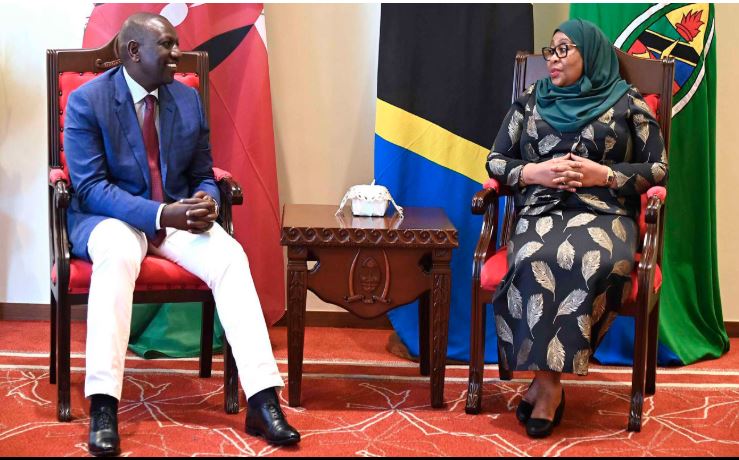
She had also made the same more direct remarks on Monday during a joint press briefing at State House in Dar es Salaam where she and President William Ruto witnessed the signing of eight bilateral agreements.
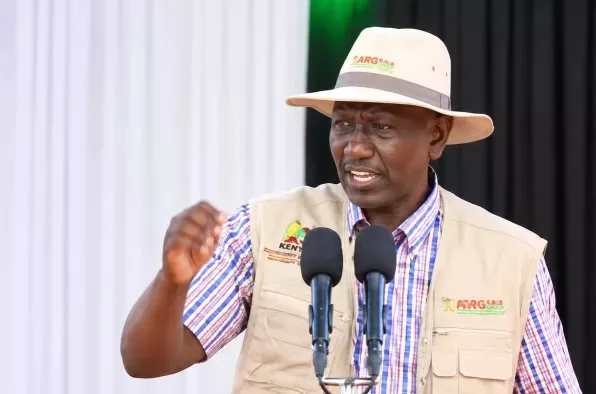
“I told President William Ruto that we should stand firm on this indiscipline of youths; we should not take sides,” Suluhu stated during the forum.
“When Tanzanians come to Kenya, you discipline them; when Kenyan Gen Z come to Tanzania, I will discipline them as well so that they are in line,” she said. “If they come to me, I will beat them with canes (nachapa mikwaju); if they come to you, beat them with canes, so they behave.”
These remarks came barely a week after Suluhu received a report into killings during Tanzania’s 2025 election, in which more than 518 people died in protest demonstrations over polls she ‘won’ with 98 per cent of the vote; rivals were excluded. To date, not a single person has been held accountable.
While historical data often suggests women in power lean toward collaborative styles, those operating within rigid patriarchal political structures often adopt hyper-aggressive stances to assert authority.
The situation is rendered yet more awkward for Ruto because his government is simultaneously implementing a victim compensation programme not confined to activists. Notably, despite overseeing the reparations process for families of protesters killed and injured during the 2024 and 2025 demonstrations, the President did not publicly rebuke Suluhu for her remarks.
Instead, he maintained a stance of mutual understanding, even as his administration faces demands for an apology and higher compensation for the at least 1,800 victims validated by the Kenya National Commission on Human Rights.
The public mood, especially amongst young East Africans, is a mixture of anger and bitter resolve.
One user said on X, “Ruto did not say anything against that, meaning he accepted the advice to heart. Kenyans be afraid, our constitution is being trashed!”
Another user said, “Mama’s speech came across as that of a leader lacking legitimacy, appearing to impose herself on her citizens. President William Ruto should publicly distance himself from the remarks made by Suluhu Samia — remaining silent could easily be interpreted as endorsement.”
Legal experts have been equally swift in their condemnation.
Former Chief Justice David Maraga described the remarks as “abhorrent” and a direct threat to the rule of law.
Faith Odhiambo, former president of the Law Society of Kenya, said such sentiments violate international human rights treaties and national constitutions that protect the right to peaceful assembly and freedom of expression.
“When two heads of state meet to discuss how to whip and discipline citizens demanding accountability, we’ve crossed from democracy into dictatorship,” Odhiambo said. “President Suluhu’s call for President Ruto to join her in suppressing Gen Zs is a conspiracy against constitutional rights.”
Suluhu’s descent into ruthlessness raises questions about the legacy of female leadership in Africa. Comparing her with Liberia’s Ellen Johnson Sirleaf, one can only be disappointed. While Sirleaf earned a Nobel Peace Prize for reconciling a fractured nation and prioritising rule-of-law reforms, Suluhu has increasingly resorted to rhetoric against youth dissent.
While Sirleaf is celebrated as a transformative figure who prioritised peace-building and democratic institutional reform, Suluhu appears to be squandering her “epitome” moment.
While Sirleaf used her position to heal a post-conflict nation, Suluhu is adopting the hyper-aggressive “bad manner” of her male predecessors to silence dissent.
This shift challenges the hope that a female presidency would naturally bring more mercy or a higher moral threshold to the seat of power. Ultimately, the rhetoric shared between Nairobi and Dar es Salaam suggests a profound misunderstanding of the social contract.
By framing the quest for justice as “indiscipline”, Presidents Ruto and Suluhu have turned their backs on the democratic ideals that keep rogue leadership in check. These two leaders owe their citizens a public apology; they must concentrate on enhancing real development while upholding human rights, rather than threatening the very people they serve.
Because true patriotism is found in those demanding accountability, not in leaders who view their children’s quest for justice as “indiscipline” to be cured by the cane.