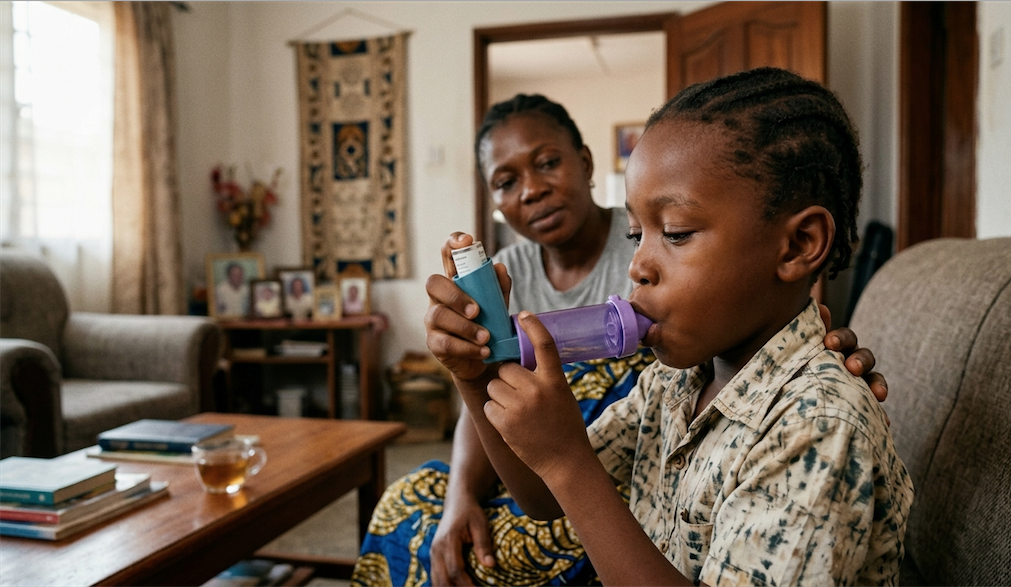
In many low- and middle-income countries, the inhalers patients need most are still too expensive, inconsistently available or simply not prioritised /AI GENERATED
There is a teenager I still think about whenever we talk about asthma awareness. The young patient had been taken to hospital several times in one year for breathlessness, wheezing and cough, especially at night or after exercise. Each time, the family did what they believed was right: they reached for the familiar blue inhaler. It helped for a while, so naturally, they thought asthma was under control. But it was not.
What the family had never fully understood was that asthma is not only about sudden tightening of the airways. Asthma is also about inflammation. Relief was being treated. The disease itself was not.
Thatiswhythisyear’sWorldAsthmaDaythemespeakssostronglytome: 'Accessto anti-inflammatoryinhalersforeveryonewithasthma–stillanurgentneed'. Itisa powerfulreminderthatasthmacarehaschanged,butaccesshasnotchangednearlyenough.
Globally, asthma affectsmore than 260million peopleand causes over 450,000deathseveryyear,mostofthempreventable.Global Initiative for Asthma (GINA)continuestoemphasise that people with asthma need inhaled corticosteroid-containing treatment, ideally througha2-in-1inhalerthatgivesbothreliefandanti-inflammatorytreatment.
For many years, asthma was commonly understood in very simple terms: if you wheeze, taketherelieverinhaler.Ifyoufeelbetter,youarefine.Butthatthinkingisnolonger enough.Thecurrentdirectioninasthmacareistomoveawayfromsymptom-onlyrelief and toward treatment that also reduces the underlying airway inflammation that drives attacks.
The2025GINAupdateretained inhaled corticosteroid (ICS-formoterol)asthepreferredanti-inflammatoryrelieverstrategyformanypatientsbecauseitreducessevere exacerbationsand urgenthealthcareusemore effectivelythan short-acting beta-agonists (SABA)-based regimens. Thesameguidancewarnsthathigh SABA useisadangersignal: threeor more canisters a year are linkedwith increasedemergency visitsorhospitalisation,and 12 or more canistersayeararelinkedwithahigherriskofdeath.
InKenya,thismessageisespeciallyimportant.Attherecent 29thAnnual Kenya AssociationofPhysiciansconference,oneoftheclearestthemeswasthatwhilethe science is advancing, implementation remains difficult because of local realities.
The conferencehighlightedthat alladultsand adolescentswith asthma shouldreceiveICS-containingtherapy,andthatSABA-onlytreatmentisnolongerappropriate.Italso madeastrongcasethatKenyaneedspractical,locallyrelevantadaptationof global guidancebecauseaccess,affordability,diagnosticcapacityandtreatmentbehaviourall shape outcomes.
That is the part we must speak about honestly. In many low- and middle-income countries, the inhalers patients need most are still too expensive, inconsistently available orsimplynotprioritised.InKenya,inhalersareoftenbought overthecounter, sometimeswithoutaproperasthmareview,inhalertechniquecounsellingorfollow-up.
Thismakesiteasyforpatientstodependonquick-reliefinhalerswhilemissingtheanti-inflammatory treatmentthatcouldreduce attacks,hospitalvisitsandfear.The issue is notthatwedonotknowwhatworks.Theissueisthattherighttreatmentstilldoesnot reach the people who need it.
Diagnosisisanotherpartofthestory.Noteverychroniccoughisasthma.Notevery wheeze is asthma. In Kenya, clinicians often work in settings where spirometry is limited and where asthma overlaps with conditions such aspost-TBlung diseaseand COPD.
There’s a role for using peak expiratory flow in settings where spirometry is unavailable, whilealsoremindingusthatpoorreversibilityoratypicalsymptomsshouldprompt broaderthinking,includingevaluationforstructurallungdisease.
When I think of that teenager, what stays with me is how much changed once thefamily understood one simple truth: a rescue inhaler is not the same thing as asthma control. Once the right anti-inflammatory treatment was introduced, and once the family understood why it mattered, the hospital visits reduced and confidence returned.Thatiswhythisyear’sWorldAsthmaDay themeshouldnot remainaslogan on a poster. It should become a public health priority.
IfweareseriousaboutreducingpreventableasthmaattacksanddeathsinKenya, thenwemustmovebeyondawarenessalone.Weneedbetterdiagnosis,better patient education, better inhaler technique and, above all, better access to anti-inflammatory inhalers. Because in 2026, the greatest injustice in asthma care is not lack ofknowledge.Itisthe gapbetweenwhatweknowcansavelivesandwhattoomany patients still cannot access.
Regional Medical Advisor – SSA