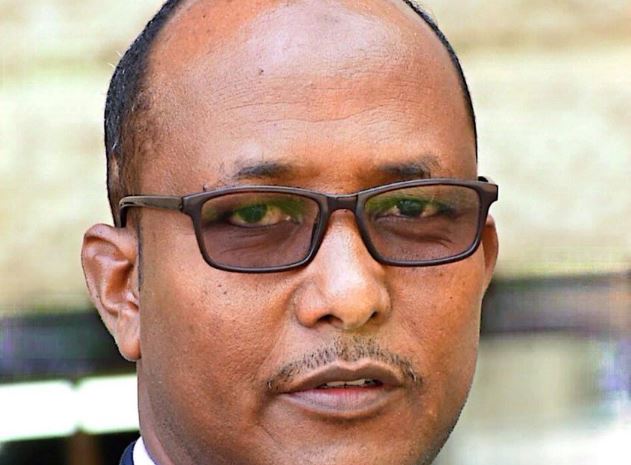
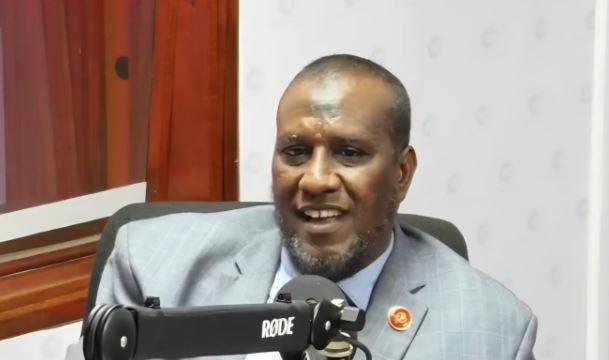
 Hon. Salah Maalim Alio — County Executive Committee member-Lands,Housing and Urban Development-County Government of Mandera-Kenya./HANDOUT
In a county once associated with high illiteracy levels, low school enrolment, high poverty levels, insecurity and limited opportunities, Governor HE Mohamed Adan Khalif is steadily rewriting Mandera’s story through education.
The “Elimu Kwa Wote” programme, initiated in 2022, has emerged as one of the most ambitious county-funded education support programmes in Kenya — transforming thousands of lives while reshaping the economic and social future of an entire generation.
Now in its Fourth phase, the programme allocates more than Sh460 million annually in bursaries targeting secondary school, college and university students. According to figures released during the latest launch, over 34,000 secondary school students and close to 6,000 university and college students are currently benefiting. Beyond these impressive numbers lies a deeper transformation being felt in homes, schools and communities across Mandera County.
For many poor families, secondary education was once a privilege reserved for only a few who could afford school fees. Bright students — especially girls — frequently dropped out due to poverty that lead to early marriages and lack of support. Today, that painful narrative is rapidly changing. The county’s free secondary and other subsidised education programme has become the great equaliser, giving children from pastoralist-nomadic families, low-income and vulnerable households a genuine opportunity to pursue education and compete nationally.
The impact is already visible. Since 2022, Mandera County has recorded nearly 100 percent transition from primary to secondary school. School enrolment has increased significantly while KCSE performance continues to improve steadily. Parents who once struggled to educate even one child can now confidently take several children to school, particularly within the polygamous family structure common in the county. The programme has restored dignity, stability and hope to thousands of households.
One of the least discussed but perhaps most transformative economic impacts of Elimu Kwa Wote is its effect on pastoralist livelihoods and household wealth protection. Traditionally, many families were forced to sell livestock at the beginning of every school term to raise school fees. Goats, sheep, camels and cattle — the primary store of wealth in pastoralist communities — were often sold under distress conditions, weakening household resilience and depleting long-term family assets.
Today, the free secondary education support programme has significantly reduced this burden. Families are no longer compelled to liquidate livestock every opening term simply to keep children in school. As a result, household livestock holdings are stabilising and growing, while livestock markets are experiencing stronger and more competitive prices due to reduced distress sales and lower market oversupply.
The ripple effects of this transformation extend far beyond education itself. Increased livestock prices and preserved household assets are translating into higher disposable income for families. Money that would previously have been consumed by school fees or emergency livestock sales is now increasingly being redirected toward other social and economic investments.
Improved healthcare
Families are improving access to healthcare, investing in small businesses, diversifying household incomes, improving housing conditions and supporting local trade. Some households are reinvesting in livestock expansion, while others are venturing into retail businesses, transport services and agribusiness activities. Home improvement projects, access to better nutrition and increased household purchasing power are slowly reshaping the local rural economy.
Broad Socio-Economic Empowerment
In this sense, Elimu Kwa Wote is no longer merely an education programme. It has evolved into a broad socio-economic empowerment model that simultaneously protects pastoralist wealth, strengthens household resilience and stimulates local economic growth.
What makes Elimu Kwa Wote unique is not merely the scale of funding, but its consistency and political commitment. Many county governments speak passionately about education, yet very few sustain such a massive subsidy programme year after year. Governor Mohamed Adan Khalif took a bold leadership decision by investing heavily in human capital instead of focusing solely on short-term populist projects. The long-term dividends are now becoming increasingly evident.
Perhaps the greatest success story lies in the emergence of what can now be called the “Generation Elimu Kwa Wote” — a growing Gen Z population of educated, ambitious and socially conscious youth whose lives have been directly transformed by the programme. Over the last four years, more than 65,000 beneficiaries have passed through the initiative, creating a new generation of graduates who understand the value of opportunity, education and public investment.
This emerging generation represents one of Mandera’s greatest strategic assets. Doctors, teachers, engineers, ICT professionals, entrepreneurs and skilled workers are gradually emerging from communities that historically had limited access to higher education. These young people are becoming symbols of possibility for younger students across the county.
The next important step is organisation.
Beneficiaries of the programme should now be brought together into a structured alumni network capable of mentoring students, promoting innovation, building professional linkages and supporting community transformation. Such a platform would strengthen social cohesion while creating a sustainable ecosystem of empowerment and leadership development for future generations.
Politically and socially
Elimu Kwa Wote has also created a powerful social contract between the youth and county leadership. Many Gen Z beneficiaries view the initiative not merely as a bursary programme, but as a life-changing intervention that opened doors previously inaccessible to children from historically marginalised regions. As Kenya approaches the 2027 elections, these young people are likely to become one of Governor Mohamed Adan Khalif’s strongest support bases because they directly associate his leadership with educational empowerment, dignity and hope for upward social mobility.
This support is not necessarily about politics alone — it is about continuity. Beneficiaries understand that sustaining such a transformative programme requires stable leadership and long-term commitment to education financing. They see the programme as an investment that must be protected, strengthened and expanded for future generations.
Mandera’s education revolution offers an important lesson to Kenya. Development is not measured only through roads, buildings or walls and markets. The most powerful investment any government can make is in the minds and future of its people. Elimu Kwa Wote has demonstrated that when leaders prioritise education, even historically marginalised regions can rapidly transform socially, economically and politically.
If sustained, the programme may
eventually become one of Kenya’s defining governance models for devolved
education support — and perhaps Mohamed Adan Khalif’s most enduring legacy.
The writer is the County Executive Committee member-Lands,Housing and Urban Development-County Government of Mandera-Kenya.

Comments 0
Sign in to join the conversation
Sign In Create AccountNo comments yet. Be the first to share your thoughts!