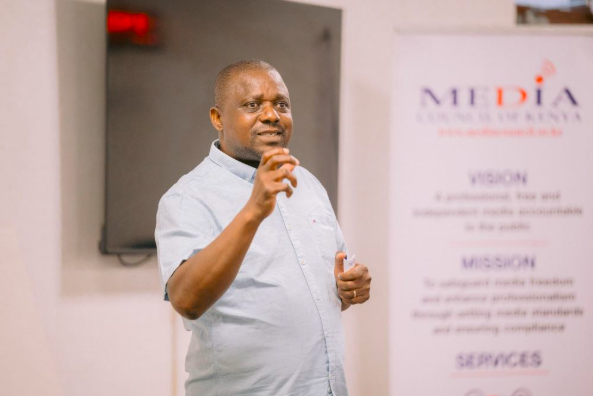
 Victor Bwire/FILE
It is not only financially disorganising and humiliating but also mentally draining for journalists retiring or being sacked from media outlets, who, even after saving in their welfare or savings schemes, cannot access their money in time.
You are abruptly laid off or made to retire and learn that even your savings were redirected into the organisation’s activities or reduced by officials, and you must face the harsh reality of starting over again.
At that time, you are in the middle of so many money-demanding ventures. Rogue organisations have pushed journalists to the brink and made them appear as people who never save or properly use their money during their heyday as they grow their wealth.
The hand-to-mouth approach which many media institutions and journalists apply to savings is not the best way towards retirement planning.
Seeing how journalists are struggling to access their monies from welfare and savings schemes upon exiting newsrooms should awaken them to change their saving practices as they prepare for retirement. Contributory savings schemes seem to be a very good alternative.
It is a better and more secure way for long-term financial security upon retirement. Other saving approaches seem prone to misuse and theft. It is mostly a cash cow for companies, as many deduct from staff and never remit, and little is done when such happens.
Contributory schemes require members to pay a monthly contribution of 7.5 per cent from their basic salary, matched by 15 per cent from the employer, which adds up to 22.5 per cent savings. The scheme uses this as capital for investments, thus adding value to the savings.
This is just the minimum; there is room for additional voluntary contributions, which boost your contributions over and above the mandatory limits. Recently, the government made changes to the tax system, allowing pension members to save more from their salary before taxation, with savings benefits made tax-free.
From the Media Council’s financial literacy programmes for journalists and sessions with the Retirement Benefits Authority, we have noted that there is a gap in how journalists understand personal finance management and practice, particularly relating to defining financial goals, income and revenue management skills, knowledge of diverse savings and investment options, including retirement, viable savings and investment opportunities, and identifying financial institutions capable of developing specific products and services that suit journalists.
Similarly, retirement benefit schemes have not considered the media and journalists as possible members who require assistance in retirement planning, thus a viable venture.
From the RBA’s 2024 Insights from the Pensioners Survey, conducted every two years, pension assets have recorded impressive growth over the last decade, mostly driven by increased contributions and a supportive investment environment.
Pension coverage is currently at 26.5 per cent of the working-age population, meaning that three out of four workers are walking toward retirement with no safety net.
The informal sector, despite accommodating over 83 per cent of the working-age population, remains largely uncovered, with coverage averaging less than 6 per cent, while 59 per cent of retirees depend on pensions as their primary source of income.
Basic financial literacy skills that other professionals are exposed to are missing for journalists, including building up savings, establishing an emergency fund that one can dip into when unforeseen circumstances strike. Even if contributions are small, this fund can save you from risky situations in which you are forced to borrow money at high interest rates or possibly find yourself unable to pay your bills on time.
People must understand the idea of making regular savings contributions to strengthen financial security in the event of job loss. The path to better finances starts with changing one’s own habits.
However, note that some of the changes will be easier than others, but if you stay committed to this transformation, it will require cutting back on recurring expenses.
I have observed that other professional cadres working in the public sector, such as teachers and the disciplined forces, have the Public Service Superannuation Scheme (PSSS), which has transformed retirement planning for public servants.
This has moved them away from a situation where people retiring from public service would become desperate immediately after leaving office, making countless trips to Nairobi chasing their pension and enduring all manner of frustrations, to a more modern and human-centred scheme that values pension savings and wealth creation for former officers.
Previously, pensions for public officers were paid through the exchequer under a non-contributory defined benefit arrangement, which created several problems for members.
It is now more defined, purposeful and member-based, with long-term thinking on investment and wealth creation. The scheme has over 511,000 members drawn from teachers, disciplined forces and civil servants, with an asset portfolio of over Sh291 billion.



Comments 0
Sign in to join the conversation
Sign In Create AccountNo comments yet. Be the first to share your thoughts!