
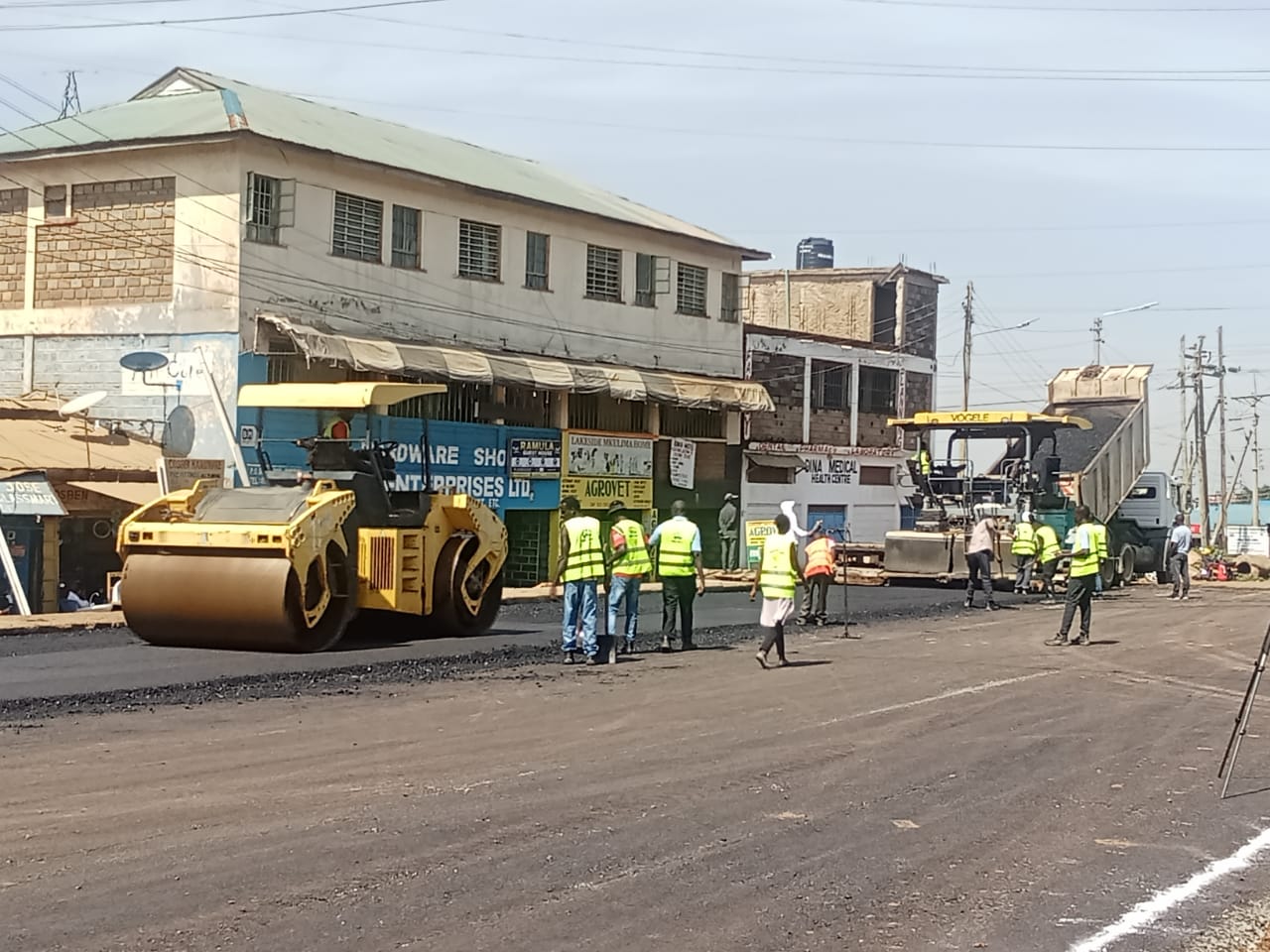
Residents and motorists in Kisumu and neighbouring counties are optimistic after the Kenya National Highways Authority resumed construction of the stalled Mamboleo-Miwani-Chemelil-Muhoroni road.
Read Also
The 44-kilometre road project, valued at Sh16.7 billion, had stalled for nearly five years, leaving residents battling dust, poor transport and rising business costs.
Speaking during an inspection tour of the ongoing works at Mamboleo, KeNHA Nyanza regional director Eng Alfred Ouko said the project had now gained momentum after funding challenges that delayed construction were resolved.
“The project started in 2021 but experienced major funding challenges. The government has since secured financing through the securitisation of the Road Maintenance Levy Fund, and contractors are fully back on site,” Ouko said.
He noted that the project had been divided into three lots to ensure faster completion and minimise risks.
The first section, from Mamboleo to Miwani, covers 12.6 kilometres and includes a 6.5-kilometre dual carriageway.
The second lot stretches from Miwani to Chemelil and is approximately 20 kilometres long, while the third section runs from Chemelil to Muhoroni and Kipkelion, including spur roads.
According to Ouko, the first lot is currently at 24 per cent completion, the second at 34 per cent, while the third stands at 22 per cent progress.
He said the road is expected to be completed by June 2027.
“The contractors handling the three lots are already on site. We are confident the works will be completed within the timelines provided,” he said.
The project is being undertaken by different contractors, with H Young handling the first lot, Sinohydro overseeing the second section and KTM working on the final lot.
Ouko said the road is strategically important because it passes through the sugar belt and key agricultural zones in the region.
“This road connects major sugar factories, including Miwani, Chemelil and Muhoroni. Once complete, it will improve the movement of goods, lower transport costs and ease travel for motorists and farmers,” he said.
He added that the road would also serve as an alternative bypass route for motorists travelling from Nairobi to Nandi and other parts of western Kenya, reducing congestion within Kisumu City.
KeNHA resident engineer Catherine Munyi said the road had been designed to withstand heavy traffic generated by industries and commercial transport along the corridor.
“There are many heavy commercial vehicles using this route because of the industries and economic activities in the region,” she said.
“We have factories such as Chemelil Sugar, Muhoroni Sugar and concrete industries that generate significant traffic.”
Munyi explained that traffic studies were conducted before the project commenced to determine the expected load on the road.
“All the heavy loadings were factored into the pavement design. What you are seeing now is Dense Bitumen Macadam, which is suitable for roads carrying heavy traffic,” Munyi said.
“The road has therefore been designed to safely and effectively handle the expected transport demands,” she said.
Residents and transport operators welcomed the revival of the project, saying the poor state of the road had made transport a nightmare for years.
A matatu operator, Jacob Owiny, who plies the route, said the damaged road had increased vehicle maintenance costs and made travel difficult, especially during the dry season when dust covered the entire stretch.
“Our roads had become very bad. When this road is completed, transport will improve greatly. The dust has been too much and business has been difficult, but we thank God that construction has resumed,” he said.
Other residents expressed hope that the road would open up the region economically by improving access to markets and connecting the area to the larger A1 highways in western Kenya.