Deaths at Jaramogi Oginga Odinga Teaching and Referral Hospital have nearly halved within eight months, dropping from an average of 10 to 11 daily to about four or five.
This signals a quiet but significant shift in healthcare delivery across western Kenya.
Hospital leadership attributes the improvement to the rapid expansion of specialised services, acquisition of modern equipment, and a deliberate push to reduce patient referrals to facilities such as Kenyatta National Hospital and Moi Teaching and Referral Hospital.
For years, such referrals burdened patients who were forced to travel long distances in search of advanced care.
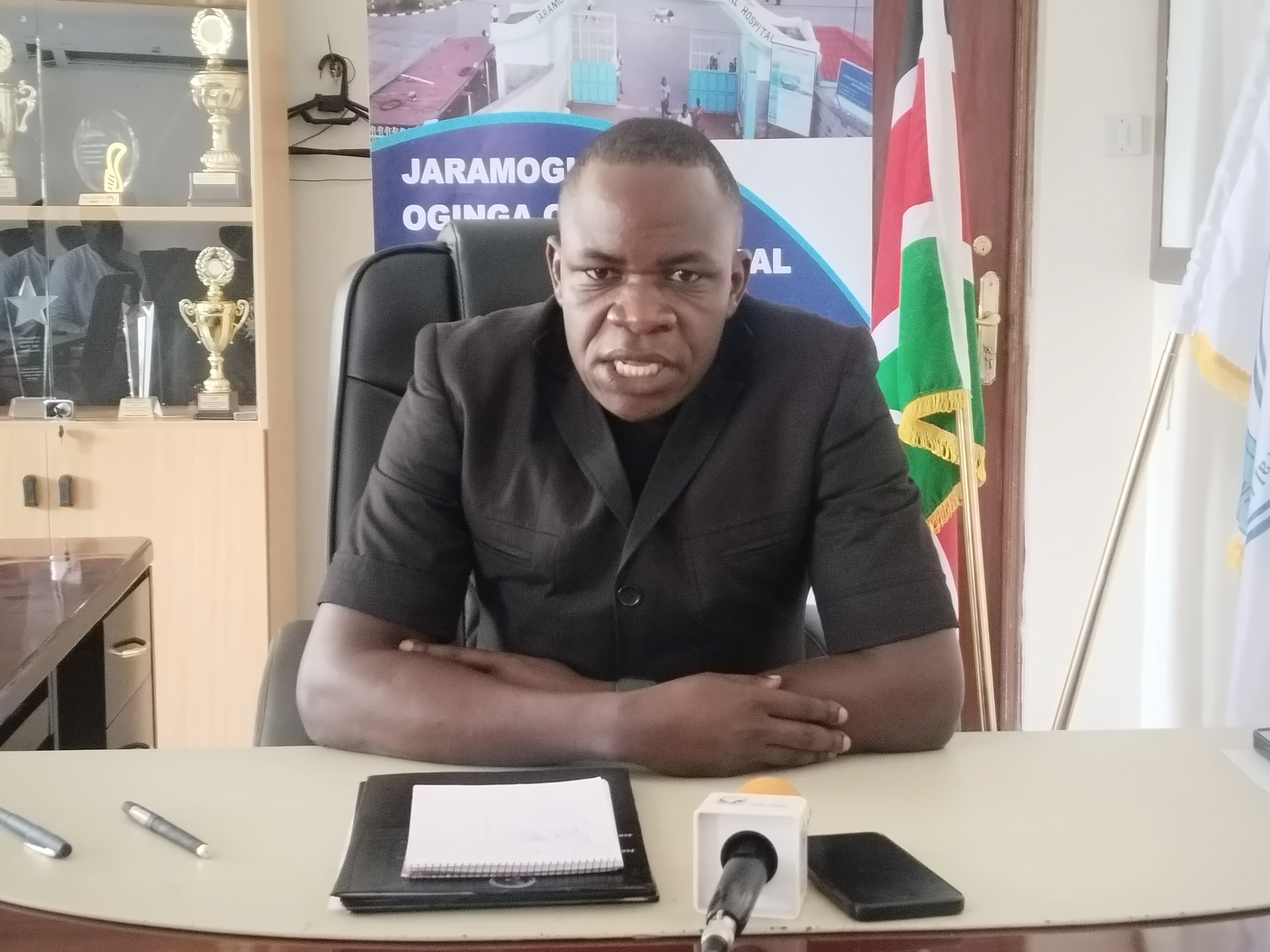
At the centre of this transformation, acting chief executive officer Dr Joshua Okise says is the hospital’s transition into a semi-autonomous national referral institution.
This has unlocked funding, expanded staffing and strengthened its capacity to handle complex cases locally.
“We are seeing real results from the changes we have made. This is not just about infrastructure—it is about saving lives,” Okise said.
JOOTRH’s journey to its new status has been years in the making.
Although classified as a Level 6 hospital by the Kenya Medical Practitioners and Dentists Council, it remained under Kisumu County management until June 2025, when the national government granted it parastatal status.
The move effectively expanded its mandate beyond county borders.
“Being Level 6 is based on services offered, but becoming a semi-autonomous agency is about governance, funding and sustainability,” Okise said.
The shift followed years of recognition that the hospital was already serving patients from across the Lake Region Economic Bloc and beyond, stretching county-level resources.
Unlike many institutional reforms, JOOTRH retained all staff during the transition. Employees in place before June 18, 2025, were protected and absorbed into the new structure. This ensured continuity of services and preserved institutional memory.
“We did not want a situation where everyone is replaced. That would have disrupted services and erased experience built over the years,” Okise said.
A technical committee was established to oversee the transition. It developed HR manuals, career guidelines and staff grading structures.
The process has nearly been completed within eight months, ahead of the projected two years.
For years, complex cases such as brain surgery, heart operations and cancer treatment were routinely referred to Nairobi and Eldoret. That trend is now reversing.
The hospital has recruited specialists, including cardiovascular surgeons, neurosurgeons, orthopaedic surgeons, plastic surgeons and paediatric oncologists.
“We analysed why we were referring patients and addressed those gaps, whether it was equipment or human resources,” Okise said.
JOOTRH now performs neurosurgeries, spinal procedures, advanced orthopaedic operations and specialised cancer treatments locally. This includes care for children with cancer and sickle cell disease.
The transformation has been supported by major investment in equipment.
Over the past eight months, the hospital has acquired more than 450 modern machines
These include neurosurgical drills, upgraded theatre equipment, digital X-ray systems, CT scanners and high-resolution ultrasound machines.
Six operating theatres are now fully equipped, with additional ones planned using refurbished equipment.
A key milestone is the expected arrival of a heart-lung machine, which will enable open-heart surgeries for the first time at the facility.
“This will change the landscape of healthcare in this region,” Okise said.
Maternal and child health services have also been strengthened. A new high-resolution ultrasound machine will improve pregnancy monitoring and help reduce maternal deaths.
A Paediatric Intensive Care Unit, being constructed with support from Safaricom Foundation, will expand care for critically ill children.
Service improvements have translated into financial gains, with JOOTRH recording a 65 per cent increase in revenue compared to the previous financial year.
Infrastructure upgrades are also underway. These include the removal of asbestos roofing, expansion of offices, construction of new wards and completion of a long-delayed cancer centre.
JOOTRH is emerging as a regional referral hub, reducing pressure on national hospitals while bringing specialised care closer to patients.
Health experts say decentralising advanced care is key to improving outcomes in Kenya, where access is often limited by distance and cost.
As the hospital approaches its first anniversary as a semi-autonomous agency, expansion continues. More specialists are being recruited, additional equipment is expected and new services are planned.
For patients across the region, the changes are already visible.
“We are building a hospital that meets national standards and serves all Kenyans,” Okise said.
JOOTRH’s evolution is steadily reshaping access to quality healthcare in western Kenya, with more lives now being saved closer to home.