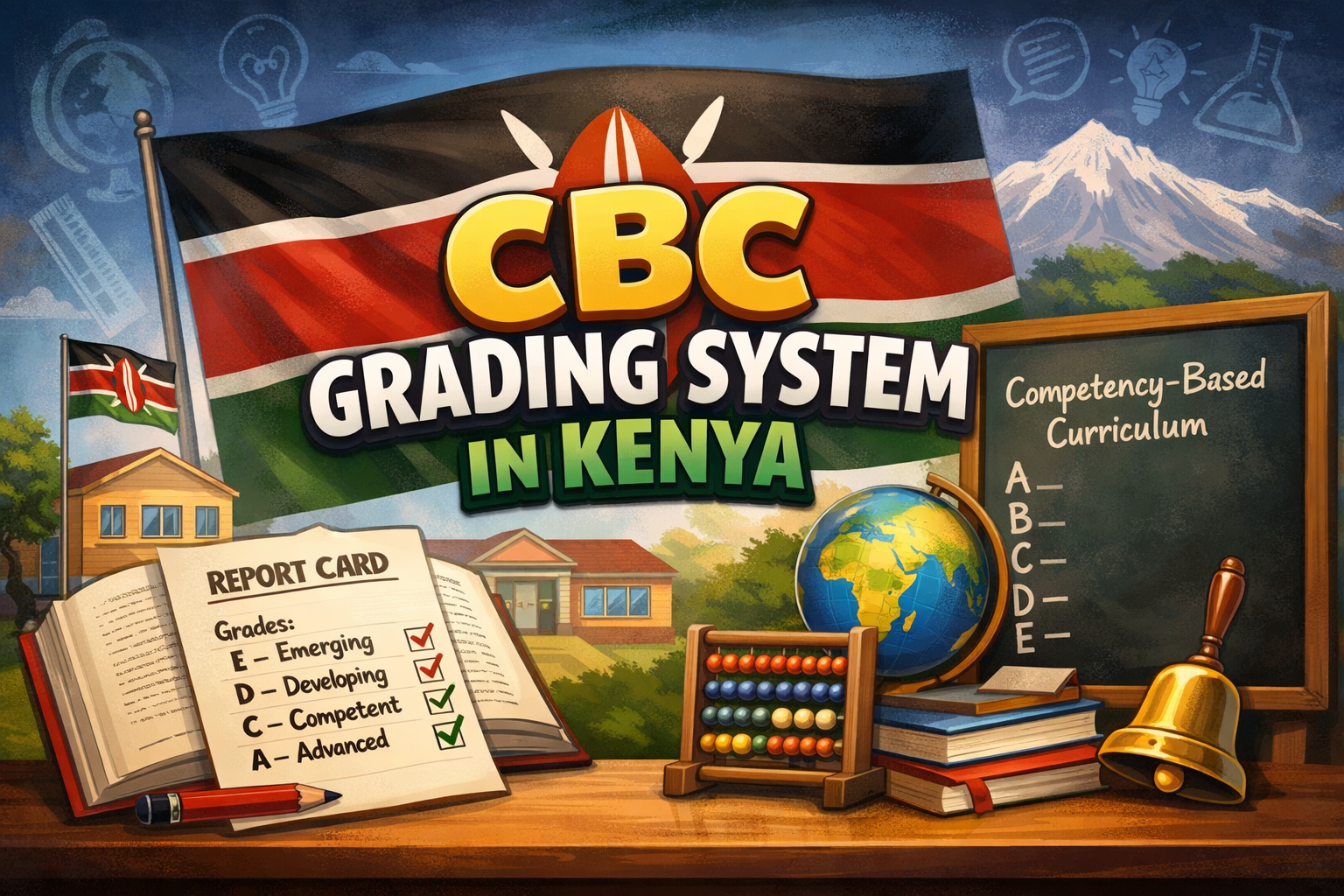
 An AI generated image posted by Infotrak illustrating CBC grading system
The transition of the first cohort of learners under the Competency-Based Curriculum (CBC) to senior school has exposed significant gaps in implementation, with experts warning that misalignment in career pathways is already disrupting learning.
Education stakeholders say the move from junior to senior school, meant to guide learners into specialised tracks based on their abilities and interests has instead revealed weaknesses in career guidance, communication, and school preparedness.
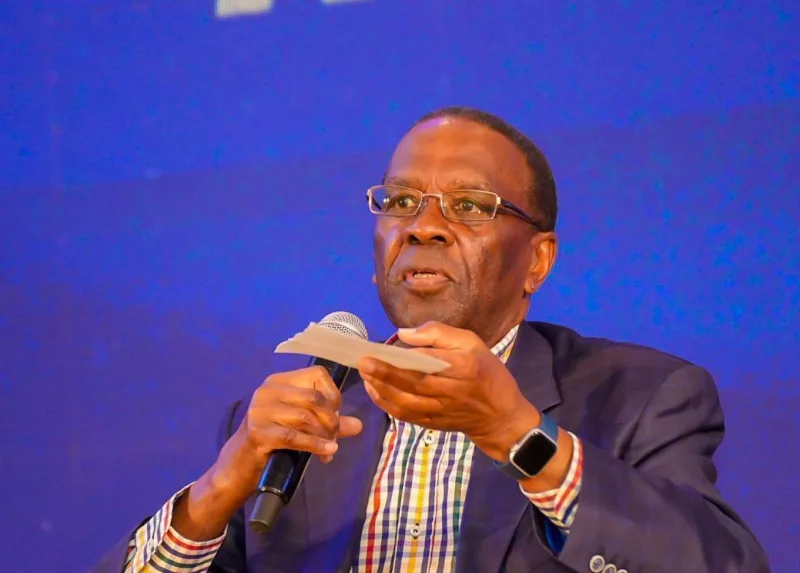
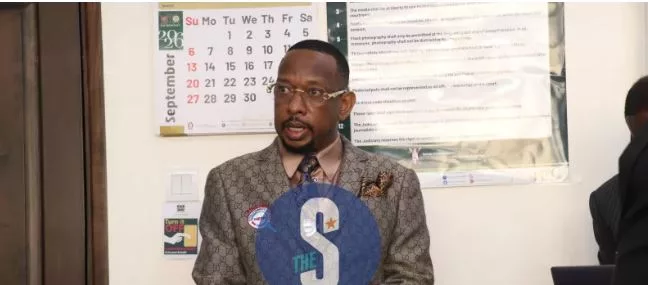
Maurice Mutisya, a research lead at Zizi Afrique Foundation, says the challenges being witnessed were largely avoidable if systems had been fully implemented as designed.
“This transition was meant to be a smooth process anchored on clear objectives, but what we are seeing is that many of those objectives are not being fully realised,” Mutisya said.
Pathway confusion emerges
Under CBC, junior school education is structured to prepare learners for senior school by exposing them to different academic and career pathways.
However, Mutisya said the intended balance between academic ability, interest, and potential is not being achieved, leading to confusion and dissatisfaction among learners.
“At the end of junior school, a learner should be able to make a decision based on their academic ability, their interests, and their potential. But that balance is missing in many cases,” he said.
He noted that a growing number of Grade 10 students are already seeking to change pathways or even transfer schools shortly after placement.
“We are seeing learners wanting to change pathways because the choices they made earlier do not reflect who they are. That is a major concern,” Mutisya added.
Influence from peers and parents
The expert attributed the mismatch to external pressures, including peer influence and parental expectations.
“Some learners are choosing pathways because their friends are taking them, especially in areas like STEM. Others are influenced by what parents want them to become, rather than what suits them,” he said.
According to Mutisya, such decisions often result in learners struggling academically or feeling misplaced once they join senior school.
“When they fail to meet the required scores or are placed in pathways they did not expect, they begin to question the system. That is why we are seeing increased requests for changes,” he said.
Lack of career assessment tools
Mutisya pointed to the absence of structured career assessment tools in schools as a key gap in the CBC rollout.
“There are psychometric tools that can help assess a learner’s interests, abilities, and potential, but these are not being widely used in our schools,” he said.
He noted that without such tools, pathway selection remains subjective and prone to error.
“Decisions are being made without sufficient data to guide them, which defeats the purpose of CBC’s learner-centered approach,” he added.
Shift back to exam focus
Despite CBC’s emphasis on holistic learning, Mutisya warned that the system appears to be reverting to exam-based placement.
“We are seeing placement discussions being driven largely by performance categories like ‘exceeding expectations’ rather than a broader understanding of the learner,” he said.
He said this trend risks undermining efforts to recognize diverse talents beyond academics.
“A learner who is gifted in sports or arts should be guided accordingly, but those considerations are not being prioritized,” he added.
Weak stakeholder engagement
Mutisya said effective pathway selection requires close collaboration between teachers, parents, and learners a process that is currently lacking.
“The system expects teachers, parents, and learners to sit together and make informed decisions, but that is not happening consistently,” he said.
He warned that without such engagement, learners are left to make decisions without adequate guidance.
Communication gaps
The transition process has also been marred by inadequate communication, leaving many parents and learners confused about key aspects of the system.
Mutisya cited the introduction of new school categories C1, C2, C3, and C4 as an example.
“There was not enough communication to help parents understand what these categories mean. Some assume certain placements are inferior, which is not necessarily true,” he said.
He noted that the confusion has contributed to anxiety and resistance among parents.
Resource disparities persist
The expert also raised concerns about unequal distribution of resources across schools, which he said could undermine the success of CBC.
“A learner in a rural day school should have access to the same facilities and quality of teaching as one in a former national school,” Mutisya said.
He emphasized that achieving equity in education requires deliberate investment in infrastructure, staffing, and learning materials.
“If we do not address these disparities, we will continue to see inequality in outcomes,” he added.
Teacher preparedness questioned
Mutisya further pointed to gaps in teacher preparedness, particularly in handling specialised senior school pathways.
“Teachers need adequate training to deliver the new curriculum effectively at the senior school level,” he said.
He also stressed the need for timely provision of teaching and learning materials.
“Schools must be equipped early enough to handle incoming learners. Preparedness is key to a successful transition,” he said.
Call for urgent reforms
Mutisya urged the government and education stakeholders to urgently address the identified gaps to safeguard the integrity of CBC.
“The system itself is well designed, but the implementation needs to be strengthened,” he said.
He called for enhanced career guidance, improved communication, equitable resource distribution, and stronger stakeholder collaboration.
“If we align learners with the right pathways from the start, we will have smoother transitions and better outcomes. But if we ignore these gaps, we risk derailing the entire system,” he warned.
As Kenya continues to roll out CBC, the experiences of the first cohort transitioning to senior school are expected to shape future reforms in the education sector.