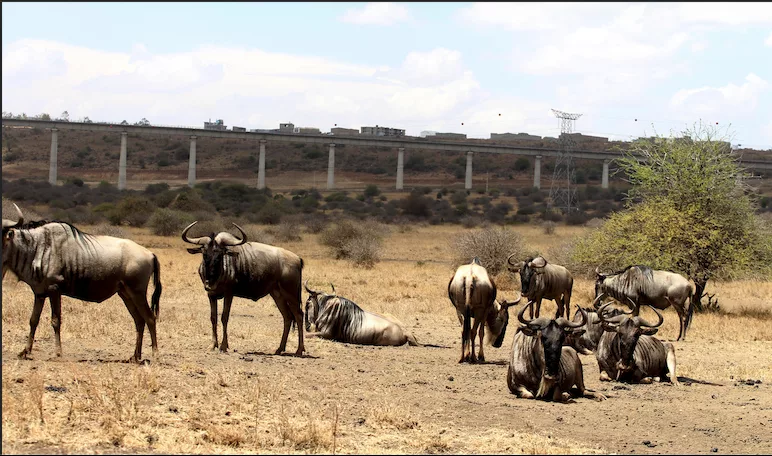
Wildlife is one of Kenya's most valuable national assets, contributing approximately 10 per cent of the Gross Domestic Product.
It accounts for nearly 75 per cent of all tourism revenue, defines our global tourism brand, sustains ecosystems across vast landscapes, and supports thousands of livelihoods in the tourism and conservation sectors.
Behind the success of Kenya's iconic national parks lies a quieter concern that deserves urgent attention: many of our national reserves remain underdeveloped and largely non-operational.
This has led to biodiversity loss, missed tourism opportunities, and diminished socio-economic benefits for Counties and local communities.
Under Kenya's devolved system of governance, wildlife management is a shared function between the national and county governments.
While national parks are managed by the national government through the Kenya Wildlife Service (KWS), national reserves and wildlife sanctuaries fall under the jurisdiction of county governments.
This functional assignment is provided for in the Wildlife Conservation and Management Act 2013 and has been further clarified through Gazette Notice No. 16477, which has delineated wildlife management responsibilities between the two levels of government.
While the law assigned and transferred responsibility for managing national reserves to counties, the institutional framework including, technical capacity and financing required to implement this mandate were not transferred.
Counties therefore inherited conservation responsibilities without the operational tools required to manage them effectively
Kenya currently has 29 gazetted national reserves spread across the country in about 25 counties.
Yet only 5 are fully operational and actively managed by Counties.
Many remain underdeveloped due to limited technical personnel, inadequate financing, weak infrastructure, and the absence of approved management plans.
This should not be viewed as a failure of devolution, but rather as an incomplete transition of the wildlife governance systems.
Maasai Mara National Reserve managed by Narok County, Samburu National Reserve management by Samburu County, Lake Bogoria National Reserve managed by Baringo County, Buffalo springs National Reserve and Shaba National Reserve both managed by Isiolo County have emerged as powerful examples of how devolved wildlife governance can contribute to significant conservation outcomes.
These examples demonstrate the potential that can be replicated in other counties hosting national reserves. Counties are well positioned to integrate conservation with local economic development, tourism growth, and community livelihoods.
However, managing wildlife is a complex undertaking requiring specialised efforts including ranger training, ecological monitoring, security operations, habitat management, and tourism infrastructure.
For decades, KWS has developed institutions that support wildlife protection, ranger training, conservation science, and protected area management.
As counties assume responsibility for managing national reserves, this institutional experience and technical expertise will be critical to ensuring that wildlife management by county governments succeeds.
There is need for a deliberate transition framework that supports counties in building the capacity needed to manage national reserves effectively.
First, stronger technical partnership between county governments and KWS is essential.
Structured collaboration on ranger training, ecological monitoring, development of management plans, and wildlife security will allow counties to build operational capacity while maintaining national conservation standards.
Secondment of technical officers from KWS to counties and joint management arrangements would significantly accelerate this process.
Second, the financing gap that currently constrains national reserve management must be addressed. Developing and managing national reserves requires sustained investment in infrastructure, security operations, ecological monitoring, and tourism facilities.
Counties cannot shoulder this responsibility alone. Establishing a dedicated national financing mechanism for national reserves and catalysing alternative models of financing and management will provide predictable resources needed to operationalise the reserves across the country.
Third, national reserves should be integrated into county economic development strategies.
Sustainably managed reserves can become powerful drivers of local growth by attracting tourism investment, expanding Kenya's tourism offerings, creating youth employment opportunities, broadening own source revenue source and supporting community enterprises linked to conservation.
Across Kenya, community wildlife conservancies have already demonstrated that when local communities benefit from wildlife, they become the strongest custodians of conservation landscapes.
The national reserves can build on these successful models while expanding conservation beyond traditional areas.
Reviving dormant national reserves therefore presents a national opportunity.
With the right institutional partnerships, financing arrangements, and governance frameworks, these landscapes could become new tourism frontiers, biodiversity refuges, and engines of local economic development.
Devolution has brought wildlife governance closer to the landscapes where conservation happens.
The next step is ensuring that counties have the institutional support, technical systems, and financing mechanisms required to succeed.
Kenya's wildlife future will increasingly depend on county leadership. But counties cannot do it alone.