In a softly lit café along a leafy street in Kilimani, the scent of roasted coffee mingles with the sweetness of fresh pastries. At a corner table by the window sits Stephanie Wairimu, 23, her phone resting beside a half-finished cappuccino. Every few seconds, her hand drifts toward it almost automatically, the motion instinctive.
When she finally looks up, she gives a knowing smile, as if aware that the moment itself says something.
“I tell myself I’ll just check something quickly,” Wairimu says, setting the phone down on the table between us. “Then suddenly two hours have passed.”
Across the world, people now spend an average of 2 hours and 31 minutes per day on social media, according to global reports. That translates to more than five years of a lifetime spent scrolling.
In Kenya, smartphone penetration has soared past 80 per cent of urban adults, and nearly 60 per cent of Kenyans actively use social media, with young people aged 18 to 29 spending an average of three to four hours online daily, often checking their phones an average of 58 times a day.
The most visited sites include Facebook, TikTok, Instagram, X (formerly Twitter) and YouTube.
Wairimu describes how browsing social media slipped into her daily routine without announcement. What began as casual entertainment gradually filled quiet moments: commutes, lunch breaks, evenings that once held other plans.
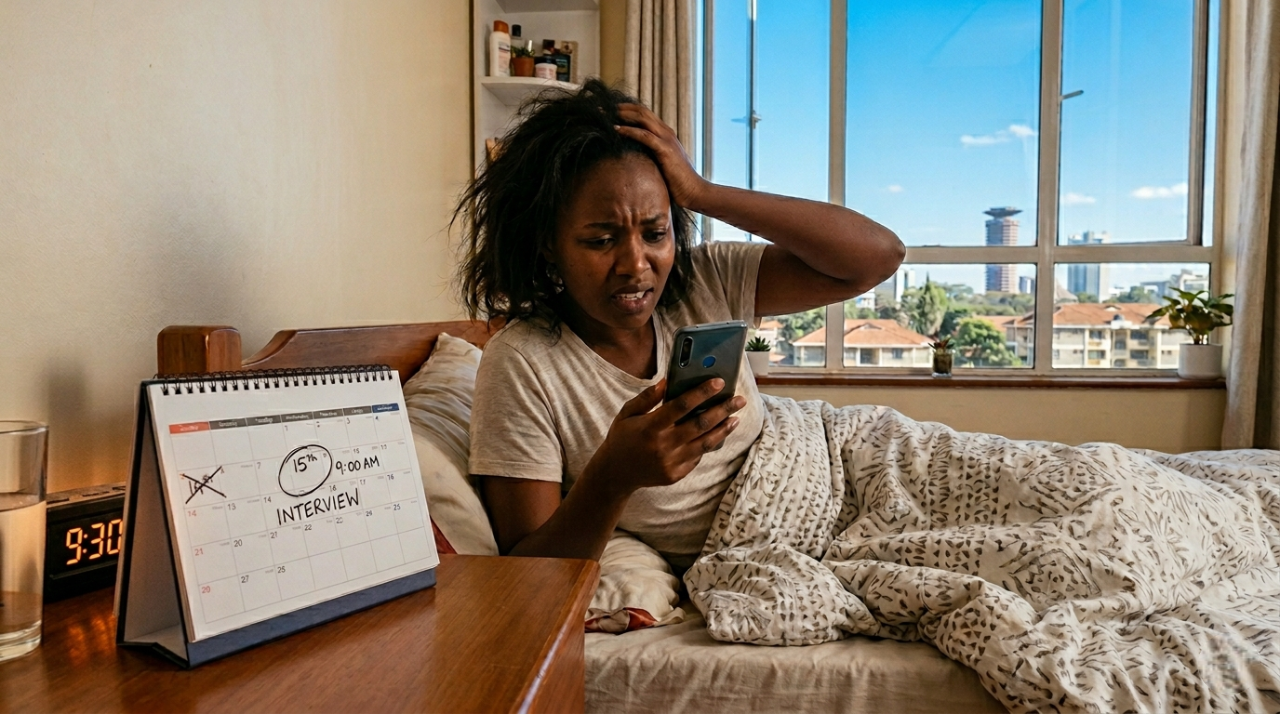
She did not realise she was addicted until it cost her a work opportunity.
“I actually missed my first real job interview because of TikTok,” Wairimu recalls, leaning back in her chair as the café hums softly around us. “I set an alarm like a responsible adult. But somehow, I ended up watching skincare tips late at night and didn’t stop. When I woke up, the interviews had already happened.”
She laughs softly, though the memory still carries a hint of regret.
“That’s when I realised something might be wrong. You don’t miss things like that unless something has a real hold on your time.”
By the time the coffee cups are empty and the late afternoon light fades through the café windows, Wairimu picks up her phone again, hesitates, then slips it into her bag instead.
FROM FUN TO PRESSURE
Across the city, that same habit feels far less dramatic, almost invisible.
On the rooftop terrace of a bustling Westlands restaurant, where music spills into the warm evening air and the skyline glitters beyond the highway, Joseph Sironka, 19, leans back in his chair, scrolling through his phone between bursts of conversations mindlessly.
“Honestly, I don’t even think about how much time I’m online,” he says with a shrug, glancing briefly at the screen again as a new video begins to play.
For him, social media isn’t a disruption to life; it’s woven directly into it. Memes fly across group chats. Football highlights appear before the final whistle of a match. Trends travel from strangers online to conversations around the table in minutes.
“It’s where everything is,” Sironka says. “News, jokes, people you follow — even stuff your friends are doing.”
The ease of it all makes the habit difficult to notice. A few minutes during lunch becomes an hour. A quick check before bed stretches deep into the night.
Across daily life, that shift is becoming increasingly familiar. The quiet spaces that once held boredom, reflection or casual conversation are now quickly filled with movement: new posts, new notifications, new things to watch.
Yet, not everyone is trapped. For Mitchell Mwende, 24, the pull of social media once came less from entertainment and more from aspiration.
Inside a bright co-working studio in Parklands, sunlight pours through tall windows onto long wooden desks, where freelancers work quietly behind glowing laptops. Mwende sits near the window, watching a light breeze stir the branches outside as she reflects on how social media once shaped her expectations.
“Everyone looked like they had already built the life they wanted,” Mwende says. “Luxury apartments, businesses taking off, trips to places I’d only seen in magazines.”
Her feed felt like a constant parade of achievement.
“At first it pushes you to dream bigger,” Mwende says. “But after a while, it starts to feel like you’re running a race you never signed up for.”
The comparison was subtle but relentless. Perfectly staged photos made ordinary days feel unfinished. Milestones posted by strangers began to feel like deadlines she hadn’t met.
The shift came when she began asking a simple question: Who decided this timeline?
“I realised I was chasing a version of success that existed mostly on my phone,” Mwende says.
Instead of abandoning social media entirely, she changed the way she interacted with it. She unfollowed accounts that constantly displayed curated lifestyles and replaced them with artists and storytellers whose work sparked curiosity rather than competition.
At the same time, she stepped into the real spaces she had been observing online. She started attending storytelling nights in Nairobi cafés and joined a small creative group experimenting with poetry.
“The funny thing,” Mwende says, “is that once I stopped comparing my life to everyone else’s, I had more energy to actually live it.”
TUNING OUT
Not every adjustment in social media use begins with comparison. Sometimes it begins with repetition.
In the open green spaces of Uhuru Park, where the skyline rises beyond rows of trees and the afternoon sun glints across the water, Derrick Otieno, 27, sits on a wooden bench, watching a group of teenagers chase a football across the grass.
“For a while, I didn’t realise how often I was reaching for my phone,” he says.
Scrolling had slipped into nearly every pause: while waiting for food, walking between places, even during quiet moments meant for rest.
“It was entertaining,” Otieno admits. “But after a while, it felt like the same things over and over. Same jokes, same trends, just recycled.”
He didn’t decide to quit social media entirely. Instead, he began reclaiming certain parts of his day. His phone now stays tucked away during long walks through the park, weekend football matches and the photography hobby he picked up after borrowing an old camera from a cousin.
Now he spends time capturing ordinary city scenes: the reflection of buildings in rainwater, street vendors arranging fruit stands, children racing bicycles through quiet neighbourhoods.
“You start noticing details you never paid attention to before,” Otieno says. “The city has its own stories if you slow down enough.”
The deeper question beneath all these experiences is not simply about time spent online. It is about attention: who controls it, and where it ultimately goes.
That question sits at the centre of the work of Dr Lydia Nafula, 36, a Nairobi-based psychologist who studies digital behaviour. Over tea in a quiet corner of a restaurant along Ngong Road, she describes social media as one of the most sophisticated attention systems ever built.
“Every notification is designed to feel like a possibility,” Dr Nafula says. “A message, a like, something funny, something interesting. Our brains naturally want to check.”
The architecture behind major platforms such as Meta, YouTube and TikTok thrives on that instinct. Algorithms quietly observe what holds a user’s focus and deliver more of it.
“It’s not that people are weak,” Dr Nafula explains. “These platforms are extremely good at capturing attention.”
She believes the real challenge is not eliminating social media but developing the ability to step outside its pull.
“If someone checks their phone the moment they feel bored, their brain never learns how to sit with silence,” Dr Nafula says. “But creativity, reflection, even deep thinking all come from those quiet spaces.”
Her advice is practical: disable unnecessary notifications, create daily pockets of phone-free time and cultivate activities that require full presence, such as conversation, physical movement and artistic expression.
“Think of attention like a muscle,” Dr Nafula says. “If you don’t exercise control over it, something else will.”
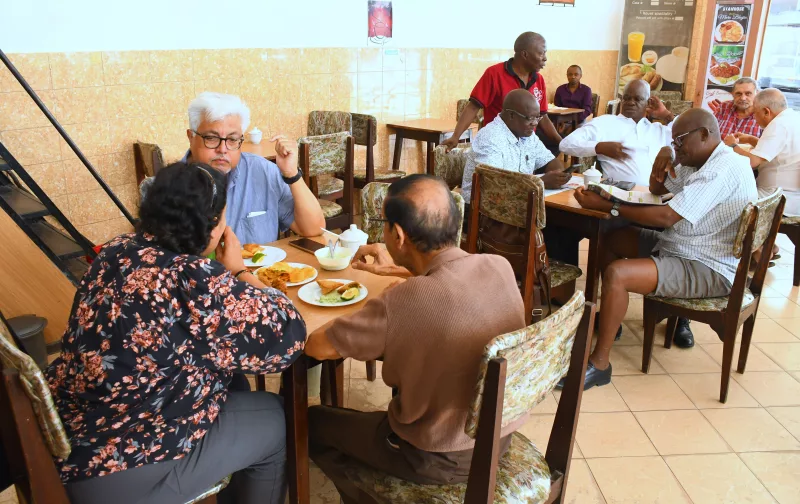
Across Nairobi, small experiments with that idea are quietly unfolding. Some churches organise phone-free retreats, where participants spend a weekend hiking, cooking together and talking without screens in sight. Book clubs and creative collectives gather in cafés. Families try the occasional device-free dinner, rediscovering conversations that stretch longer than expected.
None of these moments trend online. They rarely appear in highlight reels or viral clips.
Yet they suggest something quietly powerful about life in a hyper-connected world: attention, once scattered, can still be reclaimed. Not through dramatic rejection of technology, but through the simple act of deciding where the mind should rest — and where it should wander freely.