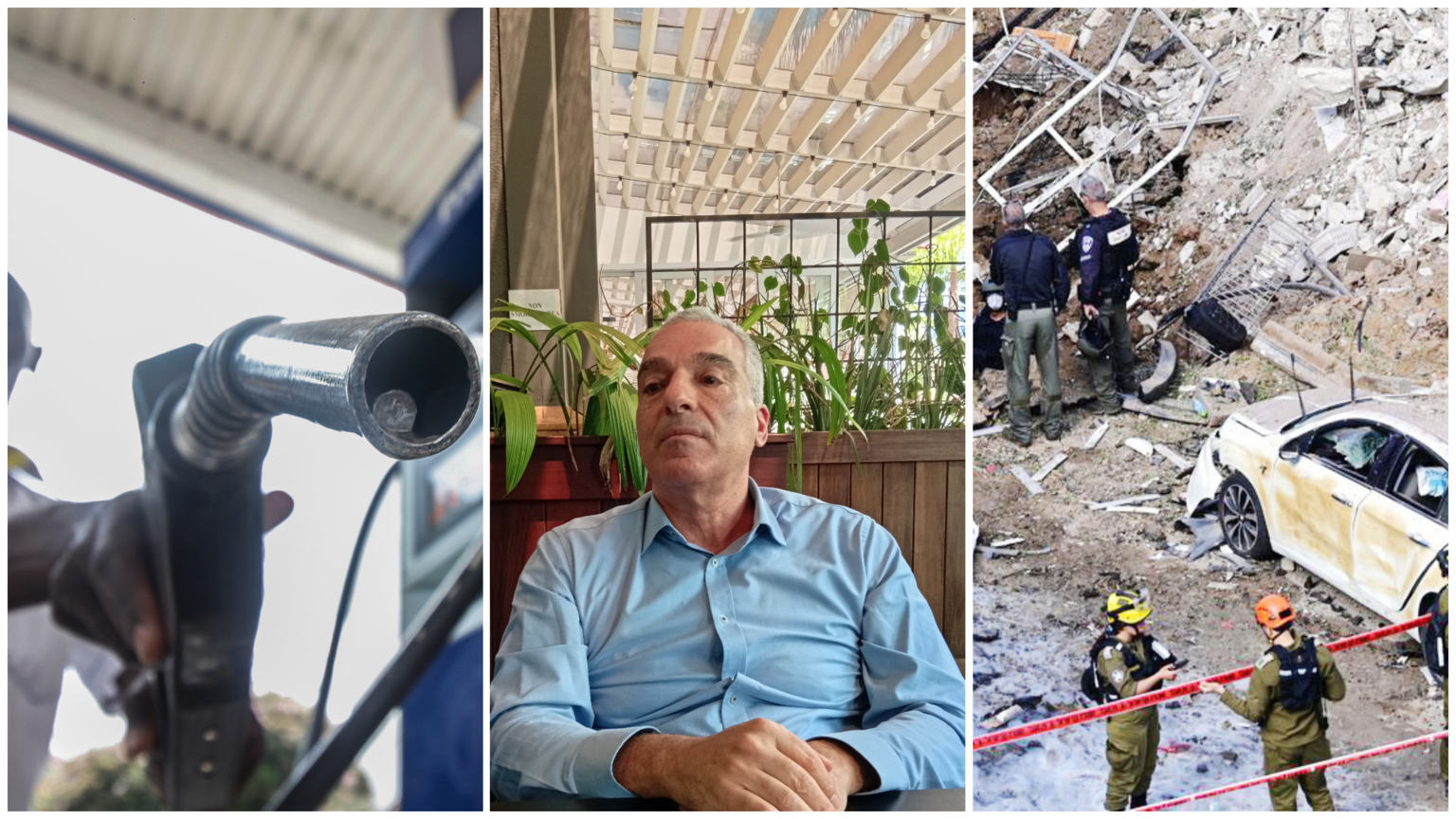
The conflict between America-backed Israel and Iran has intensified in recent weeks, with Tehran and Tel Aviv exchanging strikes that have caused widespread damage and killed thousands.
The war has roped in Gulf neighbours hit in Iran’s retaliation to coming under attack on February 28, as well as Lebanon, which Israel has targeted after Iran’s ally Hezbollah joined the war.
The resulting chaos has fuelled a global crisis that has sent oil prices soaring above $100 a barrel and disrupted trade and travel, far surpassing the impact of the 12-day war between the antagonists in June last year. Hostilities remain even after US President Donald Trump announced negotiations in a bid to de-escalate — talks which Iran disowned.
At the centre of the unfolding economic strain is the strategic Strait of Hormuz, a narrow but critical waterway through which a fifth of the world’s oil supply passes.
Iran’s move to restrict access to the strait has sent shockwaves across international markets, raising fears of a prolonged energy crisis and deepening uncertainty in global trade.
Despite the mounting pressure, Israel has maintained a firm stance, signalling it will not back down in the face of threats. This raises critical questions about what the next phase of the war may hold.
In an exclusive interview with Radio Africa Group newsreader Mark Gitau, Israel Ambassador Gideon Behar defended his country’s actions, while outlining the broader stakes of the conflict and discussing bilateral ties with Kenya.
‘SELF-DEFENCE’
Speaking during the interview, Behar described the war as a necessary step to counter what he termed an “existential threat”.
“This is an act of self-defence,” he said, adding that Israel believes it has no choice but to act in order to protect its citizens.
The ambassador framed Israel’s actions as part of a broader effort to counter threats posed by Iran. He said Iran has been advancing nuclear capabilities and expanding its ballistic missile programme — developments he described as posing a risk to not only Israel but also global stability.
Behar further accused Tehran of supporting armed groups across the Middle East, arguing that such networks extend instability beyond the region and contribute to ongoing conflicts.
Regarding ties with Kenya, the ambassador reaffirmed Israel’s commitment to strengthening the partnership, pointing to decades of cooperation across key sectors.
“There has been a very long and productive cooperation between Israel and Kenya in areas such as agriculture, water, renewable energy, security, education and health,” he said.
The envoy highlighted ongoing initiatives, including projects aimed at improving food security in arid regions such as Turkana through desert agriculture technologies.
Israeli institutions are also working with Kenyan partners in climate research, with a climate laboratory established to study environmental changes across East Africa.
Beyond agriculture, cooperation extends to healthcare, where Israeli medical teams have been involved in specialised training programmes, and to education, where Kenyan students continue to benefit from training opportunities in Israel.
Behar also outlined Israel’s long-term ambition to deepen engagement with Kenya through increased collaboration between governments, universities and private sector players, noting that shared innovation and knowledge transfer remain central to this vision.
GLOBAL IMPACT
A major dimension of the conflict has been its economic fallout, particularly in relation to energy markets.
Behar accused Iran of deliberately escalating economic pressure by restricting access to the Strait of Hormuz, describing it as a shift toward “economic and energy warfare”.
The effects are already being felt globally. In Africa, fuel markets have experienced sharp volatility.
In South Africa, petrol under-recovery has surged significantly, while diesel deficits have widened. In Nigeria, petrol prices have climbed sharply, placing additional strain on households and businesses.
The aviation sector has also been heavily affected. Disruptions in shipping routes have curtailed the flow of jet fuel from Middle Eastern refineries to Africa, where nearly 70 per cent of aviation fuel imports pass through the Strait of Hormuz.
Airlines across the continent are now grappling with reduced supply and rising operational costs, with fuel accounting for a significant portion of expenses. This has led to increased ticket prices and concerns over the sustainability of air travel operations.
The Star: Kenya and Israel have maintained longstanding diplomatic and economic relations over the years. From your perspective, what are the key areas of cooperation, and how do you see these ties evolving in the coming years?
Gideon Behar: The relationship between Israel and Kenya is deeply rooted and continues to grow across multiple sectors. We have built strong partnerships in agriculture, water management, renewable energy, education, health and security.
These are areas where Israel has developed significant expertise, and we see Kenya as a strategic partner in sharing this knowledge. Our cooperation is practical and impact-driven, especially in addressing food security and climate-related challenges.
In recent months, we have seen increased engagement through delegations and institutional partnerships. Israeli universities and organisations are working with Kenyan counterparts to introduce new technologies, particularly in arid and semi-arid regions. Our ambition is to deepen these ties further by expanding collaboration between governments, private sectors and academic institutions.
What academic programmes does Israel offer, and how can such initiatives contribute to skills development in Kenya?
Over the past decade, Israel has provided training opportunities to hundreds of Kenyan students, particularly in the field of agriculture.
These programmes are designed to combine practical, hands-on experience with academic learning, ensuring that participants gain both theoretical knowledge and real-world skills.
Many of these students return to Kenya equipped with modern agricultural techniques that can significantly improve productivity.
Beyond agriculture, we are also expanding opportunities in areas such as sustainability studies, climate change and innovation. Institutions like Ben Gurion University are offering advanced programmes that Kenyan students can benefit from.
Our goal is to continue investing in human capital by equipping young people with the tools they need to address emerging challenges.
The ongoing conflict has raised significant global concern. Could you explain Israel’s position and the key reasons behind its involvement in the war?
The current conflict is rooted in what we consider to be an existential threat posed by Iran. For many years, Iran has been developing nuclear capabilities and expanding its ballistic missile programme. These developments, combined with repeated declarations against Israel, create a situation that we cannot ignore. Our actions are, therefore, based on the principle of self-defence.
In addition to its military capabilities, Iran has been actively supporting armed groups across the Middle East, contributing to instability in the region. These networks extend beyond immediate borders and have broader implications for global security. From our perspective, this is not just a regional issue but a global one.
The closure and disruption of the Strait of Hormuz has had far-reaching consequences on global trade and energy markets. How do you assess the situation?
The situation in the Strait of Hormuz is a critical factor in the current economic challenges being experienced globally. This waterway is one of the most important routes for oil transportation, and any disruption has immediate consequences on fuel prices and supply chains. From our perspective, the restrictions imposed by Iran are part of a broader strategy to exert pressure on the international community.
We believe that this is a deliberate shift toward economic warfare. By limiting access to such a strategic route, Iran is attempting to trigger a global crisis that forces a change in the course of the conflict. Unfortunately, it is developing countries that are most affected.
What is your message to nations in the Global South, including Kenya, experiencing rising fuel prices and economic strain linked to the conflict?
We fully understand the concerns being raised by countries in the Global South, including Kenya. The economic impact of this conflict is real and significant, particularly when it comes to energy prices and supply chains. However, it is important to recognise that these disruptions are closely linked to actions affecting key trade routes.
At the same time, we believe that addressing the underlying threat is essential for long-term stability. While the short-term effects are challenging, failing to act would allow the situation to worsen and potentially create even greater risks in future.
Looking ahead, what is your message to Kenya and its leadership regarding the future of bilateral relations and cooperation between the two countries?
Our message to Kenya is one of partnership and shared opportunity. The relationship between our two countries is built on mutual respect and a long history of cooperation. We see immense potential to expand this partnership across sectors such as agriculture, technology and climate resilience.
We believe that strengthening ties between people, institutions and businesses will play a key role in shaping the future of this relationship. Israel remains committed to supporting Kenya’s progress and building a sustainable partnership.
Edited by Tom Jalio