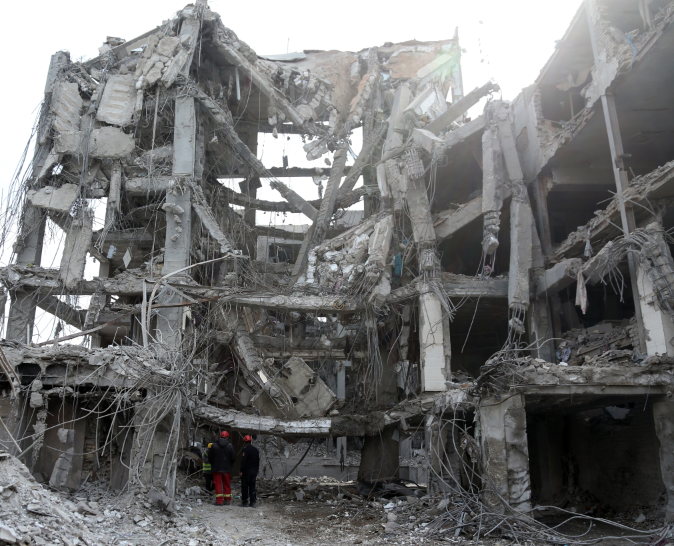
 A damaged building in Tehran, Iran, March 12, 2026/Xinhua
On February 28 the United States and Israel launched Operation Epic Fury, a sweeping military assault targeting Iranian leadership, nuclear facilities, military sites and civilian infrastructure.
The opening strike killed Iran's Supreme Leader Grand Ayatollah Ali Khamenei in Tehran, an act compared to assassinating the Pope in Vatican City.
The attack also included the horrific bombing of Shajareh Tayyebeh Girls Elementary School in Minab, where 175 girls and school staff were killed. It has been termed the biggest attack on girls in history, violating fundamental principles of international humanitarian law.
The architects of this operation, including US President Donald Trump, fell into a trap of Israeli Prime Ministry Benjamin Netanyahu and hawkish advisers. It was catastrophically miscalculated: rather than breaking Iran's will through shock and decapitation, they transformed a tense confrontation into a prolonged conflict with global ramifications.
Iran hardened its stance, rejecting ceasefire overtures and escalating retaliation against US military bases in neighbouring countries from which attacks originated.
Tehran set preconditions for any ceasefire on firm, guaranteed commitments of non-aggression and compensation for damages.
Broken diplomacy and lost trust
The US strikes occurred during active negotiations, indirect nuclear talks between Washington and Tehran, mediated by Oman in Geneva. They had shown significant progress, according to the Omani foreign minister, before missiles replaced diplomacy.
Iranian Foreign Minister Abbas Araghchi stated bluntly that the US attacked in the middle of the negotiation. Iranian officials argue that this pattern is not unprecedented, citing previous military aggressions, including strikes on Iranian nuclear infrastructure during earlier diplomatic efforts.
The effect has been profound, trust has evaporated and been replaced by a conviction that American diplomacy operates under the shadow of force, with negotiations serving as delaying tactics rather than genuine compromise.
Failed coalition building
Unlike previous US military campaigns from the Persian Gulf War to the Iraq War, Washington failed to assemble international legitimacy or coalitions before striking.
European governments limited involvement in defensive measures. Persian Gulf states, directly within Iranian missile range, hesitated to openly support offensive operations. Several regional actors reportedly warned Washington that attacking Iran could ignite the entire region. This fractured alignment carries strategic significance for Tehran, weakening both military coordination and the political legitimacy of the war.
Domestic US opposition
The war has triggered unusual political debate and protests across American cities, rather than national unity.
Critics argue that assassinating Grand Ayatollah Khamenei and expanding military operations risk dragging the US into another open-ended Middle Eastern conflict.
Iranian strategists recognise this dynamic from Vietnam to Afghanistan: US military campaigns become politically fragile when domestic opposition grows.
Tehran may calculate that rising oil prices, regional instability, and/or American casualties will eventually reshape Washington's strategic landscape through political pressure.
Netanyahu's expansionist agenda
Israeli Prime Minister Netanyahu’s has repeatedly described Iran as the greatest threat to Israel’s security.
Supporters argue that Israel is acting preemptively against a dangerous adversary. Critics see a broader strategic doctrine favouring preemptive strikes and regional dominance to prevent any rival power from emerging in North Africa and West Asia, thus establishing Israeli hegemony across the region.
This perception connects to ideological debates about "Greater Israel", visions of dominance stretching symbolically from the Nile to the Euphrates. Whether reflecting official policy or not, this perception reinforces a regional belief that this war concerns not nuclear centrifuges but the future balance of power in the region and the world.
Iran’s retaliation strategy: Self-defense in international law
The killing of the Khamenei triggered fierce Iranian retaliation against US bases across Qatar, Bahrain, Kuwait and the UAE. This assault shattered illusions of Persian Gulf security and exposed Washington's fragile credibility in protecting allies.
Iran adopted sustained pressure rather than massive single retaliation, opting for smaller continuous attacks against Israeli targets and US military infrastructure designed to stretch air defences and maintain constant pressure. The battlefield has widened geographically, with military incidents reaching far beyond Iran's borders. Tehran's message is clear: war expansion will expand the map of war accordingly.
Strait of Hormuz: Economic leverage
Iran's greatest strategic advantage is geographic control of the Strait of Hormuz, through which more than 20 per cent of global oil shipments pass daily.
Tehran has signalled that further escalation could disrupt or control tanker traffic, with US and Israeli regime vessels specifically prohibited from passage.
Even partial disruption sends global economic shockwaves, surging energy prices, panicking markets and disrupting supply chains from Asia to Europe. The Strait represents a geopolitical pressure point capable of shaking the global economy, with all resulting hardship attributed to illegal military aggression by Trump and Netanyahu.
Conditions for ceasefire
Iran rejects ceasefires because its leaders believe they have tried that before. From Tehran’s perspective, diplomacy has repeatedly been followed by unilateral coercive measures, illegal sanctions, covert attacks or military strikes.
When negotiations accompany escalating pressure, diplomacy resembles preparation for the next confrontation rather than peace. Accepting a ceasefire without altering the underlying strategic equation merely resets the clock for the next attack.
Unasked question
The West of Asia stands on the edge of a conflict reshaping the region. Iran refuses to bend and will respond decisively to punish aggressors. Israel claims determination to eliminate what it sees as strategic threats. Washington finds itself entangled in a war whose trajectory it may not fully control.
The most haunting unasked question: why did the world fail to ask the most important question before the first missile was launched and fail to condemn the aggression with a strong, united voice? What happens when a war meant to intimidate Iran instead convinces it that diplomacy itself can no longer be trusted?
Abdiwahab Sheikh Abdisamad is an expert on Horn of Africa geopolitics, security and diplomatic trends